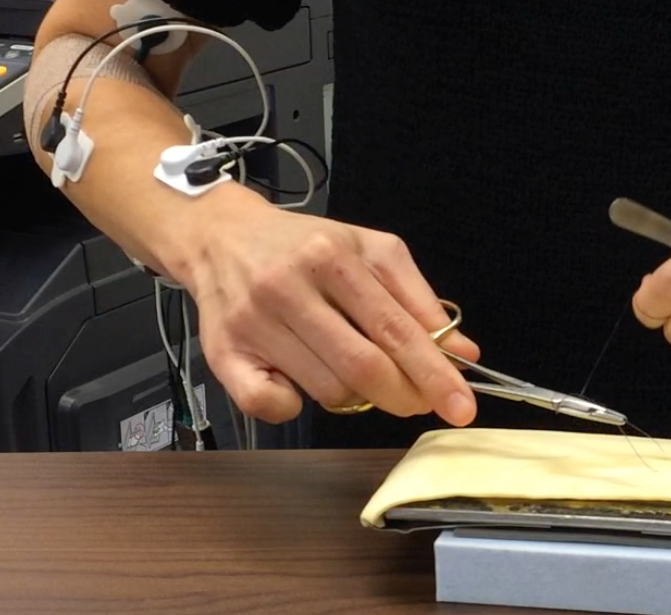
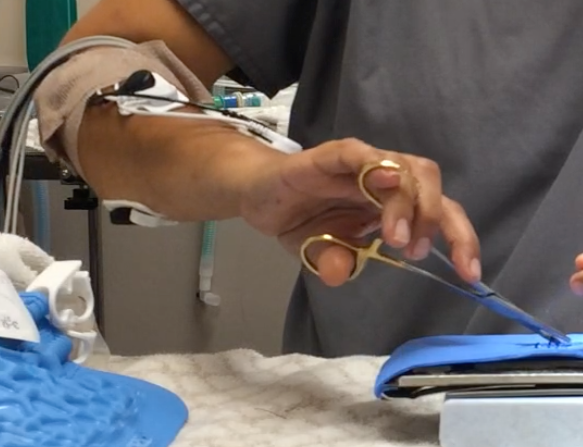
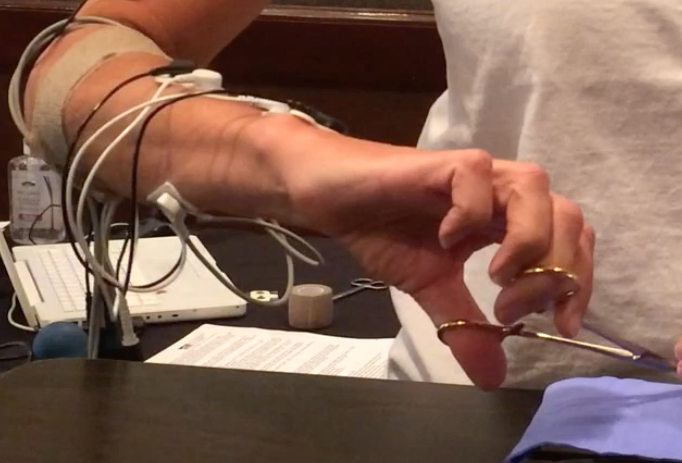
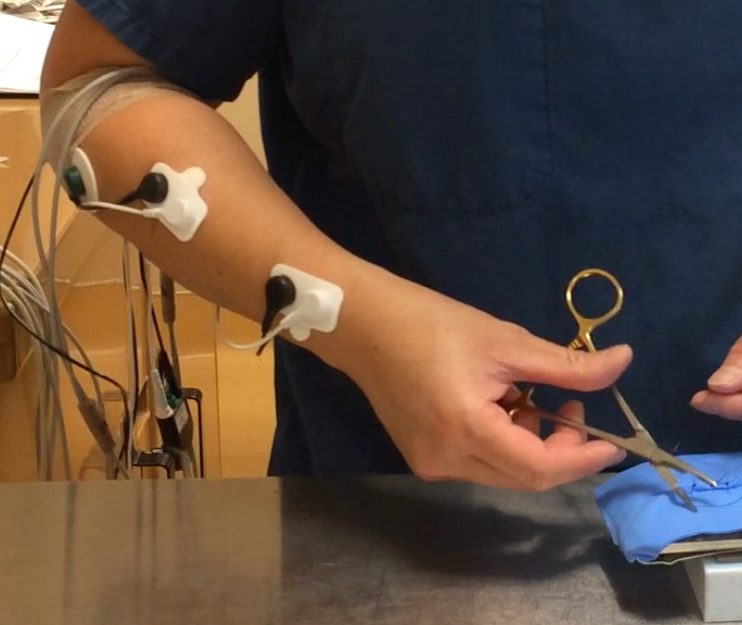
Latest Posts

The Ergonomics of Postures and Positions

On this site I’ve written a lot about “good” vs “bad” ergonomics, but what exactly makes certain postures and positions “good” or “bad” ergonomically?

The answer has to do with stress and strain. The concepts in this post are codified in an ergonomics scoring system called RULA, or Rapid Upper Limb Assessment. Here is a link to the original peer-reviewed article that introduced RULA. The RULA assessment may look technical and daunting, but here are the basic concepts that it is based upon.

Reducing musculoskeletal strain and effort

Different body postures result in different musculoskeletal strains. When we’re looking for “good ergonomics,” it means we are looking for postures and positions that reduce musculoskeletal strain and effort.
 
When we talk about whole body postures and head and neck postures, the excess strain we want to avoid usually comes from our musculoskeletal system’s work against the force of gravity. 
 
When we’re talking about hand and wrist postures, the excess strain has more to do with the forces of the work we’re doing on our joints and muscles, and the strain of working at the extremes of our joints’ ranges of motion.
 
Postures in which the bony columns of our skeletons are aligned require less work (and less fatigue and strain) than postures in which the bony supports are out of alignment. In the illustrations below, the upright surgeon’s stance functions like a stack of boxes balanced atop one another. Minimal muscular effort is needed to hold this posture. On the other hand, the surgeon who is bending as she works must exert muscular effort to hold her body in this posture. 

amala and robot straight

Here, the upright surgeon’s stance functions like a stack of boxes balanced atop one another. Minimal muscular effort is needed to hold this posture.

This surgeon is bending as they work and must exert muscular effort to hold their body in this posture. As you can see, the stack of boxes is off balance and would topple without muscular effort.

amala and robot slouch

Twisted Postures

Twisted body postures add additional strain to the musculoskeletal system. Reaching across the body or resting one leg during surgeries can put particular strain on the muscles of the lower back.

Occasional or intermittent twisting is unlikely to cause a problem, but repeated or ongoing twisted postures will likely lead to strain and discomfort.

amala twist standing
Twisting may be the result of reaching across the body. When twisting occurs repeatedly, this results in musculoskeletal strain
amala resting leg back
Twisting may also be the result of resting a leg during surgery, especially if always on the same side of the body.

Arm and Shoulder Positions

Arm and shoulder positioning also affects muscular strain.

Allow your arms to remain relaxed near your sides and avoid raising your shoulders. Raising your shoulders and arms relies on muscular work by the trapezius, the deltoids, and other muscles. This muscular work can lead to tension, pain, and fatigue in the neck and upper back. For some people, tension in the neck can be a trigger for migraine headaches.

elbows out amala
Holding the elbows out and raising the shoulders during surgery takes extra musculoskeletal effort.
elbows at sides amala
Elbows near the sides and shoulders lowered requires less effort and will lead to less strain on neck and back.

Head and Neck Positions

neck postures bending

Most spay-neuter veterinarians work with some degree of forward bend to the neck, but it is important to minimize the degree of head and neck bend whenever possible. In a neutral head position (above left), the weight of the head is supported by the spinal column with little muscular effort. If the head is bent forward or to the side, the muscles of the neck and upper back engage to help support the weight of the head, potentially leading to fatigue, strain, and pain. 

There is usually little need to side-bend or turn the head during surgery. These postures are likely to be intermittent and transient when they do occur.

amala head straight bend twist

Wrist Positions

Wrist and forearm positions during surgery are dynamic. As you manipulate tissues and suture during surgery, your forearms, wrists, and hands will go through a range of movements. However, strain, discomfort, and even damage can occur if you regularly use extreme wrist positions.

wrist flexion and extension
ulnar deviation

Extreme wrist positions including flexion, extension, and lateral deviation have potentially serious effects:

  • constriction of blood supply to the hand 
  • compression of the carpal tunnel resulting in pressure on the median nerve within the carpal tunnel
  • constriction, compression, and irritation of tendons and tendon sheaths, especially during movement

These factors may result in pain, inflammation and eventually tendinitis or tenosynovitis, and may contribute to carpal tunnel symptoms.

Pronation and Supination

Pronation and supination refer to the rotation or twisting of the forearm. Some forearm rotation is expected while performing surgery, but repeated and extreme rotation is unnecessary and potentially harmful.

Repeated rotation, especially with a bent wrist, can lead to pain and irritation around the elbow and can eventually lead to epicondylitis or “tennis elbow” or “golfer’s elbow.”

Good instrument handling techniques should not require forearm rotation range of more than 80-100 degrees  (about 1/4 turn) while suturing.

supination and pronation

Conclusion

Even though what’s in this post may seem simple and obvious, these concepts are the basis for understanding the “why” behind a wide variety of ergonomics recommendations. I hope these images and descriptions help you picture the forces and strains that affect your body regardless of the work that you are doing.

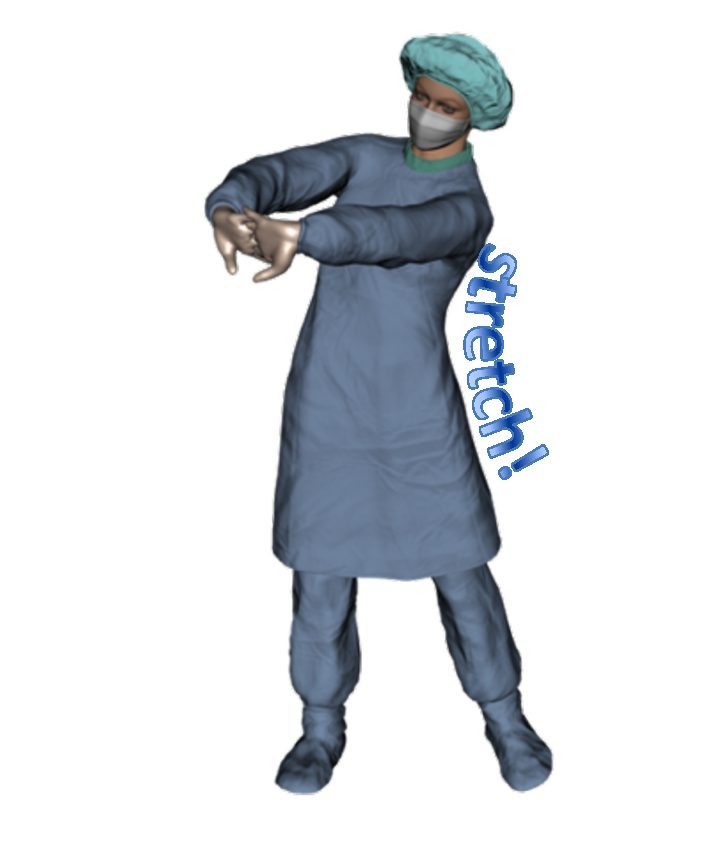
Stretches and Strength Exercises for Surgeons

Recently, I’ve been catching up on some journal reading and came across an ergonomics article in an online plastic surgery journal that I wanted to share.

We feel your pain

The article, Stretching and Strength Training to Improve Postural Ergonomics and Endurance in the Operating Room, offers all the usual warnings about musculoskeletal discomfort among surgeons as a result of surgical postures. It seems that the areas of pain are similar to those in spay neuter veterinarians. Many of the surgeon postures described in the article are also common in veterinary surgeons. And many of the solutions they suggest, like adjusting the table height or sitting for surgery, are the same as we have discussed previously.

Screen Shot 2022 04 10 At 4.08.55 PM 1024x996
Painful body areas in the study of surgeons. Look familiar? Neck, back, and shoulders are common areas for spay neuter vets to experience pain as well.

Stretches for Surgeons

What I liked about the article, though, was that it published a supplemental set of videos of one of the authors’ consultations with a physical therapist. The physical therapist offers exercises and stretches to counteract common surgical postures. The videos are available along with the article (and are slow to load, but be patient). Video 1, video 2, and video 3 are all recordings of this consultation, while the final video shows the surgeon by himself, performing each of the exercises from the consultation in the first 3 videos. The final video goes too fast for viewers to follow along while doing the exercises themselves so works better as a reference than as an accompaniment to exercise.

These videos offer something specific that I hadn’t seen before and that I have wished I could share with others: stretches and exercises targeted for surgeons. (Maybe this exists somewhere but I haven’t come across it yet). I’m curious to try some and if they help relieve some neck/shoulder/upper back tension.

It would be even more exciting if the study had actually tested the stretches and exercises to determine if the surgeons were more comfortable or more flexible after using them for a time. But they didn’t, so as it is we’re left with recommendations based off the physical therapists’ “standard practice algorithms” for addressing the surgeons’ complaints.

Limitations

The study had other limitations besides not having tested the exercises on surgeons. The study design isn’t optimal: the sample size is limited, and the authors didn’t use a validated musculoskeletal discomfort questionnaire. The participants’ surgical posture self-assessment was also problematic. After watching a 2-minute video, the participants were asked to judge deficiencies in their own surgical posture based on their ability to complete the stretches and range of motion activities in the video. They didn’t have the chance to view video of themselves at work or to have any assessment by an ergonomist or physical therapist, so I’m skeptical of that measure’s validity.

Despite the article’s shortcomings as a scientific study, I think that the exercises suggested in the videos could be a good resource or starting point for surgeons experiencing discomfort and for those trying to avoid it. Let me know if any of these work for you, or if there are any other exercises or stretches that work better.

Meanwhile

Today we had the chance to fire up the Hartland Community Oven which was built in our town during the pandemic. Tina was on the oven committee (she helped build it, too) so she has been through several firings in 2020 and 2021, but this is only my second time baking in the oven. Despite a sometimes windy, sleety afternoon, we spent a few hours out there baking different things as the oven went from really hot to only sort of hot. Everything looks and tastes great and I think I’m done cooking for the week! (well, maybe).

Lifting and Carrying a Large Dog

The need to lift dogs is common in small animal clinics. What are some ways that we can make lifting easier and less challenging on our bodies?

In the previous post we talked about some basic principles of lifting and carrying. Today we’ll expand on those ideas look at lifting large dogs.

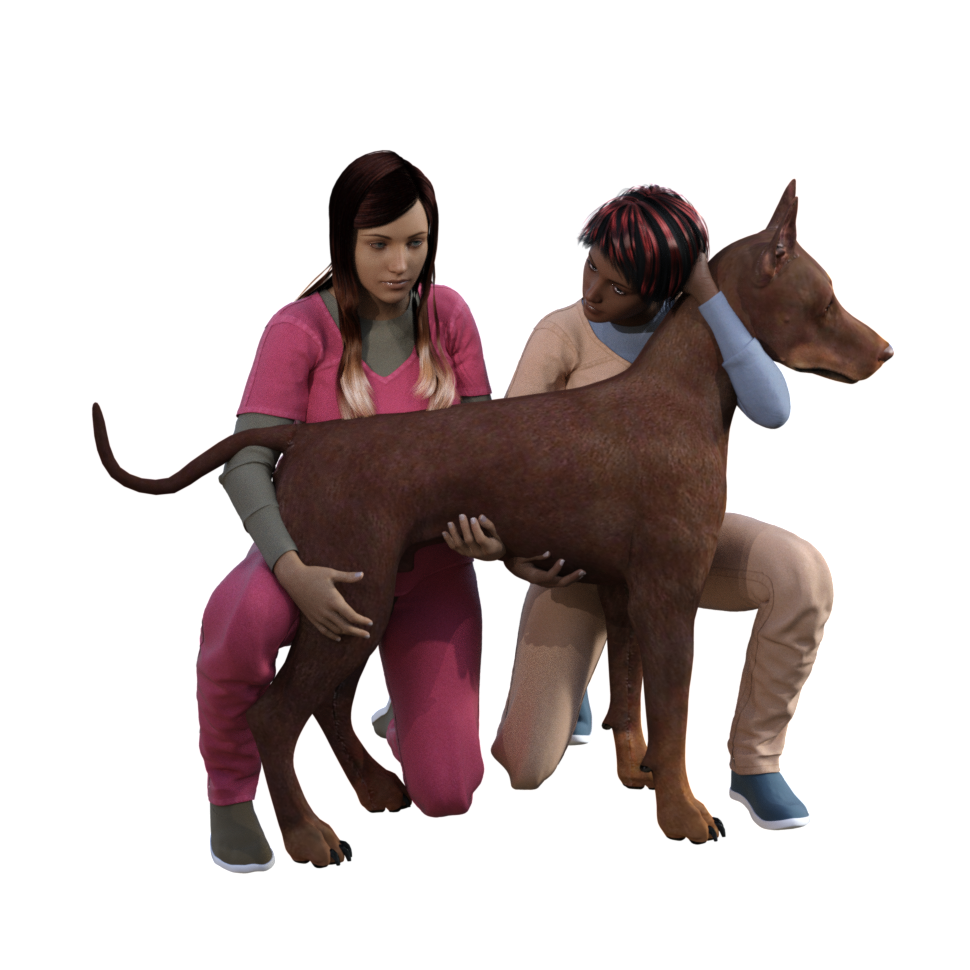
Vet Techs Restrain Dog
Workers restrain a standing dog. This restraint posture (one leg kneeling and the other bent) could also be used to lift this dog.

The need to lift dogs is common in any small animal clinic, especially in HQHVSN. The dogs we lift may be awake, sedated, or fully anesthetized, and each type of lift comes with its own challenge. Awake dogs may resist handling and wiggle, while anesthetized or heavily sedated dogs may be loose and floppy and difficult to grip.

What are some ways that we can make lifting easier and less challenging on our bodies?

Standing or Lying Down?

Remember that the height of the lift is a factor in the lift’s difficulty. It’s easier (ergonomically) to lift a standing dog than one who is lying down. (It may not be easier overall if the dog wiggles or resists). The standing dog’s center of mass is higher than the ground and already closer to the lifted position. This means you don’t have to lift that center of mass all the way from the floor to your waist height or to a table.

Back, Hips, or Knees?

When lifting from the floor, workers may bend at the knees, hips, or back, or a combination of all three. Generally, we are told to “lift with your legs not your back.” And to some extent this is true: repeated, extreme flexion of the back puts much of the strain of the lift on the vertebral joint end plates. End plate damage may be one of the causes of chronic low back pain.

However, the recommendation to avoid any lumbar flexion during lifting is not supported by research. It’s definitely best to avoid extreme lumbar flexion (60o or more), but it is OK to flex the back along with the hips and knees when lifting.

Lifting only with the legs has its down sides as well. People with painful knees or hips may be uncomfortable in the deep squat often portrayed in “proper lifting” diagrams. And bending and lifting at work can make certain workers more prone to knee or hip arthritis.

In the end, the best means of lifting probably involves moderate flexion of the knees, hips, and lower back. The “best” way to lift will vary depending on the specific task and the individual’s strength and pre-existing pain.

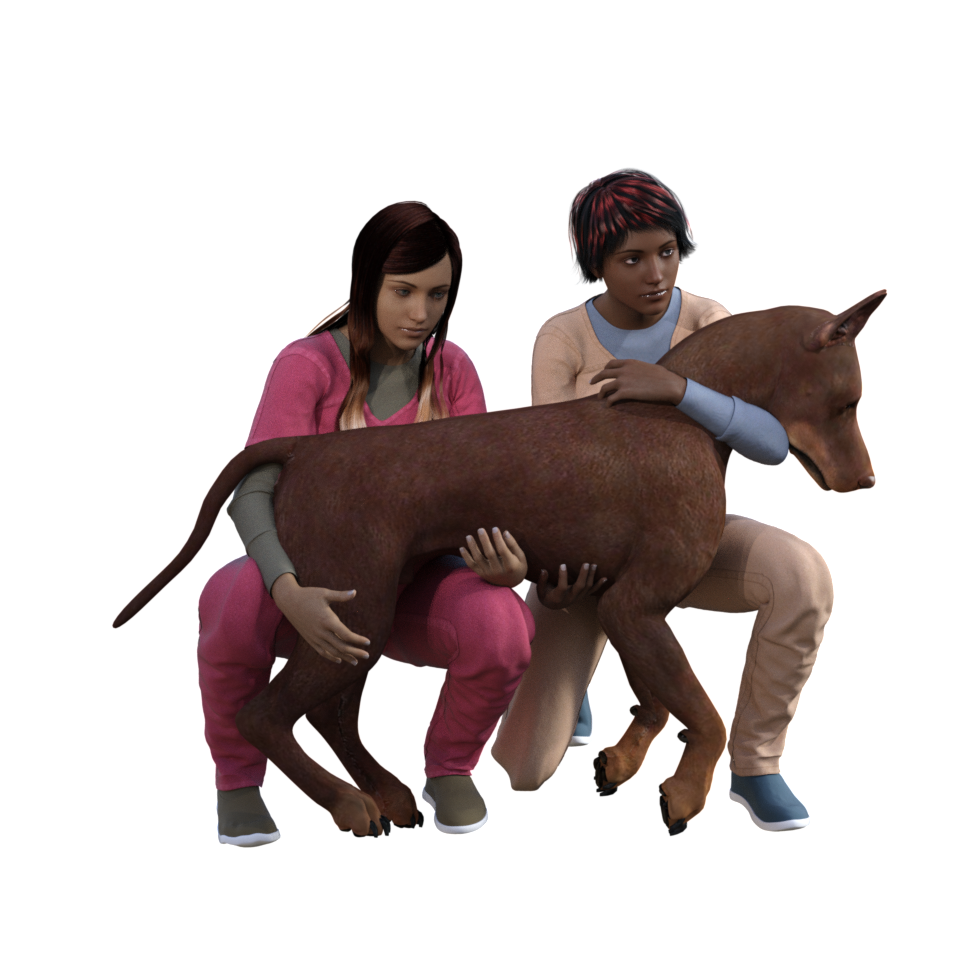
Bad Lift Big Standing Dog Edited
Not so good: Here the worker in magenta scrubs is bending mostly with her back rather than with her hips or knees. This lift will put unnecessary strain on her lower back. Also her hold on the dog’s stifle (knee) will not lead to a secure hold once the dog’s feet are off the ground.

Two Person Lifting

Vet Techs Team Lift Stand
The workers are facing the same direction and will coordinate their movements through the clinic.

When lifting as a team, both team members must communicate clearly with each other. Both team members need to know where to position themselves, when to begin lifting, and where to carry the dog. For example, if a dog is to be lifted onto a table, it is important that both lifters know which way the dog should be facing on the table before they position themselves for the lift.

Use simple technology to help

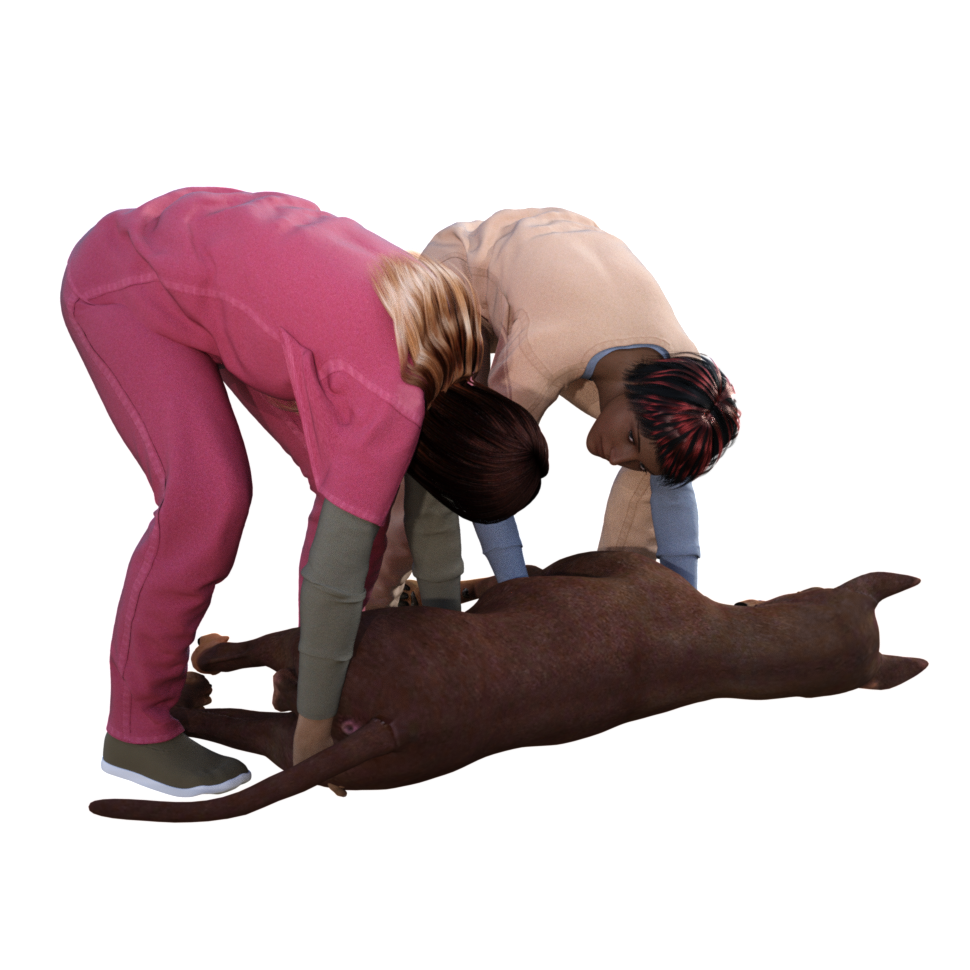
Stretcher Lift Big Dog Edited
Use technology for your lift! If you need to move a large sedated dog who can’t walk, consider using a stretcher or cart.

Our worker in the previous post used technology (a hand truck) to help transport a cardboard box. Likewise, we can use technology to help move our anesthetized dog. Stretchers and wheeled carts are both useful ways to turn a floppy, hard-to-grip load into a rigid load with handles.

Similarly, lowering a hydraulic table decreases the height of the lift, thereby decreasing its difficulty.

Meanwhile…

I hope you all are staying safe and well. Here, spay neuter clinics go on even as we find ourselves dodging COVID and mud season simultaneously, just as we have the past two years. I feel lucky for the flexibility and adaptability of my vet techs and clinic hosts as we still manage to get those cats spayed before kitten season hits. Thanks y’all!

Lifting and Carrying

Let’s start with some ergonomics fundamentals: lifting and carrying. This post shares some basic concepts that we’ll be able to apply later to specific veterinary activities like lifting and carrying dogs.

This will be the first in a series of posts about ergonomics in the veterinary clinic–and everywhere else. It’s been a long pandemic, but in the past half-year I’ve had a couple of opportunities to talk about veterinary tasks aside from surgery. Today’s slushy snowstorm seems like a good time to share some of the illustrations and ideas from these presentations.

IMG 2004
March “snowstorm” with Spaymobile in background

Lifting and Carrying: the fundamentals

Let’s start with some ergonomics fundamentals: lifting and carrying. This post shares some basic concepts that we’ll be able to apply later to specific veterinary activities like lifting and carrying dogs.

First, what are the characteristics of a lifting task that can make it more or less hazardous?

  • Weight of load
  • Distance of your hands from your lower back
  • Height of lift (From floor or from above knee height? How high do you need to lift?)
  • Twisting and side bending
  • Working in a restricted space
  • Good grip, or irregular, bulky, floppy, unpredictable load
  • Flooring condition (dry, clean, good condition, or wet or uneven)
  • Communication and coordination when lifting as a team
Hold Box Near Waist
Carrying an object close to the body and near waist height

For our lifting and carrying example, we’ll use the ubiquitous brown cardboard box. In the first illustration, the lifter is carrying a box near her body and near waist height. This puts the object close to her center of mass and puts the least amount of strain on her body. It makes intuitive sense to us that she would carry the box this way instead of carrying it with her arms extended, far away from her body and her center of mass.

In this next set of illustrations, it looks a bit strange to carry the box with extended arms. But when the worker is carrying a larger box of the same weight, she is essentially doing just that– carrying the weight further from her center of mass and putting more strain on her back. A bulky object’s center of mass is further from the worker’s center of mass, meaning that even if this object is the same weight as the first box, it puts more strain on the worker’s back. The increased strain is due to the leverage created by the weight’s greater distance from the worker’s core.

(Want to learn more about how lifting strain increases depending on the size, shape, and weight of the object and the height of the lift? Check out the NIOSH Lifting Equation.)

Another circumstance where the worker might be holding an object far from her center of mass is when obstructions in the environment require her to do so. Removing objects that obstruct work areas (such as boxes obstructing a countertop) may seem obvious but it can also be the “low hanging fruit” when making ergonomic improvements.

Yet another reason for carrying a weight far from one’s body because it the load is smelly, damp, messy, or covered in some bodily fluid– but the same principles apply. If it’s a soiled but lightweight cat carrier, it makes sense to hold it at arm’s length on the way to the wash area. But if it’s a whole load of smelly laundry or a patient covered in pee, using a protective barrier (plastic bag or clean towel) and holding the weight close to the body is a better choice because it allows for a more secure hold and less strain on the lower back.

Lifting or placing objects below the knees or above the shoulders also adds additional strain on the worker’s body. Low placement may put strain on knees and lower back, while high placement can strain shoulders and arms (and introduce the risk of the object falling). Heavy items that need to be lifted and carried (cases of wet food; trays of instrument packs) should be near waist level to reduce the strain of lifting them. Lightweight objects can be placed on high shelves, with the bottom shelves reserved for heavier objects that will be transported with mechanical help like a wheeled cart or items that are used less often.

Big Box Hand Truck Back Side
A worker uses a hand truck/ a dolly/ a trolley/ a two-wheeled cart to transport a large box. (Nomenclature for this device varies a lot as you can hear in this link )

Mechanical help can be an excellent way to reduce strain when transporting objects. Gurneys, hand trucks, carts, and other devices bear the weight of the load, freeing the worker from the heavy lift.

Next time we’ll talk about the ergonomics of lifting and carrying dogs– stay tuned!

MASH Clinics

After writing this blog for a few years now, I realized that I haven’t explained what I do for my “day job” as an HQHVSN veterinarian. I am the Executive Director and Veterinarian at Spay ASAP Inc., a MASH-style spay neuter clinic in Vermont and New Hampshire.

(Parts of the content for this post are adapted from Chapter 34 of the textbook, High Quality High Volume Spay Neuter and Other Shelter Surgeries)

What is a MASH clinic?

MASH (Mobile Animal Sterilization Hospital) clinics are a type of mobile spay-neuter program in which clinic staff transport surgical equipment to a venue and set up a temporary surgical space in that location. Surgeries are not performed in the MASH vehicle, but instead utilize an existing space in the community.

IMG 4968 1024x768
American Legion in Claremont NH, a site of many of my MASH clinics.

Examples of clinic locations that I’ve used include animal shelter buildings, church basements, animal care (grooming and boarding) facilities, fire stations, town offices, school gymnasia, senior centers, and many more.

IMG 0382 1024x768
We also used to do MASH clinics in the old farmhouse that housed the offices of the Concord Merrimack County SPCA

MASH programs vary in the number of surgeons, technicians, and support staff, the frequency of surgery days, the number of consecutive days at a single venue, and in mission and organizational structure. Some MASH programs work independently of other humane organizations (independent MASH programs), while others conduct all their work in collaboration with other humane organizations (collaborative MASH programs).  Over the years, Spay ASAP has been hosted by over 15 different humane organizations in Vermont and New Hampshire, and currently we are hosted by 8 different organizations and also have a few additional humane organizations that bring animals to our clinics.

Venues
IMG 4952 1024x768
When the space is small, shelving units for cat crates can optimize the available space

Venues for MASH clinics may be diverse and creative, but with few exceptions, MASH clinics require an enclosed space of a minimum of 1000 square feet (preferred 2000 square feet or greater) that can be maintained at a safe, comfortable temperature, and access to hot and cold water and electricity. In cases where running water is not available, hot and cold water may be brought to the venue. Facilities may be able to provide large nonmedical objects such as folding tables, chairs, and trash receptacles; if not, these items should be provided by the host organization.

Animal Housing
IMG 3440 Scaled E1601131294496 1024x922
You seriously never know what cats will arrive in.

Since many MASH clinics do not take place in animal care facilities, animal housing often consists of pet carriers or folding wire cages. In these cases, host groups should be prepared to provide crates and bedding for housing dogs, as many owners will not have or will not be able to transport appropriate crates or cages for their dog. Cats and rabbits are generally housed in the carriers in which they arrive at the clinic, and community cats remain in their traps. It is wise to have additional crates available in which to house cats who arrive in inappropriate or inadequate housing.

IMG 2755 1024x768
Yes there are 3 cats in here. That is 30 pounds of black tomcats.
IMG 4212 1024x768
Dogs housed in folding wire cages provided for the day by the host shelter. The sheets over the cages give them some visual barrier between them and keep the room a little calmer and quieter.

MASH Equipment

Equipment requirements for a MASH clinic are similar to those in other clinic types, but all items must be compact and packable, and must have the durability to withstand transport, packing and unpacking daily. Choices for surgery table, surgery light, and anesthesia machines will be influenced by this need for packability and durability.

Vehicle
IMG 0449 1024x768
My first MASH vehicle, a 2006 Scion xB. It was the perfect Spaymobile: boxy with great gas mileage. Also, this picture was taken in early springtime.

For our MASH vehicle, we needed space for 2 people and the necessary equipment. A small minivan, a compact SUV, a station wagon, or a boxy passenger car are adequate for a collaborative MASH program. Small, mass-market vehicles have the advantage of low purchase price, good fuel economy, and low maintenance costs. 

IMG 2796 1024x768
Our current MASH vehicle, a 2016 Kia Soul
Anesthesia Equipment
IMG 4973 1024x750
Our tabletop anesthesia machine. Currently set up with a nonrebreathing system for patients under 5 kilograms

Like many MASH clinics, we use inhalational agents (isoflurane) for some of our patients’anesthesia. We have two anesthesia machines: one for the surgical prep area and one for surgery. This allows animals in the prep area to receive oxygen and anesthetic gas while they are being clipped and scrubbed, so that when they arrive on the surgery table they are on a steady anesthetic plane for surgery.

IMG 3681 768x1024
Tec 4 vaporizer. Boxy but good.

Tabletop anesthesia machines are easy to carry and need not be disassembled to pack in a small vehicle. Our current machines were custom made by Eagle Eye Anesthesia. We use a Tec 4 type vaporizer (the big, square-bottomed heavy ones) since they contain internal baffles that limit the movement of the anesthetic agent. Basically, they continue to deliver appropriate anesthetic concentrations even if the vaporizer is temporarily tipped or upended (ie, when the machine falls out upside down onto the ground when you open the car door).

Figure 34.4c
E-cylinder with oxygen

For oxygen we use portable E cylinders in 2-wheeled oxygen cylinder carts and attached to the anesthesia machine via a regulator and oxygen hose. Oxygen cylinders should be immobilized in the vehicle for transport.

For anesthetic gas scavenging, we usually use passive scavenging (unless we are in a venue with a surgical suite with active scavenging). Passive scavenging options include exhaust through a window, through a hole made in the wall, or using an activated charcoal absorbent canister such as a F/Air canister.

Equipment Bins

Small equipment and supply items used during the MASH surgery day are packed in bins or totes for organization and ease of transport . We sort our bins by type of items: needles and syringes in one bin, anesthesia tubing and bags in another. We have smaller bins for surgery packs that hold about a dozen packs each.

A rolling cart is also helpful for venues with level entrances, allowing us to make fewer trips between the car and the surgery area during setup and takedown.

Surgery Table and Light
Figure 34.7 765x1024
Surgery table made from old countertop and aluminum legs, placed atop a standard table. An instrument bin to the left of the table is used as an instrument stand, and an architect’s lamp with a compact fluorescent or LED bulb is used as a surgery light.

Some MASH programs require that host organizations provide appropriate height surgery and prep tables and a surgery light at each venue. This is most easily achievable if clinic venues are used repeatedly and are owned by the host organization. In these cases, steel food service tables or appropriate-height tables constructed by volunteers offer alternatives to commercial surgery tables.

At Spay ASAP, we went with a different option and have a portable surgery tabletop, allowing for greater flexibility in temporary surgery venues. A portable tabletop may be constructed using a piece of countertop with folding legs at a fixed or adjustable height that can be placed atop a standard height table– ours was made from a piece of countertop that once went over a dishwasher. We use a small bin (a surgical instrument bin) as an instrument stand.

Figure 34.8 1024x768
Surgical prep table elevated on bed risers. An ergonomic standing mat is provided for the veterinary technician.

Other portable table alternatives would include using a small or standard folding table with bed risers or an adjustable-height folding table. We also elevate the surgical prep table to the appropriate height for the veterinary technician using bed risers or blocks. 

For surgical lighting, we use an architect’s lamp with a compact fluorescent bulb of 23 watts or greater, or LED bulb of 16 watts or greater (equivalent to a 100-watt incandescent bulb). Alternatively, a head lamp may be used, but I find the weight of these lamps to be uncomfortable and am less impressed by the lighting quality.

Patient warming

Selecting a surgical patient warming device for MASH can be challenging, as some are too bulky to transport in small MASH vehicles, and those containing water may be difficult to transport due to spilling or freezing water during transport and storage (I used to use a Gaymar pump and water blanket but got frustrated by leaks and spills and the risk of freezing). A low-voltage conductive polymer fabric heating pad (such as Hot Dog or ChillBuster or Warm Blood if you can still find them) can be used, as they are compact and fairly durable.

Any postoperative warming devices that we use, such as heating pads, rice socks, or electric blankets, are supplied by the host organization, and should be used with caution (ie, no skin contact with the pet, and used only with direct human supervision) to avoid thermal burns. 

Additional Equipment
Squeeze Cage Gloves Net 1024x781
Net, squeeze cage, and kevlar gloves.

Additional equipment transported by the MASH clinic includes a scale to weigh surgery patients, anesthesia monitor(s) such as a pulse oximeter or capnograph, anti-fatigue floor mats, and an insulated container for vaccines.

Safety equipment such as cat net, animal handling gloves, syringe pole, squeeze cage, and dog muzzles should be included, as many venues will not have adequate handling equipment. An additional useful piece of handling equipment is a snappy snare, which is a 3- to 5-foot-long stiff leash that allows the leash to be placed on the dog from a distance, and is useful for safely applying a leash to a frightened dog in a crate or kennel.

“Home Base”
Wvds Fire Excape 1 768x1024
Entrance to our rented room above a veterinary clinic

MASH clinics require a small area (minimum 10 x 10 feet) for receiving and storage of supplies and medications. At Spay ASAP, we rent a room on the second floor above a veterinary hospital. The ideal space would be easy to access with a convenient geographic location, a convenient physical location (first floor, near supply delivery area), and is temperature controlled for safe medication storage. Our space isn’t ideal from the point of view of deliveries, but we do have direct access via the fire escape.

If the MASH program is part of existing organization with a physical building, the MASH clinic can use this space.

If the MASH is a new organization or has no suitable site, possible sites include the home of a staff member or a rental space.  Renting space from an existing animal care organization such as a veterinary clinic offers the advantage of on-site staff to receive deliveries of temperature-sensitive items such as vaccines or medications.

Wvds Room 768x1024
Inside our storage room: just enough space for backstock and storage of the supplies that don’t fit in the vehicle

If the home base is to be used for surgical pack preparation, it should contain or allow access to laundry facilities (unless all drapes and pack wrappers are disposable) and electricity, and should be large enough to accommodate pack assembly and an autoclave. During times when we have prepared packs in our rental space, we have rented additional space in order to have table space to prepare packs.


How to set up a MASH program: organizational structure and details

Everything from here on is more nitty gritty organizational detail, including more words, no pictures, and more generalizable information. It draws heavily from the MASH textbook chapter. It may be a bit too detailed for a blog post, but I wanted to get this information out and available for anyone who is really interested in starting up this type of clinic.

Can I MASH here? Legal issues:

Before considering a MASH clinic, be certain to check any relevant state or provincial veterinary practice acts and local regulations to be sure that MASH clinics are permitted. Some states and provinces require premise permits for any practice location, which may preclude MASH clinics. However, in some cases, states or provinces that require premise permits may allow exemptions for MASH clinics if asked in advance.

Who should MASH?

MASH clinics are adaptable and there are not specific prerequisites for regional population density or shelter animal intake. They are suitable for rural areas where low population density does not easily support a stationary clinic (like the border area of Vermont and New Hampshire), as well as for densely populated urban areas. MASH clinics are valuable for local shelters that wish to provide in-house HQHVSN, but either cannot afford to build and equip their own surgical suites, or that have surgical areas but lack veterinary staff. MASH clinics are also suitable for international and remote area spay-neuter programs.

For a veterinarian with surgery skills seeking spay-neuter work, establishing a MASH clinic can be one of the fastest and lowest cost ways of starting a HQHVSN clinic. This is what I did when I started Spay ASAP in 2006, and we went from registering the nonprofit in March to performing our first surgery in early June. In most cases, veterinarians who choose this route should be willing to operate the business aspects of the clinic and be able and willing to work with shelters and humane organizations in their target region.

In some cases, programs with limited startup funds may wish to offer surgery services before fundraising is complete or before a clinic site is located for a future stationary clinic. In this case, a MASH clinic may serve as a temporary economical option during the development of the HQHVSN program. Since any equipment purchased for MASH can be used in other models, the MASH clinic provides the opportunity for quicker startup without loss of equipment investment.While MASH programs are diverse, this chapter will focus on programs that utilize paid veterinarian(s) and technician(s) and operate within a prescribed region (as opposed to national or international scope). However, many of the descriptions in this chapter may be adapted to MASH programs that operate internationally and/or use volunteer veterinarians and technicians. For information on setting up international or remote area MASH clinics, the reader is referred to Susan Monger’s chapter on Operating a field Spay Neuter Clinic in the Field Manual for Small Animal Medicine.

Independent versus Collaborative MASH programs

MASH programs can operate their clinics independently of other humane organizations in a region or may collaborate with other humane or community organizations to host their clinics. Some MASH clinics may use a combination of these two approaches. There are advantages and disadvantages to each of these models. My own Spay ASAP clinics are collaborative MASH clinics so I’m biased towards that model and find it to be sustainable over the long term.

Collaborative MASH programs

Collaborative MASH programs are generally small organizations that collaborate with various local humane or community groups that act as their hosts in the communities within their service area. These host groups (or “ground teams”) must provide the venue and personnel, consisting of 2-5 staff members or volunteers, while the MASH program (or “surgery team”) provides the veterinarian, the technician, and all surgical supplies and equipment. The host organization is responsible for scheduling, admitting, and discharging patients, and for printing, preparing, and distributing clinic paperwork such as medical record forms, liability releases, discharge instructions, rabies certificates, and neuter certificates. Host groups are often required to provide non-medical supplies such as tables, chairs, animal bedding, extra pet carriers, and trash receptacles. In these collaborative programs, the MASH group generally works with several different host organizations throughout their service area to host clinic days. At times, more than one local humane group may work together to host a MASH clinic. 

Collaborative MASH programs empower small humane organizations and shelters to host their own “Spay Days,” affording them the opportunity to enhance their community relations and outreach. The opportunity to host and assist with a MASH clinic enables staff and volunteers at host shelters to do something “fun” and different, compared to their usual shelter duties. These collaborations also allow opportunities for MASH clinic staff to share information and best practices for shelter medicine and HQHVSN with their host organizations.

Generally, it is the responsibility of the MASH organization to provide training and mentorship to new or potential new host organizations. Before hosting their first clinic, host organizations will need to know how to schedule the appropriate surgical load and how to determine the number and skill level of volunteers required. They need to understand the paperwork and be able to provide appropriate pre- and post-operative instructions to clients. An in-person meeting between the MASH organization and potential new hosts along with written instructions on hosting protocols and expectations is recommended prior to the first clinic.

Once a MASH organization has established relationships and carried out clinics with one or more host organizations, potential new host organizations can benefit greatly by visiting with and observing existing host organizations during MASH clinic days. This peer-to-peer mentorship helps new host organizations develop their own protocols and systems and allows them to see clinic flow and ask questions before their first clinic. In some cases, this mentorship may even continue, with representatives from existing host organizations attending the first few clinics sponsored by new host organizations, smoothing their transition into their role as host.

Advantages of the collaborative MASH model include flexibility and decreased operating costs. Staffing costs are decreased for the MASH organization because of the symbiotic relationship between the MASH organization and their hosts. The MASH organization pays only one veterinarian and one technician per day, in addition to an after-hours surgical pack preparation staff, and relies upon the host organization to provide additional resources (2-5 staff or volunteers, and venue). The hosts are motivated to provide this because they need the MASH program’s staff, equipment, and expertise in order to offer affordable HQHVSN clinics.

In contrast to an independent MASH clinic, the collaborative MASH clinic requires a relatively small vehicle given the small staff and minimal equipment required. Purchasing a smaller vehicle results in a lower initial purchase price, as well as lower ongoing fuel and maintenance costs. This decreased operating cost often means that a collaborative MASH clinic is able meet their budget entirely via low-cost fees for service, without additional fundraising.  

Independent MASH programs

Independent MASH programs have sole responsibility for scheduling the venue, booking patients, securing volunteers and staff, and admitting and discharging patients. The independent MASH model is more likely to be adopted by large, pre-existing organizations, by new HQHVSN programs planning to transition to stationary clinics in the future, or by organizations doing MASH clinics intermittently. This is because developing and training the network of collaborating host organizations that is required for a collaborative MASH clinic takes time and effort. For large, established organizations that have the resources to perform ground team tasks in addition to surgical team tasks, this extra task of collaborator development may be unnecessary. For MASH clinics that operate intermittently, the collaborative relationships may languish and be harder to maintain.

In an independent MASH clinic, staffing and finances are likely to be similar to a stationary clinic or self-contained mobile surgery unit, unless adequate, reliable volunteer staffing is available. Minimal required staff would consist of a veterinarian, a veterinary technician, one or more veterinary assistants, and administrative staff for record keeping, patient booking and reception. 

Independent MASH clinics may require larger vehicles than collaborative programs to transport staff, surgical equipment, and some nonmedical items such as animal bedding and extra pet carriers or crates. Since the staffing for this model of clinic is similar to that of a stationary clinic, the costs are higher as well, making this model harder to sustain financially than collaborative MASH clinics. However, independence can offer the advantage of more predictability by utilizing more consistent clinic staff and by not needing to rely on other humane groups to schedule clinic dates and locate suitable staff and volunteers.

Organizational structure

MASH clinics may be established within any organizational structure, including nonprofit, for profit, and government or tribal entities. In some cases, MASH clinics may represent a single program within a large, diverse existing organization. For example, an animal shelter with an in-house spay-neuter clinic may develop a MASH program to reach certain communities in their service area. In others, a new organization is formed for the purpose of offering MASH clinics, and this organization exists solely for the purpose of offering MASH clinics. 

Financial investments and ongoing costs

Financial requirements for a MASH clinic are generally much lower than for a stationary clinic or self-contained mobile unit. There will also be some differences in the initial investments between MASH clinics following a collaborative model versus an independent model. In all MASH clinics, the major initial costs will include acquisition of a vehicle, surgical and anesthetic equipment, initial consumable supplies (for example, drugs, vaccines, syringes and needles, gauze sponges, antiseptics, and suture material) and an autoclave. In cases in which the MASH clinic already has access to a suitable vehicle, or if the MASH vehicle is purchased with a car loan, the initial investment to start a collaborative MASH clinic will likely range from $20,000- $35,000.

Ongoing costs for MASH will include personnel costs (salaries, wages, benefits, payroll taxes, workers compensation), consumable supplies, and vehicle gas and maintenance. Most MASH clinics will also need to rent a small, climate-controlled “home base” physical space for safe storage of consumable supplies (see “home base” section above). 

Because overhead costs are low, it is possible to sustain a collaborative MASH clinic with low-cost fees for services, without additional fundraising. In cases where extremely discounted or free surgeries are to be offered, additional fundraising and grant writing by the MASH clinic or by one or more host organizations will be required to subsidize program costs.

Personnel

Minimal personnel requirements for a collaborative MASH clinic generally consist of one veterinarian and one veterinary technician. Some MASH programs employ additional staff for instrument care or for management. In many collaborative MASH programs, the veterinarian and technician handle instrument care and management responsibilities without additional staff. For example, the veterinarian serves as the program director/manager, and the technician assumes the responsibility for preparing surgical packs.

Independent MASH programs require additional personnel including veterinary assistants and administrative staff. The staffing model for these clinics is similar to that for a stationary or mobile self-contained clinic.

Surgical capacity

Surgical capacity for a MASH clinic should be comparable to other HQHVSN models, although in many MASH clinics, only one surgery table is available, so surgical flow and resulting speed is somewhat slower than in a fully-equipped stationary clinic. However, unlike in some self-contained mobile units, physical space for animal housing need not be a limitation for MASH clinics. Approximately 5 hours of surgery time is a full day for a MASH clinic, and this may consist of as few as 15-20 dogs or as many as 50-60 cats for one veterinarian depending on surgical speed and species and sex composition of the patient load. 

Timeline

Startup time for a MASH program can vary.  In the case of collaborative MASH programs, startup may be delayed if collaborating organizations need to be identified and persuaded. However, if collaborating organizations are prepared to host clinics immediately, a MASH program can start up in less than 3 months once finances are obtained.

Protocols 

As with all HQHVSN clinics, MASH clinics should adhere to the ASV Guidelines for Spay-Neuter Programs. Surgery techniques, patient selection, and disinfection and sterilization of equipment are no different than in other HQHVSN clinics. Anesthesia and analgesia protocols are similar to those in stationary clinics, although care must be taken to select protocols that are suitable for same-day discharge of patients. As with all clinic types, proper medical record-keeping is essential, and clients must be provided with written and verbal postoperative instructions. 

Post-operative care

As with other clinic types, there is a need to develop a postoperative care plan for emergencies and client questions. In most cases, this is achieved by providing a phone number to clients to contact MASH clinic staff in case of questions or emergencies. This phone may be carried by a veterinarian or a technician who can answer client questions and concerns and triage cases requiring veterinary care. For independent MASH clinics, administrative staff may carry this phone, triage calls, and refer medical questions to a veterinarian. Emergencies and rechecks will generally need to be seen by outside veterinary hospitals, as the MASH staff may be distant from the animal in question and may have no available facility in which to see patient rechecks. It is up to the MASH program to set policies with regards to client reimbursement or payment to outside veterinary hospitals seeing MASH clients. In many MASH clinics, as with other HQHVSN clinics, outside care is reimbursed if related to the surgical or anesthetic procedure, and if the client has generally followed post-operative instructions.

Some MASH programs have established relationships with specific local veterinarians or emergency clinics within their service areas who are willing to provide emergency care, and in some cases, the clients may be provided with this contact information instead of or in addition to contact information for the MASH clinic. Other MASH programs establish relationships with local practices as needed, as the geographical areas covered by some MASH programs are large enough that specific local relationships may be difficult to establish. Regardless, it is essential that the MASH clinic have a plan in place for how they will address follow-up or emergency care for their patients.

Surgical Instruments and their Care

In most cases, MASH clinics have no on-site autoclave. Most surgical instrument care, including ultrasonic cleaning, pack preparation and autoclaving, takes place after hours or between clinic dates. Thus, many small, collaborative MASH clinics maintain enough sterile surgical packs for multiple (2-3) days-worth of surgery or schedule time in between surgery days to provide time for packing and sterilization. This may be especially important if the pack preparation is performed by staff who are also members of the traveling MASH clinic team.

Surgical instruments should be soaked to remove organic debris and cleaned by hand by volunteers at the surgical venue, then rinsed and returned to the transport vehicle to be transported back to the home base with the surgical team. Further instrument cleaning, laundering of drapes and pack wrappers, pack preparation, and sterilization may occur at the MASH clinic’s home base, or alternatively may take place in a staff member’s home. This at-home pack preparation and autoclaving may be advantageous if the staff member lives far from the home base, or if the staff member has household obligations (such as small children) that make after-hours travel to the home base difficult.

MASH: The Day of Surgery

MASH clinics are typically located in different venues with a different layout each day. Collaborative MASH clinics work with different assistant staff each day, as provided by the host organization. These changes can affect clinic flow and efficiency, and they require the MASH veterinarian and technician to adapt to a variety of new situations and circumstances.

Setting up the clinic

In a collaborative MASH clinic, the host organization’s staff admits patients before the veterinarian and technician arrive, or while the veterinarian and technician are unpacking and setting up. In each new clinic venue, the MASH veterinarian and technician must plan the layout and flow for the clinic. The veterinarian’s and technician’s workspaces are re-created as consistently as possible but must be adjusted to accommodate the locations of windows, electrical outlets, and doors. Flow through the clinic should be optimized, although not every venue will lend itself to smooth flow between preop, prep, surgery, recovery, and postop areas.

Clinic Flow

Clinic flow in a MASH program may be somewhat slower than flow in a stationary clinic.  Typically, a MASH clinic has one surgery table per surgeon, such that the surgeon must wait while patients are exchanged on the table. To improve flow while working on cats, the surgeon may alternate male and female cats, castrating male cats on a side-table or countertop while female cats are exchanged on the surgery table. MASH clinics also usually have only one prep station, which may be the rate-limiting step during fast surgeries. Also, since clinic layout and staffing vary between locations, ideal flow may not be achievable at each clinic site.

Clinic Day

The MASH clinic day includes travel, setup, and re-packing, in addition to the usual tasks related to operating a HQHVSN clinic such as performing patient exams, anesthetic procedures, and surgery. The total day length for the veterinarian and technician may be 11 hours, whereas the surgery time is only 4-5 hours. Thus, more than half the staff’s time is spent driving, setting up, and re-packing the surgery area. This time budget may be improved somewhat by changing clinic policies: driving time may be reduced by restricting the travel radius, and setup and takedown time may be reduced if the clinic is located in the same venue for multiple days.  

The time required for these additional tasks of driving, setup, and packing means that MASH clinics are not the most efficient clinic model in regards to use of the veterinarian’s and technician’s professional time. A MASH that employs only one veterinarian and one technician may be operating “full time” (36-40 hours a week) with just 3 clinics—or about 100 surgeries—per week, if the technician is also preparing packs between surgery days, and the veterinarian is acting as administrator and business manager. However, despite achieving fewer surgeries per full-time veterinarian, the lower overhead costs mean that the cost-per-surgery is equivalent to that of a stationary clinic. This allows MASH clinics to pay hourly wages to the veterinarian and technician that are on a par with, or in some cases greater than, stationary or self-contained mobile HQHVSN clinics.

MASH clinics provide a flexible, low-cost, high-quality method for delivering spay-neuter services. The MASH clinic’s versatility, adaptability, relatively low capital investment, and short time to start up are the particular strengths of this clinic type, and makes these clinics useful both as short-term solutions as well as long-term, sustainable HQHVSN providers.


I hope you all enjoyed this intro to MASH clinics!

Needle holder grasps in surgery

For the spay-neuter vet, pandemic social distancing has been a slow time. I’ve had plenty of opportunity to stay home sleeping, baking, playing Pokemon Go and watching birds (often these two are simultaneous activities), eating fiddleheads, and seeing spring unfurl. With services starting to reopen, I’m getting ready to go back to work on Monday, so my thoughts have started to turn back to surgery and ergonomics.

During these idle months I’ve had some time to look through old ergonomics articles and projects with an eye to assembling them into something useful. This week I found myself thinking about needle holder grasps (after a Facebook conversation) and thought to look back at my masters thesis in ergonomics. The topic was a comparison between palm grasp and tripod (fingers in the rings) grasp for needle holders. The aim was to compare users of the two techniques both by surveying them about pain and by measuring the muscular strain in their forearms. In keeping with my desire to share incidental and independent research results, I’m publishing the thesis at the bottom of this blog post (never fear, we were limited to 5000 words).

If you thought this article would answer the question of whether palm grasp is better than placing fingers in the rings of the instrument, think again! The utter messiness of the results and the difficulty of drawing conclusions about the different grasp types was why I never published it anywhere (until now! here!). But I learned a lot from the research about individual variability and the diversity of supposedly standardized techniques. This paragraph taken from the Discussion sums up what I learned:

The amount of grasp diversity between participants, the use of non-standard instrument grasps, and the variability in individual participants’ grasps, were surprising findings in the current study. Participants were often unaware of the grasp that they used. Several described themselves using a grasp different from the one that they actually used, and some noticed in the midst of the experiment that they were using a different grasp from what they had described. Even within a single grasp type, the participants varied in their movement patterns and degrees of forearm rotation and wrist angulation. 

So while I can’t promise any groundbreaking information about which grasp style is ergonomically superior, I do think there are some interesting photos and tidbits in this article. I also think that the diversity of successful techniques leaves clear opportunity for individuals to modify their grasping and suturing technique if and when it becomes painful or problematic for them.

I hope you all are well, and staying safe. Enjoy!

Electromyographic analysis of needle-holder grasps used while suturing

A thesis in partial fulfillment of Masters of Science in Health Ergonomics, University of Derby, February, 2015

Abstract

The current study examined variations in muscular force and muscle use patterns between surgeons using different grasps while suturing. Fourteen (4 male, 10 female) right-handed veterinarians were recruited into one of two groups, palm or tripod, depending on their usual, preferred needle holder grasp. Participants completed the Cornell Musculoskeletal Discomfort Questionnaire (CMDQ) and the Cornell Hand Discomfort Questionnaire (CHDQ), and then performed a suturing task using their preferred grasp. Four muscles in the right forearm region were selected for electromyographic (EMG) recording: extensor digitorum communis (EDC), flexor carpi radialis (FCR), flexor carpi ulnaris (FCU) and abductor pollicis longus/ extensor pollicis brevis (APL). 

The 1-week period prevalence of MSD was 92.9%, with 13 of 14 participants reporting pain. Of these, 7 (50%) reported hand pain, and 12 (85.7%) reported body pain. Observed grasps differed from those reported by participants, with five using exclusively tripod grasp with the thumb and ring finger in the instrument rings, two using a modified tripod grasp with thumb and middle finger, three using palm grasp for suture placement and tripod grasp during needle extraction and knot tying, three using palm grasp with no fingers in the instrument rings, and one using palm grasp with the ring finger in one instrument ring. The static load (10th% APDF) on each of the four muscles ranged from 0.9 to 10% MVC, with greater mean values for the extensor EDC than for the flexors FCR and FCU. Degrees of forearm pronation and supination ranged from 80 to 180 degrees, and degree of rotation was positively correlated with the total pain score. Future investigation into the characteristics and benefits of various grasps is warranted, so that practical advice on reducing strain and MSD risk can be offered to surgeons.

Introduction 

High-volume spay-neuter is a growing practice area in veterinary medicine in the US (Looney et al., 2008) in which veterinarians may perform over 30 surgical procedures daily, and some individuals spend over 35 hours each week performing surgery (White, 2013). These procedures are of limited variety compared with general surgery, and frequently involve static postures and repetitive manual tasks. Repetitive work is associated with increases in upper limb discomfort, tendinitis, and carpal tunnel syndrome in people who engage in manual work (Latko et al., 1999), and static postures, or isometric positions where little movement takes place, multiply the risk for musculoskeletal disorders attributable to those postures (Esser et al., 2007). While work in high volume spay-neuter has many qualities that would appear to put veterinarians at risk for MSD, there is limited research on the effects of this repetitive surgical workload on veterinarians, and no research exploring ways to mitigate these effects. 

A single cross-sectional study (White, 2013) has investigated musculoskeletal discomfort (MSD) in veterinarians working in high-volume spay-neuter. The one-month period prevalence of MSD was 99.1%, with 76.7% experiencing hand or wrist pain and 98.2% experiencing body pain. Hand discomfort was most commonly reported in the right thumb and/or thumb base (49.8%) and the right wrist (37.9%). This rate of hand/wrist discomfort is 1.5 to 2 times the prevalence of upper limb MSD experienced by veterinarians in general practice (Kozak et al., 2014; Scuffham et al., 2010; Smith et al., 2009), and greater than the prevalence in surgeons in human surgical practice (Adams et al., 2013; Soueid et al., 2010). Body discomfort in spay-neuter veterinarians was most commonly reported in the lower back (76.7%), shoulders (72.6%), and neck (71.7%). Three-quarters of veterinarians experiencing hand, finger, and thumb MSD attributed their MSD completely to their work in spay-neuter. Increasing career length, increasing weekly hours in surgery and decreasing job satisfaction were the work-related factors with the greatest relative contribution accounting for variation in hand pain severity and total pain. While 94.4% of respondents felt that posture and positioning during surgery is important, only 30.6% had received any instruction in posture, positioning, or ergonomics in surgery (White, 2013).

The high prevalence of upper limb MSD in spay-neuter veterinarians may be related to the high volume and limited variety of surgical tasks undertaken, and thus the repetition of a limited diversity of hand movement patterns performed in the workday. Anecdotally, some spay-neuter veterinarians have attributed their lack of upper limb MSD to their use of a palm grasp when using needle holders, instead placing their fingers in the instrument rings. 

Textbooks and authors vary in their use of terms to describe instrument grip. Anderson and Romfh (1980) describe the “palmed grip” in which the surgeon grips a long needle holder by the shanks, away from the finger rings and ratchet, making it impossible to open or close the ratchet while using this grip. This is in contrast to Seki’s (1988) diagram of “grip 2,” in which the finger rings and ratchet are held in the palm of the hand, allowing operation of the ratchet mechanism. This is the same as the “modified thenar eminence grip” described by Toombs and Bauer (1993), and also described (though unnamed), two decades earlier (Weiss, 1973). More recent sources (Kirpensteijn & Klein, 2006; Yoon & Mann, 2011) name this same grasp the “palm grip.” Yoon and Mann (2011) use the term “thenar eminence grip” to describe a grasp in which the needle holder is grasped in the palm, with the tip of the ring finger placed through one finger ring. The same grasp is elsewhere called the “thenar grip” (Anderson & Romfh, 1980). Booth (2013) repeats the descriptions and terms used by Anderson and Romfh (1980), except that, in the illustration of Booth’s “thenar grip,” the fourth finger does not enter the finger ring, making this “thenar grip” resemble the “palm grip” described above.

Current consensus appears to favor “palm grip” to describe the grasp in which the finger rings and ratchet are held in the palm, with no fingers in the finger rings. The comparison grip, utilizing thumb and ring finger in the instrument rings, has been called the three point grip (Kirpensteijn & Klein, 2006), the thumb-ring finger grip (Anderson & Romfh, 1980), the thumb-third finger grip (Toombs & Bauer, 1993) [this grip is pictured with the fourth phalanx in the instrument ring, despite the use of “third finger” in the name], and thumb-ring finger (tripod) grip (Booth, 2013). For the current study, the term “tripod grip” has been chosen for its brevity and clarity.

The research comparing the attributes, physics, and precision of these grasps during open (non-laparoscopic) surgery is limited. One study found greater suturing precision among surgeons using palm grasp as compared to tripod grasp (Seki, 1988), and the author speculated that the palm grasp was more stable and reduced the difference in angle between the hand and the instrument. Despite the limited research comparing the grasps, surgical textbooks make assertions about their qualities and disadvantages. Toombs and Bauer (1993) state that the modified thenar eminence (palm) grip results in imprecise release of the needle, making this grip poorly suited to delicate suturing compared to the thumb-third finger (tripod) grip. This contrasts with Seki’s (1988) finding of greater accuracy when using the palm grip.

Several studies have used electromyography (EMG) to compare the ergonomic aspects of various grasps. Surface EMG uses electrodes on the skin to detect the electrical activity produced by the summed motor unit action potentials in the muscle of interest (Criswell, 2011). EMG signal strength has an approximately linear relationship with muscular force, making it useful in ergonomics for determining the amount of individual muscle involvement in a given task, and allowing evaluation of strain on the tissues (Hägg et al., 2004). One study comparing two different grasp styles on a laparoscopic instrument found differences in EMG amplitude in several forearm muscle groups, leading to the recommendation of a specific, palm-grasp style in certain circumstances (Berguer et al., 1999). A second study comparing various laparoscopic handle designs found that the pattern of EMG activity—the proportional use of each measured muscle—is characteristic of the handle (and thus the grasp) used, rather than being task-specific (Matern et al., 2004). A similar EMG study of handwriting grasp styles also showed characteristic EMG activation patterns for each grasp style (de Almeida et al., 2013).

The amplitude probability distribution function (APDF) is a means of EMG data reduction that is used to characterize the muscular load profile over a period of time (Hägg et al., 2004). The calculation reveals the cumulative probability for EMG amplitude over time, and can be normalized for each subject to a percentage of their maximum voluntary contraction (%MVC) for that muscle. APDF levels are often reported as 10th, 50th, and 90th percentiles, with 10th %APDF representing static load, 50th% APDF median load, and 90th% APDF considered peak load for that muscle (Szeto et al., 2009). 

The current study aimed to examine variations in muscular force and muscle use patterns between surgeons using a palm grasp versus a tripod grasp while suturing. It was expected that the results could be used to guide surgeons in selecting which grasp to use routinely, and indicate which grasp to choose or avoid to decrease strain on specific muscles and their associated tendons and ligaments.

Methods

Participants 

A total of 14 (4 male, 10 female) veterinarians were recruited for the present study. Participants were recruited into one of two groups, palm or tripod, depending on their usual, preferred needle holder grasp pattern. All subjects were right-handed. 

Participants were recruited at two veterinary conferences: the North American Spay/Neuter Conference in Austin, Texas and the Silicon Valley Spay & Neuter Symposium in Milpitas, California, in 2014. Two additional veterinarians were recruited at a spay/neuter strategy meeting in Burlington, Vermont. Consent to participate was obtained from each participant before the study began. The study was approved by the Psychology Research Ethics Committee at the University of Derby

All participants in the study were asked to complete a questionnaire prior to participation. Demographic data including year of birth, year of graduation from veterinary school, whether they have obtained any specialty certification, and current hours per week performing surgery were recorded. Participants were shown pictures of “palm” and “tripod” grasps, and asked which grasp they use, or, if a mixture of grasps, in what proportion they use those grasps. They were also asked when they began using their current instrument grasp, whether they have used a different grasp at any point in their career, and why they have chosen their current instrument grasp.

In addition, participants were asked to complete the Cornell Musculoskeletal Discomfort Questionnaire and the Cornell Hand Discomfort Questionnaire regarding any discomfort in the past week. These questionnaires allowed the determination of the location, severity, and impact on work and daily activities.

Electromyography

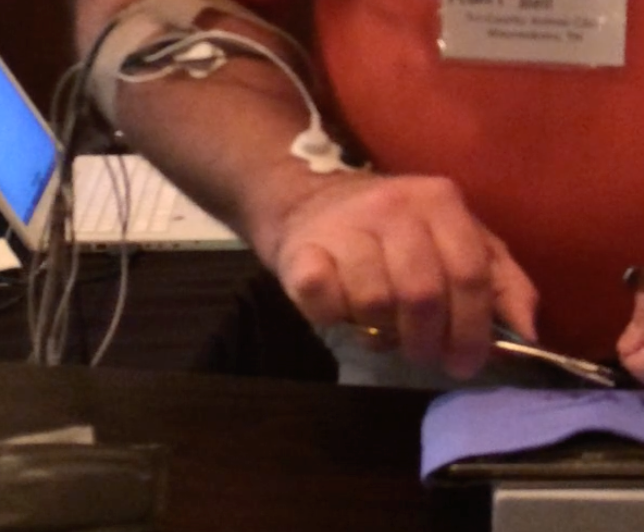
Four muscles in the right forearm region were selected for the electro- myography (EMG) study: extensor digitorum communis (EDC), flexor carpi radialis (FCR), flexor carpi ulnaris (FCU) and abductor pollicis longus/ extensor pollicis brevis (APL). The I-330-C2+ system (J&J Engineering, Inc., Poulsboro, WA) was used to capture the surface EMG data, with a bandwidth of 10-400 Hz and a common mode rejection ratio of 100 dB, with input impedance 10 GW and a notch filter of 60 Hz. The EMG signals underwent a 16 bit analogue to digital (A/D) conversion at a sampling frequency of 1024 Hz.

Bipolar Ag-AgCl surface electrodes (Norotrode 20, Myotronics, Inc, Kent, WA) with an inter-electrode spacing of 22 mm were used. The ground electrode was an 1 3/8 inch Ag-AgCl electrode (SilveRest, Vermed, Bellows Falls, VT) that was placed on the right upper arm above the elbow.

The locations for EMG electrodes were adopted from Perotto (2011) and Criswell (2011). Before attaching electrodes, the skin was prepared by abrading with a gauze sponge. After electrode placement, the skin impedance was checked using the impedance testing function in the I-330-C2+, and impedance below 900 KW was considered acceptable. 

Prior to starting the experiment, subjects were asked to perform two trials of resisted isometric maximum voluntary contractions (MVC) of 5 seconds each against manual resistance for each muscle. 

Video Recording

Each session was recorded using 1080p HD video at 30 frames per second using an iPhone 5S (Apple, Inc, Cupertino, CA). A single, front view recording of each participant was made, and markers in the EMG recording allowed synchronization of video and EMG recordings. 

Video recordings were used to examine posture during surgery using Rapid Upper Limb Assessment  (McAtamney & Corlett, 1993). RULA assessment was made at the time in the work cycle when the highest loads occurred, assessing the participant’s dominant arm, and applied just to the experimental condition (not extrapolated to a “typical” work day).

Protocol

Each participant stood at a table adjusted to their preferred height. Participants were then asked to use an 5.5 inch Olsen-Hegar needle holder (Spectrum Surgical, Stow, OH) and thumb forceps to place five simple interrupted sutures in a polyvinyl alcohol synthetic chamois skin model using 3-0 Monocryl suture on a 40 mm, ½ circle taper needle. Measurements taken during the first suture were not included in the analysis, in order to allow the surgeon to become familiar with the materials and task.

Data Processing and Analysis

The USE3 Physiolab (J&J Engineering, Inc., Poulsboro, WA) software was used to process the EMG data. Data processing involved full-wave rectification and smoothing with root-mean-square (RMS) with a 250 ms window. These data were then exported to Microsoft Excel to compute the MVCs for each muscle, and to SPSS to compute the 10th%, 50th% and 90th% levels of Amplitude Probability Distribution Function (APDF) for the four muscle groups. 

            Pain severity for each body region was calculated for each participant using the scoring guidelines accompanying the CMDQ and CMHQ (Hedge, n.d.). Frequency scores were assigned: never = 0; 1–2 times a week = 1.5; 3-4 times a week = 3.5; every day = 5; several times a day = 10. Discomfort scores were assigned: slightly uncomfortable = 1; moderately uncomfortable = 2; very uncomfortable = 3. Daily interference scores were assigned: not at all = 1; slightly interfered = 2; substantially interfered = 3. Pain severity was obtained by multiplying the frequency, discomfort, and interference scores for each body part. Total body pain severity for an individual was obtained by summing all the body pain severity scores for that individual. Total hand pain scores were obtained by summing the hand pain severity scores for that individual. Total overall pain scores were obtained by summing the hand pain and body pain scores for that participant. 

            Demographic, MSD, and EMG data were entered into SPSS. Pearson correlations were used to assess relationships between MSD and demographic and postural characteristics. APDF levels of different muscles were compared using paired sample t-tests.

Results

Demographics

            A total of 14 veterinarians participated in this study, including 10 (71.4%) females and 4 (28.6%) males (Table 1). The median age of participants was 43 years, with a range of 31 to 62 years of age. Median time since graduation from veterinary school was 13.5 years, with a range of 4 to 32 years. None of the veterinarians had obtained board specialty certification. Participants spent a median of 17.5 hours a week in surgery, with a range from 0 to 35 hours weekly. Two participants did not regularly perform surgery in their current jobs: one was in a management position and performed surgery on an as-needed basis, and the other was seeking employment. Both of these veterinarians had several years experience performing surgery.

Table 1 Cropped
Table 1. Participant demographic, workload, instrument grip, and discomfort data

Musculoskeletal Discomfort Prevalence 

The self-reported 1-week period prevalence of MSD was 92.9%, with 13 of 14 participants reporting pain. Of these, 7 (50%) reported hand pain, and 12 (85.7%) reported body pain. All who reported discomfort also reported that it interfered at least slightly with their ability to work. In the right hand, the most commonly reported areas of MSD were the distal thumb (first proximal and distal phalangeal area; 28.6%), and the thumb base (first metacarpal area; 28.6%). MSD was reported in some portion of the right thumb [phalangeal and metacarpal areas] by 42.8% of participants. Body MSD was most commonly reported in the lower back (71.4%), right shoulder (50%), and neck (50%). 

Pain severity was not correlated with age (r (12)= 0.233, p= 0.424) or hours per week in surgery (r (12)= 0.005, p= 0.987), and was unrelated to the sex of the participant (t(12) = -1.415, p=0.182).

Grasp Characteristics

            Eight of the participants reported using tripod grasp all or most of the time, and 5 reported using palm grasp all or most of the time. The remaining surgeon reported using the two grasps equally. Eleven participants (78.6%) reported having adopted their current grasp in veterinary school or before, whereas 3 participants (21.4%) reported to have modified their grasp after graduation from school.

Actual observed grasps differed from those reported by participants (Figures 1-5). Video analysis revealed that 5 participants used exclusively tripod grasp with the thumb and ring finger in the instrument rings (1, 4 tripod), one of whom routinely placed her fifth finger in the instrument ring with her fourth finger. Two participants used a modified tripod grasp with the thumb and middle finger (1, 3 tripod) in the instrument rings. Three participants used palm grip for suture placement (driving the needle through the substrate) and switched to 1, 4 tripod grasp during needle extraction and knot tying (palm/tripod). Three participants used palm grasp with no fingers in the instrument rings, and one participant used a palm grasp with the ring finger in one instrument ring.

14 Tripod
Figure 1. Instrument grasps used by study participants.: 1,4 tripod grasp
14 5 Tripod
Figure 2. Instrument grasps used by study participants: 1,4 tripod grasp with fifth finger in ring.
13 Tripod
Figure 3. Instrument grasps used by study participants: 1,3 tripod grasp
Palm
Figure 4. Instrument grasps used by study participants: Palm grasp.
Palm 4
Figure 5. Instrument grasps used by study participants: Palm grasp with fourth finger in ring.

Electromyography

Results of electromyographic recordings are presented in Table 2. In one participant, EMG readings were not obtained for FCU activity, as the electrodes loosened during the experiment.

Table 2
Table 2. Results of low (10th % APDF), median (50th % APDF), and high (90th % APDF) muscle activities for all muscle groups and each participant. All values are expressed as a percentage of the maximum voluntary contraction (%MVC) for that muscle in that participant.

EDC: extensor digitorum communis, FCR: flexor carpi radialis, FCU: flexor carpi ulnaris, APL: abductor pollicis longus/ extensor pollicis brevis. 
*FCU electrodes loosened on Participant 7, preventing data collection from this muscle

The 10th % APDF, representing the static load on each of the four muscles, ranged from 0.9 to 10% MVC, with greater mean values for the extensor EDC (M = 5.51; SD = 1.37) than for the flexors FCR (M = 3.27, SD= 1.62) and FCU (M = 3.33, SD=1.53). These differences were statistically significant, with EDC:FCR t(13) = 5.082, p<0.001 and EDC:FCU t(12) = 4.824, p<0.001, two tailed. This differential activation level persisted between the EDC and FCU at the 50th and 90th % APDF, whereas the mean activity level of the FCR increased by the 50th and 90th % APDF so that there was no difference at either time between EDC and FCR activation levels (Figure 6). 

APDF Graph
Figure 6. Muscle activation of extensors and flexors at the 10th, 50th, and 90th percentile APDF, expressed as a percentage of the maximum voluntary contraction (%MVC) for that muscle.

EDC: extensor digitorum communis, FCU: flexor carpi ulnaris, FCR: flexor carpi radialis. 
* significant difference between mean activation levels.

The unexpected diversity of grasp styles and small number of participants using each grasp prevented adequate comparisons of muscle activation patterns between grasps.

Postural comparisons

RULA assessments produced scores of 3 or 4 in all subjects, indicating that overall postural scores did not differ substantially between subjects, and that all fell into the moderate risk category. Variations in the degrees forearm pronation and supination were noted between subjects, with a range of 80 to 180 degrees of rotation (M= 125, SD = 26.5). The degree of rotation did not appear to be related to the instrument grasp, and was positively correlated with the total pain score determined on the CMDQ and CHDQ questionnaires (r (12)= 0.556, p= 0.039).

Discussion

There has been little previous research into the physical demands of high volume spay neuter surgery. A previous study of MSD prevalence in spay neuter veterinarians (White, 2013) found a 99.1% one-month period prevalence of MSD, which is slightly higher than the 92.9% one-week period prevalence reported in the current study. The body sites with the highest prevalence of MSD were the same in the two studies, with participants most often reporting body MSD in the lower back, shoulders and neck, and hand MSD in the right distal thumb and in the right thumb base. The previous study demonstrated increased MSD risk with increased weekly surgery hours and increased years of work, an effect not seen in the current study. However, these factors had weak explanatory power, accounting for less than 5% of the variability in MSD scores. This small effect size, paired with the smaller sample size in the current study, may account for this lack of effect. Neither study showed an effect of gender on MSD prevalence.

The EMG findings of greater static load on extensors compared to flexors is likely due to the extension of the metacarpophalangeal joints required to execute any of the needle holder grasps. During median and high load conditions, greater need for wrist flexion increases flexor load. Some of the increase with load in the FCR readings may also be due to crosstalk with the superficial digital flexor (Criswell, 2011), and may be related to creating a tighter instrument grasp as greater force is required.

The amount of grasp diversity between participants, the use of non-standard instrument grasps, and the variability in individual participants’ grasps, were surprising findings in the current study. Participants were often unaware of the grasp that they used. Several described themselves using a grasp different from the one that they actually used, and some noticed in the midst of the experiment that they were using a different grasp from what they had described. Even within a single grasp type, the participants varied in their movement patterns and degrees of forearm rotation and wrist angulation. 

Most of the participants claimed to have used their current instrument grasp beginning in veterinary school. However, the wide diversity of grasps, and the use of grasps not described in most veterinary or surgical texts, suggests either that the participants modified their grasps after leaving school, or that their veterinary surgical instructors taught or at least tolerated unconventional grasps. It is also possible that participants’ initial surgery instruction in veterinary school taught conventional instrument grasps, but that later in the curriculum, instructors failed to notice or failed to correct unusual grasps.

After leaving veterinary school, few practitioners receive instruction in instrument grasp or the biomechanics of surgical technique. Veterinary continuing education in surgery emphasizes processes at the “sharp” end of the instrument — the interface between instrument and patient tissue — but generally does not address the interaction between surgeon and instrument. Thus, practitioners are typically on their own as they develop and encode the motor sequences that comprise their practice of surgery. 

The process of acquisition of a motor skill such as suturing requires initial cognitive attention to the task and its components. After repetition, performance becomes smoother and the need to concentrate on the task decreases. Finally, the motor sequence becomes automated and the skilled performer loses conscious awareness of individual motor actions (Ericsson, 2004). This automation of learned action sequences into performance units occurs slowly through repetition without requiring conscious awareness (Graybiel, 1998). 

Surgeons and their patients benefit from the surgeon’s use of automated motor sequences. Automaticity allows the surgeon to execute complex motor sequences with relatively little cognitive load, freeing up cognitive space to attend to other aspects of surgical performance and optimal patient care. However, while beneficial, automated motor sequences may be difficult for skilled performers to describe or teach to others, to modify, or to break down into component parts (Hamdorf & Hall, 2000). In the case of veterinarians, much of this automation is likely to occur after formal surgical instruction has ceased. Thus, the grasp and movement patterns they ultimately adopt may be based on trial-and-error modifications to the techniques they were originally taught. The resulting variations in technique may be adaptive and beneficial, or they may be adequate but sub-optimal solutions in terms of biomechanics or performance (Bartlett et al., 2007).

In addition to diversity of grasps between surgeons, this study also noted instances of variability within individual surgeons’ grasps and movement patterns. In some cases, skilled performers show more variability than novices in the movements that they use to complete a task (Madeleine, 2010; Madeleine et al., 2008). This may be due to flexibility built into the automated motor sequence that they have acquired, or due to the acquisition of more than one automated motor sequence that can be used to complete the same task. For those with flexibility in their automated motor sequence, it is thought that this variability is made possible by the redundant degrees of freedom available in multi-joint movements (Srinivasan & Mathiassen, 2012). This flexibility allows the performer to adapt to perturbations and uncertainty while still completing the task (Bartlett et al., 2007). 

Some skilled performers possess more than one automated movement sequence to perform the same task, and have developed these redundant motor sequences through deliberate practice and refinement (Ericsson, 2004). Among participants in the current study, three reported modifying their grasp after completing veterinary school. Two of these reported making these modifications consciously, and both sometimes use palm grasp and sometimes use 1,4 tripod grasp, selecting their grasp based on ease, comfort, and the appropriateness of the grasp to the specific suturing task. 

It is likely that there is no single, unique movement pattern that optimizes performance (Bartlett et al., 2007). All of the veterinarians in the current study are experienced in high volume spay and neuter surgery, and each has performed thousands of procedures. The diversity in grasps, movement patterns, and muscle use described in this study all represent functional variations upon the task of suturing. Nonetheless, surgeons may benefit from developing multiple functional movement patterns that can be used to achieve the same task, both because this flexibility may lead to improved surgical performance, and because the increased variability may decrease repetitive strain. 

Differences between individuals performing the same task make it difficult to characterize biomechanical exposure and consequent risk based on job description or work hours, and also suggest a possible mechanism for the differences between individuals in MSD susceptibility (Srinivasan & Mathiassen, 2012). The current study did not evaluate variability per se, and only examined a single task within the larger task of surgery, so was not adequate to see the scope of variability within spay neuter work. Future research could examine whether increased motor variability in surgery can be taught, and if so, the optimal amount and type of variability. Also, future studies could examine whether teaching a new grasp and motor sequence could allow a surgeon to recover from MSD, and whether surgeons with more than one grasp and corresponding automated motor sequence are more resilient than those with a single movement pattern.

Conclusions

The present study found an unexpected diversity of needle holder grasps used by spay neuter veterinarians while suturing. All were characterized by extensor dominance during static load. Future investigation into the characteristics and benefits of various grasps is warranted, so that practical advice on reducing strain and MSD risk can be offered to surgeons. In addition, examination of current surgical instruction and learning may help explain the origination of the diversity of grasps encountered here.

References

Adams, S.R., Hacker, M.R., McKinney, J.L., Elkadry, E.A., & Rosenblatt, P.L. (2013). Musculoskeletal pain in gynecologic surgeons. Journal of minimally invasive gynecology, 20(5), 656-660. 

Anderson, R.M., & Romfh, R.F. (1980). Technique in the use of surgical tools. New York: Appleton-Century-Crofts.

Bartlett, R., Wheat, J., & Robins, M. (2007). Is movement variability important for sports biomechanists? Sports Biomech, 6(2), 224-243. doi: 10.1080/14763140701322994

Berguer, R., Gerber, S., Kilpatrick, G., Remler, M., & Beckley, D. (1999). A comparison of forearm and thumb muscle electromyographic responses to the use of laparoscopic instruments with either a finger grasp or a palm grasp. Ergonomics, 42(12), 1634-1645. doi: 10.1080/001401399184721

Booth, H.W. (2013). Instrument and tissue handling techniques. In K. M. Tobias & S. A. Johnston (Eds.), Veterinary surgery: Small animal: 2-volume set (pp. 201-213): Elsevier Health Sciences.

Criswell, E. (2011). Cram’s introduction to surface electromyography (2nd ed.). Sudbury, MA: Jones & Bartlett Publishers.

de Almeida, P.H., da Cruz, D.M., Magna, L.A., & Ferrigno, I.S. (2013). An electromyographic analysis of two handwriting grasp patterns. Journal of electromyography and kinesiology, 23(4), 838-843. doi: 10.1016/j.jelekin.2013.04.004

Ericsson, K.A. (2004). Deliberate practice and the acquisition and maintenance of expert performance in medicine and related domains. Academic Medicine, 79(10), S70-S81. 

Esser, A.C., Koshy, J.G., & Randle, H.W. (2007). Ergonomics in office-based surgery: A survey-guided observational study. Dermatologic surgery, 33(11), 1304-1313; discussion 1313-1304. doi: 10.1111/j.1524-4725.2007.33281.x

Graybiel, A.M. (1998). The basal ganglia and chunking of action repertoires. Neurobiology of learning and memory, 70(1), 119-136. 

Hägg, G., Melin, B., & Kadefors, R. (2004). Applications in ergonomics. In R. Merletti & P. Parker (Eds.), Electromyography: Physiology, engineering, and noninvasive applications (pp. 343-363). Hoboken, NJ: John Wiley & Sons, Inc.

Hamdorf, J., & Hall, J. (2000). Acquiring surgical skills. British Journal of Surgery, 87(1), 28-37. 

Hedge, A. (n.d.). Cornell musculoskeletal discomfort questionnaires (cmdq).   Retrieved 4 January, 2015, from http://ergo.human.cornell.edu/ahmsquest.html

Kirpensteijn, J., & Klein, W. (2006). Instruments. In J. Kirpensteijn (Ed.), Cutting edge: Basic operating skills for the veterinary surgeon (pp. 31-43). Ripon: Roman House Publishers Ltd.

Kozak, A., Schedlbauer, G., Peters, C., & Nienhaus, A. (2014). Self-reported musculoskeletal disorders of the distal upper extremities and the neck in german veterinarians: A cross-sectional study. PLoS ONE, 9(2), e89362. doi: 10.1371/journal.pone.0089362

Latko, W.A., Armstrong, T.J., Franzblau, A., Ulin, S.S., Werner, R.A., & Albers, J.W. (1999). Cross-sectional study of the relationship between repetitive work and the prevalence of upper limb musculoskeletal disorders. American Journal of Industrial Medicine, 36(2), 248-259. doi: 10.1002/(SICI)1097-0274(199908)36:2<248::AID-AJIM4>3.0.CO;2-Q

Looney, A.L., Bohling, M.W., Bushby, P.A., Howe, L.M., Griffin, B., Levy, J.K., Eddlestone, S.M., Weedon, J.R., Appel, L.D., Rigdon-Brestle, Y.K., Ferguson, N.J., Sweeney, D.J., Tyson, K.A., Voors, A.H., White, S.C., Wilford, C.L., Farrell, K.A., Jefferson, E.P., Moyer, M.R., Newbury, S.P., Saxton, M.A., Scarlett, J.M., Association of Shelter Veterinarians, S., & Neuter Task, F. (2008). The association of shelter veterinarians veterinary medical care guidelines for spay-neuter programs. Journal of the American Veterinary Medical Association, 233(1), 74-86. doi: 10.2460/javma.233.1.74

Madeleine, P. (2010). On functional motor adaptations: From the quantification of motor strategies to the prevention of musculoskeletal disorders in the neck-shoulder region. Acta physiologica, 199 Suppl 679, 1-46. doi: 10.1111/j.1748-1716.2010.02145.x

Madeleine, P., Voigt, M., & Mathiassen, S.E. (2008). The size of cycle-to-cycle variability in biomechanical exposure among butchers performing a standardised cutting task. Ergonomics, 51(7), 1078-1095. doi: 10.1080/00140130801958659

Matern, U., Kuttler, G., Giebmeyer, C., Waller, P., & Faist, M. (2004). Ergonomic aspects of five different types of laparoscopic instrument handles under dynamic conditions with respect to specific laparoscopic tasks: An electromyographic-based study. Surgical Endoscopy And Other Interventional Techniques, 18(8), 1231-1241. 

McAtamney, L., & Corlett, E.N. (1993). Rula: A survey method for the investigation of work-related upper limb disorders. Applied Ergonomics, 24(2), 91-99. 

Perotto, A. (2011). Anatomical guide for the electromyographer: The limbs and trunk: Charles C. Thomas Publisher, Limited.

Scuffham, A.M., Legg, S.J., Firth, E.C., & Stevenson, M.A. (2010). Prevalence and risk factors associated with musculoskeletal discomfort in new zealand veterinarians. Applied ergonomics, 41(3), 444-453. doi: 10.1016/j.apergo.2009.09.009

Seki, S. (1988). Suturing techniques of surgeons utilizing two different needle-holder grips. American journal of surgery, 155(2), 250-252. 

Smith, D.R., Leggat, P.A., & Speare, R. (2009). Musculoskeletal disorders and psychosocial risk factors among veterinarians in queensland, australia. Australian veterinary journal, 87(7), 260-265. doi: 10.1111/j.1751-0813.2009.00435.x

Soueid, A., Oudit, D., Thiagarajah, S., & Laitung, G. (2010). The pain of surgery: Pain experienced by surgeons while operating. International journal of surgery, 8(2), 118-120. doi: 10.1016/j.ijsu.2009.11.008

Srinivasan, D., & Mathiassen, S.E. (2012). Motor variability in occupational health and performance. Clinical biomechanics, 27(10), 979-993. doi: 10.1016/j.clinbiomech.2012.08.007

Szeto, G.P., Straker, L.M., & O’Sullivan, P.B. (2009). Examining the low, high and range measures of muscle activity amplitudes in symptomatic and asymptomatic computer users performing typing and mousing tasks. European journal of applied physiology, 106(2), 243-251. doi: 10.1007/s00421-009-1019-4

Toombs, J.P., & Bauer, M.S. (1993). Basic operative techniques. In D. Slatter (Ed.), Textbook of small animal surgery (2nd ed., Vol. 1, pp. 168-191). Philadelphia, PA: Saunders.

Weiss, Y. (1973). Simplified method of needle-holder handling. Archives of Surgery, 106(5), 735-736. 

White, S. (2013). Prevalence and risk factors associated with musculoskeletal discomfort in spay and neuter veterinarians. Animals, 3(1), 85-108. 

Yoon, H.-Y., & Mann, F.A. (2011). Instrument handling. In F. A. Mann, G. M. Constantinescu & H.-Y. Yoon (Eds.), Fundamentals of small animal surgery (pp. 128-142).

Computers and ergonomics: Working from home

Like a lot of people, I find myself working from home these days. Between the needs for social distancing and for preserving medical supplies, my “day job” as a spay neuter vet has been sidelined, so I find myself dreaming up new projects and spending more time in front of a screen.

As we find ourselves building office spaces at home, we may be faced with combining computers, chairs, and desks that were not designed for use together or that don’t fit well with our physical needs or proportions.

But what does a good ergonomic setup look like? Are there ways to improve a home office to make it more comfortable for more hours of use?

My home office setup

In order to explain some of the fundamentals of office ergonomics, I will use my own home office setup as an illustration. This is the space that I’ve used for various writing and editing projects, so I have been tinkering with the setup for a while to make the space comfortable for long periods of use. But you’ll also see that I have improvised a few solutions for items that just weren’t sized for me.

Home Office With Arrows
My home office. My laptop computer (red arrow) is connected to an external monitor and wireless keyboard. My mouse (green arrow) is elevated on a platform, and my feet are also on a riser (pink arrow). I’m using a chair with adjustable height and adjustable arm rests (yellow arrow).

Computer Equipment

I have a laptop computer and I love the flexibility and portability. When I am using the computer for reading (for example, reading an article or editing a book chapter), I’m usually on the sofa or a recliner rather than in a desk-and-chair setup. But when I really want to get down to work and do a lot of typing or visual design (for example, writing this post, writing a book, editing photos) I use my laptop with an external monitor and wireless keyboard, essentially turning it into a desktop computer.

Laptop ergonomics

The problem with laptops is that they are built for portability rather than good ergonomics. When the keyboard is at a comfortable height (say, on a pillow on your lap on the couch), the screen is too low so you end up with your neck bent at something like a 30 degree angle. This may be especially problematic for people (like surgeons) who already have jobs that necessitate a forward-bent neck.

Conversely, when the laptop screen is elevated to a height that allows the user to look at the screen with minimal neck bending, the attached keyboard is much too high for comfortable use.

It is possible to have good ergonomics with a laptop and either an external monitor or a separate keyboard. To use a laptop with a separate keyboard, the laptop should be placed on a laptop stand or an elevated platform (a box, a stack of books) that places the top edge of the laptop screen at or slightly above eye level, and the keyboard should be placed at or just below elbow level. To use a laptop keyboard with a separate monitor, the monitor should be placed so that the top edge of the monitor is 2-3 inches above eye level, and the laptop placed so that the keyboard is at or below elbow level.

I chose to have both an external monitor and external keyboard because I want a large monitor (for giant spreadsheets or side-by-side editing) and also a larger, more supportive keyboard compared to the built-in laptop keyboard. So in my setup, the laptop sits closed on the monitor base and provides the processing and computing power, but I don’t use the laptop screen or keyboard when I’m working at a desk.

Keyboard

The computer keyboard should be placed at or below elbow level. Most keyboards are level or slope slightly towards the user, but some research has shown that it’s actually better for hand and wrist posture if the keyboard is tilted slightly “downhill”away from the user.

IMG 7676
My keyboard and mouse. The keyboard tray height is good for keyboarding, but too low for mousing, so a textbook serves as a mouse pad platform. Note also the closed laptop computer and the separate number keypad.

For regular typing (words, sentences, paragraphs), the keyboard should be centered in front of you. However, if your keyboard has an attached number pad and you are doing a lot of number entries, you will have the least strain if the number pad is located in easy reach of your dominant hand, which may mean that the keyboard is placed off center from your body.

The keyboard that I use has a separate number pad. The main reason that I like this is so that the keyboard itself is more compact, which means my mouse can be placed closer to my hands. With my previous long keyboard with attached number pad, I found myself constantly leaning, straining, or twisting to reach the mouse, especially at times when I was alternating between mousing and typing.

Seating

(I used this reference to help write this section)

The best type of chair for home office work will vary with the type of computer work being done, and also depends on the person or people using that seating. Most of the time, an office chair with adjustable height, adjustable back rests including lumbar support, and adjustable arm rests is recommended. Unless the chair back is reclined to 120 degrees or greater, a headrest is not necessary (although some may find it comfortable to have one).

The chair should fit the user: the width of the seat pan should support your thighs but not be so long that it contacts the backs of your knees, as this may be uncomfortable and may also obstruct blood circulation. The width of the seat pan should allow an inch or so between the outside of the thighs and the armrests. Armrests that are mounted to the chair back rather than on pillars attached to the seat pan will allow a bit more thigh clearance for those that would benefit from this. For users who can not find a chair whose arm rests are placed far enough apart to fit their thigh width comfortably, an armless chair may be most suitable. Similarly, in circumstances where the job demands getting up and down often, chair arms may get in the way and an armless chair (or a chair whose arms swing out of the way) may be better for these jobs.

Adjusting the chair

The height of the chair should be adjusted so that the user’s feet can be placed flat on the floor. While this seems simple enough, if you are working with a fixed height desk and adjustable height chair, you may find that when the chair height is adjusted properly for the length of your lower legs, the desk height is all wrong for the height of your keyboard (see the previous section on keyboards).

IMG 7584
My elevated footrest: a textbook from the first semester of ergonomics graduate school. I’m pretty sure the authors would be proud of the ongoing use of their heavy tome.

If your legs are short and/or your desk is high and fixed height, a footrest can help fix the geometry of your office space. There are commercially made footrests for office workers for just this reason. In my case, I improvised, using a textbook as a footrest, and have been content with this solution.

If your legs are long, once you have adjusted your chair you may find that your desk is too low and not adjustable. Elevating the desk using wood blocks or bed risers would get the geometry back in sync.

If you are working with a chair without height adjustments, you may have to improvise a bit on your office configuration in order to get the geometry of your office as low-stress (ergonomically) as possible.

Armrests

Armrests should be adjusted to the height of the user’s elbows while seated. Most of the time while using the computer, you don’t actually use the armrests: as I am typing in the picture below, my arms are not on the armrests at all. However, in the next picture I use both armrests as I sit back and use the mouse and not the keyboard

IMG 7674
Keyboarding posture. When I’m keyboarding I don’t use the arm rests. I’ve pulled my chair a little further forward than when just reading or mousing, so that the arm rests overhang the keyboard tray by a few inches. My elbows are relaxed by my side. The keyboard tray is low enough and slightly angled downward to avoid having an extended wrist angle.
IMG 7644
Mousing posture. I’m using both armrests and leaning back on the chair back. My right armrest, along with the elevated mouse pad, lets me keep a straight wrist and relaxed hand while I cruise Google Scholar.

Desk

The ideal desk would be adjustable in height and would have a separate keyboard tray that was also adjustable. My own desk has one out of two: it has the keyboard tray, but the desk and tray are at a fixed height from the ground. This fixed height is the reason I have to raise my chair enough that I require a footrest. If my desk (or even just the keyboard tray) was adjustable, I would be able to lower the keyboard by a couple of inches, lower my seat, and not need the footrest.

Positioning and posture

IMG 7574
The screen is about an arm’s length from my face.

Once you have the computer equipment and you have adjusted the chair and desk (and optional footrest and any other MacGyver ergonomic devices), the next task is figuring out how to positioning use them.

The monitor or screen should be about arm’s length away. Most of the time, the monitor should be straight ahead of the user. For tasks where you will be using one side of the monitor more than the other (left-justified word processing on a wide screen), it may be best to center yourself on the working part of the screen.

If you will be using more than one monitor, centering can be more difficult. If both monitors are used equally then you can place the dividing line between the two straight ahead so that you don’t have to look very far to either side to see either screen. If one of the two monitors is used much more frequently, then that one should be straight ahead and the secondary monitor placed nearby in the field of view (beside or perhaps above or below the main monitor)

posture

Your body posture should be relaxed and supported by your chair, just as your lower legs are supported by the floor or footrest. Your chair is the anti-gravity device that keeps you from having to expend muscular effort to keep yourself upright. Sit in your chair in a way that lets you take advantage of this.

And remember, just like when doing surgery, it’s important to take breaks to rest and stretch. Much of the early research on micropauses took place in an office environment, and the data supporting break-taking as a way to decrease fatigue and pain and increase performance is impressive. Micropauses can be just a minute or so every twenty or thirty minutes and should consist of changing position and stretching or moving. Try set a timer for microbreaks or, failing that, try to hydrate enough that trips to the bathroom are inevitable reminders to pause and stretch.

What about standing desks?

Standing desks are a great idea for encouraging movement and offering a change in position through the day. As someone who stands for work most of the time, I haven’t set up a standing desk for myself. Ergonomists don’t necessarily find that standing desks are better than sitting, but what they do find is that being able to change position through the work day is important.

Some workplaces have adjustable height desks and chairs so that workers can remain at the same workstation and, with the press of a button, convert that workstation from sitting to standing and then back again. People working from home (especially on a short term, emergency basis such as during a pandemic) are much less likely to have these adjustable desks and so must improvise. One worthwhile option is to configure both a standing desk and a sitting desk, and perhaps have each of these spaces set up for different tasks, so that desk height switching is enforced whenever task switching is necessary.

For standing desks, the relative configuration of the keyboard and monitor with respect to the user’s eyes, shoulders, and elbows should be the same as for sitting desks. The top of the monitor should be slightly above eye level. The keyboard should be at about elbow height or slightly below when the shoulders are relaxed and the upper arms hang slightly in front of vertical beside the body. Flooring and footwear should be comfortable, and consider using a floor mat, especially if standing for several hours.

Meanwhile…

IMG 7534 3
Moe judges me while I try on my mask.

As for me, I’ve been healthy but find myself on an enforced vacation of unknown length. Unlike other jobs where you can work from home, spay-neuter doesn’t work well from a distance. I made myself a surgery mask in hopes that I could donate my my disposable masks but still return to work sometime soon, but for the short (and medium?) term, it looks like self-isolation is key.

So what is a spay neuter vet and book editor to do? I’m seriously toying with writing the next textbook, the one I’ve known for years was needed but never had the time to work on: Ergonomics in Veterinary Medicine. Will I or won’t I? I’ll let you know as soon as I know…

The Spay Neuter Textbook is Here!

Textbook cover image for High Quality High Volume Spay Neuter and Other Shelter Surgeries textbook.

Those of you who have spent any time with me during the past 2 years have probably heard about my work as the editor of the long-awaited Spay Neuter Textbook. Well, it’s finally here! The e-book version has been available for a few months, but the print copies just arrived at the publisher’s this week.

Want to order a copy? This link will take you to Wiley’s page for the book with links to various sellers. And when you receive your copy, let everyone know what you think by reviewing the book on Amazon.

This book is the product of the dreams and hard work of a lot of people: there are dozens of contributing authors with a variety of areas of expertise, and I have been honored and humbled to work with them all.

So what’s in the book? Who is it for?

I could write a long blog post on this from scratch, but I realized that I already answered these questions when I wrote the book’s preface and acknowledgements. So I’ve included these two sections here to answer these questions and to provide a sense of the history, context, and organization of the book.

I hope that this is the book you’ve been looking for — enjoy!

Why do we need a spay-neuter textbook?

Spaying and neutering are often the first (and in some cases, the only) surgeries that students learn in veterinary school, and are expected skills for every new graduate in general small- or mixed-animal practice. It can be tempting to dismiss them as “beginner surgeries,” the easily trivialized but sometimes terrifying rites of passage into the veterinary profession. Perhaps because spaying and neutering are skills learned so early and repeated so often in a general practitioner’s veterinary career, they are rarely the subject of continuing education seminars and articles, and general practitioners may go their entire career without modifying or even questioning the techniques for spaying and neutering that they learned as third-year veterinary students. 

At the same time, spaying and neutering have been central to efforts to reduce the overpopulation and euthanasia of unwanted and unowned cats and dogs. The spay-neuter clinics and programs that arose over the past several decades recognized the need for minimally invasive, efficient techniques that would shorten surgical times and improve patient recovery. This textbook pulls together many of the surgical, anesthetic, perioperative, and operational techniques discovered, developed, and popularized over the decades by these innovative spay-neuter pioneers. 

As the field of spay-neuter developed, practitioners recognized the need for greater acceptance and clarity. In 2006, a task force was convened that developed the first guidelines for medical care in spay neuter programs; this document was published in JAVMA in 2008 as The Association of Shelter Veterinarians veterinary medical care guidelines for spay-neuter programs (Looney et al., 2008). The goals of these guidelines were to promote acceptance of spay-neuter practice by the veterinary profession and the public, as well as to provide guidance for veterinarians and spay-neuter programs regarding standards of care and practices based on scientific evidence and expert opinion. The ASV Spay Neuter Task Force reconvened in 2014 to update and expand the document, resulting in The Association of Shelter Veterinarians’ 2016 Veterinary Medical Care Guidelines for Spay-Neuter Programs (Griffin et al., 2016).

High-Quality, High Volume Spay Neuter (or HQHVSN, the awkward but now widely used acronym adopted by the first Spay Neuter Task Force) is the field of veterinary medicine that began with the efforts of spay-neuter pioneers in the 1970s through 1990s and became firmly established and advanced by the publication of the 2008 and 2016 spay-neuter guidelines. HQHVSN is defined as “efficient surgical initiatives that meet or exceed veterinary medical standards of care in providing accessible, targeted sterilization of large numbers of cats and dogs to reduce their overpopulation and subsequent euthanasia”(Griffin et al., 2016). 

Until now, practitioners new to HQHVSN or isolated in their practice have had no single place to turn to find out about HQHVSN techniques and protocols and the evidence supporting them, or about spay-neuter program types, their implementation and staffing, and their effects on animal populations and individual animal health. Many of the techniques used in HQHVSN have been taught at conferences and mentorship programs and shared and spread between practitioners, and many have been subjects of peer reviewed research; however, few appear in textbooks. Nevertheless, the medical, surgical, and perioperative care described in this book need not be limited to high-volume or shelter settings—they are applicable wherever veterinary surgery is performed.

This book is divided into two parts, and each of those parts divided into several sections. Part 1, Clinical Techniques and Patient Care, is concerned with evidence-based clinical knowledge and skills including perioperative, anesthetic, and surgical techniques. Part 2, Fundamentals of HQHVSN, introduces the high-volume surgical setting and the special organizational, logistical, and epidemiologic challenges that arise when striving to optimize the clinic’s operations and impact.

The book is intended for a range of audiences: from the veterinary student to the experienced HQHVSN practitioner, and from the veterinary technician to the aspiring spay-neuter clinic founder. Part 1 begins with chapters on determination of patient sex and neuter status, reproductive anomalies and pathologies, the selection of surgical instruments and suture, infectious disease control, asepsis, and stress reduction in the clinic. The sections on anesthesia and surgery cover general principles as well as specific techniques and protocols, including chapters on avoiding and managing both anesthetic and surgical complications, and a chapter on anesthetic and surgical techniques in rabbits and other small mammals.

While many of the techniques covered in Part 1 are well known to experienced HQHVSN surgeons, some of the anomalies, complications, and complicated presentations are unusual and may be once-in-a-lifetime cases for some. Experienced practitioners may also learn of useful variations on or alternatives to their accustomed techniques, or learn new ways of preventing or addressing frustrating complications. 

Part 1 concludes with a section on other common shelter surgeries and associated anesthetic procedures, and can serve as a reference for shelter surgeons with a variety of levels of experience. This section includes amputations, eye surgeries, vulvar or rectal prolapse treatment, and dental extractions.

Part 2 of this book moves away from the clinical care of individual patients and into the structures and systems fundamental to HQHVSN, with sections on population medicine, human resources and wellbeing, and HQHVSN program models. Optimizing the potential of HQHVSN requires more than just proficiency in the clinical care (anesthesia and surgery) of individual patients. Effective HQHVSN programs must understand the effects of their interventions on animal populations and individuals; they must combine their clinical skills with appropriate staffing and facilities to allow an efficient and streamlined workflow; they must institute systems that are financially, physically, and emotionally sustainable. Chapter 23 serves as an introduction and roadmap to the second half of this book. The material in this second half of the book should be of interest to anyone seeking to establish a new HQHVSN program or improve an existing one.

Acknowledgements and Deepest Thanks…

First, I want to thank the original four editors of the book: Brenda Griffin, Karla Brestle, Philip Bushby, and Mark Bohling. These four veterinarians have been instrumental in establishing and promoting the field of HQHVSN; this book would not have existed without them. I have had the privilege of working with all four of these people in different capacities over the past decade and a half: as teammates on the ASV spay neuter task force and co-authors on the 2008 and 2016 Guidelines, as co-teachers in pediatric spay neuter wet labs, and finally as contributing authors to this textbook. Thank you for being my mentors and colleagues, and for believing I could do this. Thanks especially to Brenda, who during my editorship has been my cheerleader and sounding board, my informant and historian, and a bridge between the original vision for this book and its evolution and re/vision. The encouragement, context, and friendship you have offered throughout this process has supported and inspired me.

I also want to thank all the HQHVSN and shelter veterinarians I have met over the years in person and online. My early teachers in this field were all virtual (but real!) colleagues who took the time to explain and describe surgical techniques in words, back in the days of dial-up internet, before YouTube. From the sheltervet electronic mailing list that I joined in 2001 to today’s shelter veterinary and spay neuter Facebook communities and hqhvsnvets online group, you have been and continue to be my mentors and my inspiration. Thank you also to my online colleagues who contributed photos for this textbook—your eagerness, openness, and surgical and photographic skills have made this book better.

And a huge thank you to all the authors who have contributed chapters to this textbook. It is your expertise that has driven the field of HQHVSN forward and that makes this book all that it is. This book is a first edition, but it is also a revision: by the time I signed on as editor in early 2018, many of the submitted manuscripts had become dated. I want to thank the authors for their patience and willingness to revise or even overhaul these chapters in order to make the materials as relevant, timely, and useful as possible.

And finally, thanks to my wife Tina, who kept the refrigerator full and the woodstove stoked during my many long hours of writing and editing. 

Want to order a copy? This link will take you to Wiley’s page for the book with links to various sellers. And when you receive your copy, let everyone know what you think by reviewing the book on Amazon.

Pool Shock at the clinic? Yes– here’s why

This post goes along with the JIFFI post about surgical hand hygiene from last year, since it’s about a low-cost way of keeping the surgical environment clean. For a lot of people, this will be old news, but for anyone who hasn’t used calcium hypochlorite to disinfect in their clinic, or who is wondering about the research behind this disinfectant and its preparation, read on–

Origin story

Back in the fall of 2010, in the days of Trifectant, before accelerated hydrogen peroxide took the shelter disinfection world by storm, my friend Brenda was raving about a kennel cleaner called Wysiwash. The active ingredient is calcium hypochlorite, and the product is sold as a hose-end sprayer for kennel disinfection. There was a lot to be excited about: it’s cheap and effective against most of the pathogens we’re worried about in veterinary care, it’s much less irritating than bleach, and it doesn’t need to be rinsed away.

But I have a MASH mobile spay neuter clinic: I don’t have kennels or a hose, and I only need a gallon or two of disinfectant every day. How could I use this product? Sure, I could put a hose-end sprayer on a hose at home and fill a jug, but how would that work in the winter when the hoses are frozen solid? I decided there had to be some other way to purchase and mix calcium hypochlorite.

Researching an alternative

After spending some time on Google, I found that one of the most easily available forms of calcium hypochlorite is swimming pool shock. But how much to use? And which type?

Fortunately, Wysiwash and many of the pool shock suppliers also provided online copies of MSDS (now SDS) sheets listing the chemical composition of each product. After downloading a bunch of these MSDS sheets, I was able to find Turbo Shock, a pool shock product with the same chemical composition– the same components, in the same proportions– as Wysiwash. Turbo Shock is supplied as a white granular powder and can be purchased in a 1-pound bag.

Next I had to figure out how much to use. For that, I turned to the technical information page on the Wysiwash site and found this paper describing how to make a 2x solution of Wysiwash in the lab. Armed with that information and the density of the pool shock (also from the MSDS), I was able to make the calculation that you would need just over 1/16 teaspoon of Turbo Shock per gallon of water to make the same strength solution as the hose-end sprayer. For practical reasons (the smallest plastic measuring spoon I can find is 1/8 tsp, and metal measuring spoons rust almost immediately when used in pool shock), I end up using a 2x concentration, mixing 1/8 tsp per gallon. At this rate, it takes me a few years to go through just one bag of Turbo Shock.

I started using this solution that fall, and by spring of 2011, I mentioned Turbo Shock using in a conference presentation at the SNIP Summit in Asheville. After that presentation, other spay neuter and shelter vets have started using calcium hypochlorite solution made from pool shock, especially for disinfecting endotracheal tubes, masks, and pulse oximeter probes between patients, and in some cases for disinfecting animal contact surfaces such as scales and tables.

But wait…!

So I know what y’all are thinking: “What about that 2015 article by Dr. Karen Moriello showing that calcium hypochlorite was ineffective against ringworm?” I read this one too, but I’m not quite ready to throw the baby out with the pool water.

In this study, in order to obtain the calcium hypochlorite solution, a Wysiwash hose-end sprayer was used and the solution was collected midstream after the hose had run for 3 minutes. One of the downsides of a hose-end sprayer is that you have to take it on faith that the correct amount of disinfectant is being dispensed at any given moment. This made me wonder– what if the solution that was being dispensed from that hose was not as concentrated as it should have been? What if there was something wrong with the sprayer and there wasn’t any calcium hypochlorite in it at all? The strengths of the various solutions used in the study were never verified; for the study design, this was appropriate (after all, she was using kennel disinfectants according to label and assessing their effectiveness), but it doesn’t tell me for sure that a solution of calcium hypochlorite is ineffective against ringworm fungus.

So if any of you who are reading this are students, interns, or residents and you’re looking for a project, I would love to see the calcium hypochlorite portion of this study replicated with a known or verified concentration of the chemical. This could be done by testing the chlorine content of the solution, which should be between 60-70 ppm for a 1x solution or about 120 ppm for a 2x solution, and could be tested with commercial chlorine test strips. Why not test both strengths and let us all know how it turns out?

Pro tips

As I mentioned above, calcium hypochlorite powder can corrode metal when in prolonged contact (I have had no problem with the mixed solution causing damage when disinfecting metal surfaces, though). Avoid using a metal measuring spoon. I’ve also been told that one clinic that stored a bag of pool shock under their sink found that just the fumes from the bag of pool shock corroded the metal pipes under the sink– so be careful and store away from metal. Plastic measuring spoons and plastic storage containers seem to hold up well.

Since it takes me a long time (years) to go through a 1-pound bag of Turbo Shock, I dispense the powder into a labeled pill vial to carry with me to clinics. I re-seal the pool shock bag by rolling down the edge and using a rubber band to secure it (the metal clip in the photo attached to this blog post? Completely rusted now).

It’s also probably obvious (if you think about swimming pools, or chlorine bleach), but calcium hypochlorite is not a detergent or a cleaner: it’s a disinfectant, but it won’t do any more than water would do to clean slimy, messy, dirty objects. For anything that’s dirty, slimy, etc (including endotracheal tubes), clean first (soap and water!), then disinfect.

The HQHVSN Workplace

Years ago, in 2011, I set out to study spay neuter veterinarians with the aim of finding out about musculoskeletal pain risk factors and what we might be able to do about them. The resulting study was published here, but as with many research surveys, I collected data as background information that never made it into a publication (other than as a poster abstract in the 2012 Midwest Veterinary Conference proceedings). Although this extra data is not exactly groundbreaking, there are some interesting tidbits about our field, and even though the results are from a 2011 survey, I think many of the findings are still relevant. This is exactly the sort of research that the Journal of Incidental Findings and Freelance Inquiry (JIFFI) was designed to publish. So enjoy!

Characteristics of spay and neuter employment positions and contributors to efficiency

Methods: Online survey of veterinarians who currently or previously spay and neuter at least 4 hours per week.  Responses were solicited via the Association of Shelter Veterinarians’ Sheltervet listserv, the HQHVSNvets listserv, and conference attendees at the 2011 SNIP Summit, yielding 228 useable responses.

Results:

Demographics 1024x362
Where Do Sn Vets Work 2 755x1024

Where do spay neuter vets work? Lots of places, though most are in a stationary venue. And a lot of spay neuter vets work in more than one place, too– more than one shelter or clinic, or doing mobile and stationary spay neuter work for the same organization.

Characteristics By Clinic Type 1024x499

Of veterinarians in the four most common clinic types, mobile veterinarians have the longest total workdays (median 12 hours) and perform the most surgeries (median 34 daily) with a large staff (median 4 per veterinarian), but their surgery time is similar to veterinarians in stationary clinics and shelter clinics serving the public (median 6 hours daily).  Shelter-only clinics see fewer patients (median 18) in a shorter surgical workday (median 5 hours) with fewer staff (median 2 per veterinarian).

Efficiency And Staffing 1024x535

Clinics with 4 or more staff or volunteers per veterinarian performed more surgical units per hour (median 5.4) than clinics with one (3.28), two (4.57), or three (4.69) staff per veterinarian.

Why Part Time 1024x672

Approximately half of the surveyed veterinarians (116/216) work full time in spay/neuter.  For part-time spay/neuter veterinarians, in addition to having other job duties that limit time in spay/neuter, factors preventing full time spay/neuter work include finances (14.8%), prevention of burnout (58.2%), physical and musculoskeletal health (45.1%), family (36.0%), and limited availability of spay/neuter jobs (41.6%).

Lunch Break 1016x1024

I like lunch, so I asked about it. Most spay neuter vets don’t take a lunch break during their spay neuter work day. It’s not necessarily as daunting as all that, though– many vets finish surgery mid-day, so can eat before and after surgery rather than breaking in the middle of surgery. For my MASH clinics, though, I insist on a sit-down lunch break if the surgery day will last past about 1:30 pm. Less efficient, maybe. Less hangry, definitely.

Discussion:What are the takeaways from this snapshot into the spay neuter workplace of 2011?

For me one of the most obvious, intuitive, but potentially overlooked (by management) findings is that having more support staff equals more surgeries per hour.

Since finding out about staffing levels wasn’t the main objective of the survey, there is still a lot we can’t say about how staffing and surgeries per hour relate to each other. I assume that having more staff doesn’t actually make a surgeon cut and sew faster– it just means that the surgeon gets to spend more time cutting and sewing, and less time restraining, injecting, waiting, or doing any other activity that keeps them away from the surgery itself.

For low volume clinics, this decreased efficiency from lower staffing levels may not be a problem. Sure, things could go more quickly, but the work gets done. But for anyplace looking to increase their efficiency, increasing staffing level is a good place to start.

Is this what our field of HQHVSN looks like now? Probably, mostly yes. Maybe I’ll ask again in a few years…

Mega-MASH clinic: The Spayathon for Puerto Rico

MASH spay and neuter clinics are nothing new for me: during the past 13 years I’ve done well over 1000 MASH clinic days in Vermont and New Hampshire. My own MASH clinics are small: one veterinarian, one veterinary technician, and between 2 and 10 other volunteers or shelter staff. We set up our clinic for just a day at a time and see somewhere between 20 and 60 patients in a day (depending on dog or cat, male or female).

But recently, I’ve had the chance to participate in Spayathon for Puerto Rico: four, one-week-long rounds of multi-site, multi-vet MASH clinics. I’ve spent Spayathon Rounds 2 and 3 with the group Veterinarians for Puerto Rico, a fabulous new group formed in the wake of Hurricane Maria. The Spayathon for PR clinics are large: some sites like ours served between 150 and 200 (or so) patients a day with about 4-7 veterinarians in surgery each day, while the biggest location served about 500-600 patients a day with about 20 vets in surgery each day. Lots of people have posted cute pictures of pets and owners at Spayathon and talked about the rewarding and exhausting experience of volunteering– just search #spayathon4pr to see some examples– so here I’m going to talk about the logistics and flow (physical and organizational ergonomics) of running a large MASH clinic like this.

Screen Shot 2019 02 11 At 3.22.15 PM
Before: The community center in Toa Baja that would become the Vets for PR surgery site during Spayathon4PR round 3. The surgery area pictured at the beginning of this post is the area to the left in this picture.

52029367 380525419346909 4441048857542918144 N
Without these volunteers, Spayathon would not be possible

Large MASH clinics are full of logistical challenges. How do we create a safe and efficient flow of animals through the clinic? How do we keep the animals and the people as safe and un-stressed as possible? How do we make the best use of the space we have for the clinic? How do we make the best use of the dozens of volunteers at each site?

This round, utilizing our limited indoor space as efficiently as possible was one of our biggest challenges in Toa Baja. While the community center looked large when it was empty, it was much smaller than the sports arena we had occupied in round 2 in Aguada.

51451684 10156817565968950 2516210271148572672 O 768x1024
A client waits with her dog until it’s time for her dog to go inside for surgery

One of the space-savers was using the covered balcony area for dog physical exams; clients and dogs also waited outdoors (under the cover of tents, on the balcony, in the shade of the building, or on the small lawn) until it was their dog’s turn for surgery. When it was time for the dog to come inside for surgery, the owner was there too. Pets who had received their anesthetic injection waited in their owners arms or on a bed on the floor until the sedation kicked in and they fell asleep.

51730729 10157043295621730 6604349895136509952 N
Clients wait with their dogs in the induction area. The dogs closest to the curtain towards the back of this picture have received an anesthetic injection.

Cats were a little different (they’re cats after all…). We admitted the cats in their carriers into the building so that they could have physical exams in a confined space, rather than using the open-air balcony with the dogs.

51650051 10155816890266791 2729498987018059776 N
Cats and more cats waiting for physical exams
51700486 10156827810233950 6638978717500571648 O 1024x774
Watching cats fall asleep may not be the most glamorous job, but it’s one of the most important.

Once the cats were examined, they could be injected with anesthesia and brought out to a post-induction table (aka Kitty Sleepover Party) where they could be under continuous observation until they were anesthetized enough to move to a surgery prep table.

Dogs too were moved into surgery prep– this is where their pathway merges with that of the cats. And after prep, patients were moved to an unoccupied surgery table.

IMG 5251 1024x768
Veterinarians for Puerto Rico surgery area during Spayathon for Puerto Rico Round 3 in a community center in Toa Baja. The Kitty Sleepover Party table is located in the lower left of this picture, and surgical prep tables are on the lower right. The entrance from dog induction is to the right, outside the view of the photo. In the background are the 10 surgery tables (8 around the edges, two in the center), each with an anesthesia machine.

As in many high volume settings (but not in my own MASH clinics), the Vets for PR surgery area had more surgery tables than surgeons. This mean the surgeons don’t have to wait for the exchange of patients on their table; they can re-glove and move directly on to the next surgery. It also allows the postoperative patients an extra minute or two on the anesthesia machine, to breathe oxygen and breathe out the anesthetic gases before being moved to recovery.

IMG 5254 E1549919006204 1024x641
The beach

After surgery, animals were moved directly to Recovery 1, or “the beach.” Here they were attended by a team of veterinarians, technicians, students, and volunteers who watched their recovery and recorded their temperature, pulse, and respiration at intervals throughout their recovery. The beach was all soft padding, heating pads, and “warmies,” the hot water bottles and rice socks that were microwaved and re-microwaved throughout the day to help the patients warm up. (The air-conditioned facility, while comfortable for most of the workers, was chilly for anesthetized patients, so we had to make efforts throughout the day to keep them warm, including heating pads on the tables in surgical prep and in surgery).

IMG 5252
Recovery 1 area (“The Beach” 🏖) located just off the surgery room. Dogs on the floor, cats on the countertop.
IMG 5255
The beach 🏝 from above. Veterinarians and technicians from the MSPCA in Massachusetts set up for the influx of patients. Having the small patients at an easy-to-reach standing height table makes caring for and monitoring them easier on the volunteers.
51748854 10156821984523950 1840761371759738880 N
Owners helped in recovery, sitting with and holding their pets until ready for discharge

Once patients were warm and alert, they could leave the Recovery 1 beach and be reunited with their owners in Recovery 2. Veterinarians, technicians, and other volunteers watched over the roomful of “pet parents” waiting with their animals until the animals were recovered enough for discharge. An instructional video played, and owners also received instructions from and were able to ask questions of the vets and techs. Once their animals were recovered and ready to go home, they were discharged with post-operative instructions and emergency contact information, along with donated pet supplies and pet food.

51563368 10156821984633950 1642992202386767872 N 1

Once the animals were gone, the work wasn’t done: data had to be entered from all the medical records into a centralized database that would allow researchers to study the users (clients and pets) and outcomes of the Spayathon clinics. Our site in Toa Baja had such limited indoor space that the data entry station was in a tent outdoors that was in theory air conditioned but was in actuality a bit of a sauna. Also, the data tent was the volunteer lounge and lunch tent, so data warriors also got to be lunch patrol (“only two plantains per person!”; “save the pitas and hummus for the vegans!”). Next round, we’re hoping for a space that puts these folks back inside the building in a climate controlled setting.

51996463 10156820057388950 3867064106640998400 O
She’s not just wearing a harness, it’s a dress. How could I resist an embarrassed calico?

Meanwhile, I got to spend my time between many different areas of the clinic, but mostly between induction, prep, surgery, and recovery 1, trying to keep an eye on the big picture and flow, and pitching in where I could (and trying to remember to take pictures here and there). It was a great experience working with so many talented and dedicated people, and I’m looking forward to going back to the fourth round of Spayathon for Puerto Rico in May!

Veterinarian of the Year

Just over a week ago, I had the honor of receiving the Association of Shelter Veterinarians 2018 Veterinarian of the Year Award. I’d learned that I would be receiving the award a couple months before, and at the time had been pretty stunned. Me? Seriously?

As you know from this blog, I do research and writing projects, some with other people, and more on my own. Since I work on my own, outside of any institution or organization, I don’t have committees, approval, or funding (except on a few projects I’ve worked on with others, for which I have written grants), I don’t have an institutional mission telling me which research topics are of interest to the university, a big donor, or the board of directors, and which topics may be too uncomfortable, difficult, or controversial. For me and my interests and tendencies (i.e., doesn’t always play well with others; has trouble recognizing the preeminence of authority figures), this has mostly been convenient. It has allowed me to follow my interests of the moment, to ask and then try to answer awkward or thorny questions, and to wander.

But it has also meant that I often don’t know how many people have even noticed what I’ve written, if they have read it, and what they think of it. It also means that I have learned to become my own publicist. Thus, I’m writing this braggy blog post in the same way that I worked on press releases for my last two papers– putting it out there because if I don’t announce my own accomplishments, who will? (OK, probably ASV will later, beyond their post in a closed Facebook group, but I want to show off now!).

The Award

Here is a description of the award– this is its first year, so I’m the first recipient:

2018 ASV Veterinarian of the Year Award

Established in 2018, this award recognizes remarkable members of the Association who have been outstanding in their role as a veterinarian to improve community animal health and wellbeing. The ASV’s intent in conferring this award is to bring attention to excellence in shelter medicine by recognizing those who serve as exceptional role models of the profession. Veterinarians serving in municipal, private, and/or non-profit shelters and other community animal endeavors are eligible; current ASV Board Members are ineligible. The award designee will receive a plaque, a shelter medicine textbook, and a $250.00 donation to an organization of his/her choice.

The award was presented at the ASV annual reception in Tampa on October 11, in conjunction with the ABVP (American Board of Veterinary Practitioners) conference and the ASV annual meeting.

IMG 8803 768x1024
Elizabeth Berliner used an appropriate amount  of humor while sharing details of my nomination.

Elizabeth Berliner submitted the nomination and described some of the my work– from pot bellied pigs to Shelter Animals Count to ergonomics and of course spay neuter.

IMG 8812 768x1024
Way too excited to be here. Also, maybe Brenda shouldn’t have given me her extra drink ticket.

I gave a bit of an acceptance speech, the main gist of which was, “The research that I do is all about you– the shelter and spay neuter vet– because I want to support what you do, and who you are, because you are super cool.”

Later in the evening, the ASV presented this year’s Meritorious Achievement Award posthumously to my friend Kelly Farrell, who died last year but had been one of the most forward-thinking spay neuter vets I’ve ever met. Her family came to accept the award and it was sad, touching, sentimental, lovely, and heart-wrenching.

How do I have time for research?

I think sometimes people with “regular” jobs (meaning, 5 days a week working for someone else) assume I must do the same, and that any research or other work that I do is on top of this standard work schedule. That’s not really the case– here’s how my work schedule actually works.

My Spay Neuter Work

I love my spay-neuter work, and also, it keeps me “honest” (meaning, grounded in the reality of daily practice) in my research. But because of the model of spay-neuter that I do, I only actually do surgery about 110 days a year.

When I was starting my clinic in 2006 and being mentored by Leslie Appel of SOS in Ithaca, NY, Leslie recommended that I do MASH spay neuter just 2 days a week. She had started her MASH clinic working 5 days a week, then 4, and it was too much, even for her energetic, extroverted self, with the long work days in addition to the lifting, packing, unpacking, driving, etc. I have found that for me, three days of surgery in a week is do-able, but is also enough. With holidays, vacations, conferences, and odd weeks containing Saturday clinics (Saturdays, of course, count both for the week before and the week after), this works out to my 110-120 annual clinic days.

I’m also inventory, boss, budget-master, and book-keeper/accountant, making it a legitimately full-time job, but as time has gone on, these tasks get easier since the clinic schedule, budget, and mission barely change. What this means is that often, I have time on my hands to think, listen, explore, and learn.

My Research

It never would have occurred to me that I could do research and write scientific journal articles on my own without being part of a university or other institution. But back in 2007, when I was a part of the first Spay Neuter Task Force, I got involved with a project to analyze and publish shelter intake and euthanasia data from New Hampshire and Austin TX (since I already had years of NH data). Julie Levy, the experienced but overcommitted researcher in the group, recognized a potential time-management boon and offered that I could be first author if I wrote the paper. I jumped at the opportunity, and thus with her guidance and that of Jan Scarlett, I learned the ins and outs of writing and revising, peer review and eventual publication. Once I had been through the whole process with one journal, it was suddenly conceivable that I could do it again, and on my own. So when I found a question that kept coming up in the spay neuter community, and when I could figure out a way to find (or at least get closer to, and explore) an answer, I did so.

But Why?

During lunch at the SAWA/ National Council on Pet Population research day in 2016, a university researcher asked me why I did research if I didn’t have to. As we talked it was clear to me that what she resented about her own work was the impositions of the university structure, rules, and systems on her research. Whether it was funding or approvals or imposed timelines, the system made research a hassle rather than fun. By doing research outside of such a system, I’ve avoided a lot of that hassle (also, by doing survey-based research outside of an institution, I’ve been able to avoid needing to find an independent human subjects committee to evaluate and approve my research). So I get to learn deeply about a subject and ask interesting questions. What’s not to like?

But Library Access…

How do I get access to journal articles without being part of a university? At home, I have the same limitations as any other internet user. But like many people, I live just a few towns away from a university. And like many universities, it has a library that allows everyone access. When my list of otherwise inaccessible articles on Google Scholar gets long enough, I head on over to the university library and download to my heart’s content. It’s not as easy as having access at home, but it works, and it’s sometimes fun to have an excuse to spend a few hours hanging out in the fancy university town, drinking soy lattes and eating ciabatta.

Life outside

And of course I have a life outside of veterinary medicine: family, pets, walks in the woods, video games, novels, binge-watching Netflix.

So anyway, thanks to those who chose me for this award, and thanks to all of you who have participated in or read or shared my research. I hope you’ve gotten as much out of it as I have 


IMG 4818 577x1024
My other accomplishment on October 11: Achieving level 40 in Pokemon Go. This has required countless hours of antisocial behavior staring at my phone. Just ask my mother or my wife.


Surgical hand hygiene

IMG 4819 1024x768
Give me a hand for surgical hand hygiene!

Several years ago I went to a continuing education lecture with a “surgery updates” session, and the thing I took away from it was this: that waterless surgical “hand rub” formulations are more effective than traditional wet scrub with chlorhexidine, betadine, or the like at reducing skin microbes on surgeon’s hands.

The speaker said that not only were these products more effective, but that they were also cheaper than wet scrub. This sounded great, so I looked up prices and realized that the price comparison was only true if one was comparing pre-packaged sterile chlorhexidine-impregnated scrub sponges to the waterless products. For those of us who were using chlorhexidine scrub “straight from the bottle” on reusable scrub brushes, the waterless hand rubs were much more expensive.

What are surgical hand rubs?

Surgical hand rubs are generally alcohol-based and may also contain chlorhexidine. These products aren’t the same as over-the-counter alcohol-based gel hand sanitizers or similar products. Some of the companies that make surgical hand rubs also make similarly-named hand sanitizers for non-surgical use—basically, for hospital worker hand sanitation. For example, Sterillium makes a Sterillium Rub Surgical hand scrub as well as a Sterillium Comfort Gel– the first costing $75-$125 per liter, the second costing about $18-$30 per liter.  The lower-cost similar products may be tempting to purchase, but they generally aren’t capable of killing as many microbes as their surgical counterparts, and may also contain user-friendly emollients that may increase acceptance but decrease effectiveness.

How have surgical hand rub formulations been made accessible?

In order to address the problem of cost of surgical hand rub in developing countries, the World Health Organization published guidelines on local production of suitable formulations to be used for waterless surgical hand preparation. However, the WHO formulations failed to meet the European standards in certain measures of efficacy and duration of activity, so other authors developed updated hand rub formulations based on WHO formulas that meet European standards. When we wrote The Association of Shelter Veterinarians’ 2016 Veterinary Medical Care Guidelines for Spay-Neuter Programs, we included reference to these Modified WHO guidelines for hand rub formulations as an acceptable method of hand preparation in HQHVSN programs.

For the spay neuter veterinarian (or any veterinary surgeon) with limited budget, these modified formulations sound amazing: affordable, simple, effective, used safely in human surgery all over the world. But as soon as you look at the front page for necessary ingredients, the task gets daunting. Where do I find 99.8% pure isopropyl alcohol or 96% ethanol? What if I don’t need 10 liters at a time? What if there was a way I could make the same end product as in the modified hand rub formulation paper, but entirely out of ingredients I can buy over the counter at the local Walmart?

So I started doing some math and realized that I could mix bottles of two standard concentrations of drugstore isopropyl alcohol to make the 80% (volume/volume) (equivalent to 75% weight/weight) isopropyl alcohol recommended by the modified formula article without ever having to add water to the formulation.  By using commercially available pre-measured  sizes and concentrations of alcohol, the process of mixing is super simple– once I’ve mixed the alcohol, I use syringes to draw up and add the appropriate amounts of peroxide and glycerol.

IMG 3538 E1539445210399 768x1024
Glycerol may be sold over the counter as Glycerin. It is the same product. One bottle will last you quite a while.

Here is the  final formulation:

Modified World Health Organization isopropyl alcohol surgeon hand rub

1 quart (946 mL) 91% isopropanol

1 pint (473 mL) 70% isopropanol

62 ml H2O2

10.8 mL glycerol (also called glycerine)

Mix all ingredients together–I use a clean gallon jug for mixing and storage of the formula, and dispense into a repurposed hand sanitizer dispensing bottle for daily use.

Yield 1492 mL 79.9% (v/v) isopropanol with 0.1246% H2O2 and 0.724% glycerol

Results

I’ve been using this hand rub formulation for several years now. Of course, as with any waterless hand rub or scrub formula, it’s important that you have removed any gross contamination (in all senses of “gross”) from your hands before using the formula.

I have appreciated how easy it is to re-scrub compared to when I used water and chlorhexidine scrub to prep my hands for surgery. I don’t re-scrub between each surgery, but I will if I break sterility during my surgery day or if the indoor temperature is hot and my sweaty hands won’t go into my non-powdered surgical gloves. The isopropyl alcohol smell with this formulation is strong, so be ready for that. The skin on my hands hasn’t been bothered by the formulation and is actually less dried out than when I used chlorhexidine scrub, even though I use this product more often (again, because of the simplicity of scrubbing out and scrubbing in).

I hope you find this information useful!

Journal of Incidental Findings and Freelance Inquiry (JIFFI)

This year I’ve been thinking a lot about academic publishing: the process, access, and rights, the built-in delays. If you’ve been following this blog, you know I’ve had two articles published this year in peer-reviewed academic journals (see here and here). While I’m proud and excited to have been able to get my articles published, it’s also led me to contemplate some things that aren’t ideal about the current world of academic publishing.

Some background

Academic journal publication may be open-access or subscription-based. With open-access publishing, the article is available for free online to any reader. While this sounds fabulous for everyone—readers read for free! more people see my article!—the expenses of operating such journals are payed for using publication fees. That means that the authors of the paper have paid a fee to the publisher—from a few hundred to a few thousand dollars, from what I’ve seen—in order to submit their article. For those working for institutions, these fees may be paid for by the institution. For grant-funded studies, grantors may pay the fees. For those of us doing research on our own, these fees are a substantial barrier.

There has been a proliferation of open access journals with the internet, and credibility varies from highly reputable to highly questionable. A sting by Science Magazine several years ago revealed some serious lack of review at many (though not all) of these new journals. So while publication in a reputable peer-reviewed journal (whether open access or subscription) lends real credibility, publication in a similar-looking but sketchier journal doesn’t actually add any value or legitimacy to the content.

For subscription journals, the process is free to the authors, since the cost of publication is paid by the subscribers. The problem then becomes providing access to all the people who would be interested in or would benefit from reading the article. Different subscription content journals have different rules about how articles may be shared. In some journals like Anthrozoös, authors are allowed to publish the accepted version (not the formatted, final version) of the manuscript on their own website (as I did) or academic repository and share a limited number of free links to the article. In other journals like JAVMA, the subscription-only content is much more restricted and any sharing requires permission.

The Delays

There can be quite a delay in getting research published in subscription academic journals. Open access journals generally have faster times to publication, perhaps because their online-only format is not space restricted, and no hard-copy printing and distribution system is needed. The delay in getting research published can mean that data may be out of date and useful findings are withheld from readers, perhaps even for years. “Years” may sound extreme, but it took 2 years 4 months after submission—1 year and 8 months after acceptance— before our JAVMA study was finally published last month. From what I understand this may not be unusual for subscription academic journal articles.

What’s missing from “the literature”

Every good research publication tells a story, and every research study collects data that may be interesting but are tangential to the story. Perhaps data are collected as a step in an eligibility and randomization process or as background information, or surveys contain fields that are never analyzed. Comparisons that could be made aren’t. Information that exists is never shared.

And what about quick, small studies? Student research, or small independent surveys? When do these ever see the light of day?

What if there was a place where we could publish those bits and pieces*, the small studies, the “spin off” version of the main show? Someplace without the expense or delay of current academic publishing, where the research may just be interesting if not always deeply meaningful or revolutionary. Or, if not a single place or site, then a new standard convention of academic knowledge-sharing.

And so I have created: the Journal of Incidental Findings and Freelance Inquiry (JIFFI), an imaginary publication that exists right here. It is fast and free, reviewed by my peers after publication. No study too small or scope too narrow. (Also, it took me an entire morning of cat spays to come up with that journal name and acronym)

Of course the internet is a place with massive quantities of buyer-beware information – but is that any worse than never-shared information moldering on a floppy disk? Or for that matter, expensive publication in a sketchy/ poorly run open access journal? It seems to me that getting information out there is more valuable than waiting to figure out a more “legitimate” forum in which to publish.

In that vein, I will be aiming to use this space to publish some of the previously unpublished bits and pieces that I think could be helpful to some people. Some of my previous posts, such as Surgery Packs and Suture in HQHVSN would “qualify” for JIFFI as well, and I’ll create a tag and category for these posts on this site.

I’d love to see other people who do research, whether formally or informally, get their small or incidental results out there for others to use too.

*Credit for the initial idea of a journal that would publish these “other” findings goes to my recent co-authors Jan Scarlett and Julie Levy, from a conversation in early 2016 as we were preparing the final version of our recently published JAVMA study.


IMG 0074 1024x785
Meanwhile, how does Moe even see past those whiskers? They’re almost enough to distract from the excessive number of toes.


Who uses Spay Neuter Clinics?

Sara Cat Exam
Ten years ago, I examined this handsome cat at a nonprofit spay neuter clinic.

This week’s Journal of the American Veterinary Medical Association (JAVMA) contains an article about the people and the animals who use nonprofit spay neuter clinics. The full title of the study is Characteristics of clients and animals served by high-volume, stationary, nonprofit spay-neuter clinics. I conducted this study along my co-authors Julie Levy and Jan Scarlett, two superstars of shelter medicine who were both great collaborators and great mentors on this project.

The data for the study comes from surveys of thousands of clients bringing their cats or dogs to stationary spay neuter clinics all over the US over the course of one year.

If you were lucky, you may have seen me presenting the results of this study in 2015 at the North American Veterinary Conference or at the SAWA/National Council on Pet Population research day. Below, I’ll describe the study using some graphics from these original presentations (which are more colorful and varied and less copyrighted than those in JAVMA). We have a press release available on the Million Cat Challenge website too, which you might want to check out to learn more about the study and its interpretation.

The Study Clinics

We wanted to be sure to include clinics and clients from all over the US, in case there were regional differences in the types of clients or pets who use spay neuter clinics. Similarly, we wanted to be sure to include different times of year, in case there was a seasonality to clinic patients. In order to make sure we chose clinics from all over, we divided the US into 4 regions (actually, the Census Bureau did the dividing) and tried to get proportional representation from each region. Here is what that looked like:

Clinic Regions 1024x768

Once we selected the clinics, we asked them each to survey all clients bringing cats or dogs to the clinic during four specific weeks over the course of a year. Clients would fill out a survey for up to two animals and answer questions about themselves as well as about their pet. We didn’t ask feral cat caretakers or shelters and rescues to fill out surveys, and we also didn’t get surveys from clients whose pets arrived at the clinic in transport vehicles.

The Animals

Overall, about half of the 12,901 animals that clinics saw during the study weeks were brought to the clinic by owners, and the other half consisted of shelter animals, ferals, and animals arriving by transport vehicle.

Clinic Patients 1024x910

Again, only the drop-off at clinic animals were eligible for the study. About 2/3 of these animals (4,056 animals) ended up being included. Among those, there was a pretty equal split between males and females, and between dogs and cats.

Study Animals 1024x935

The ages of animals varied, but overall, felines were being altered younger than canines:

Animal Ages 1024x768

The age and species composition varied somewhat around the US, with the Northeast having more cats, and the West having more dogs.

Animal Regional Demographics 1024x768

Among the adult female patients, 28% of the cats and 17% of the dogs had had a previous litter. Most of these cats (66%) had only had one litter, whereas just over half of these dogs (51%) had two or more litters before being spayed.

Previous Veterinary Care

The animals, especially the cats, had limited previous exposure to veterinary medicine. For most of these pets, this was their first time seeing a veterinarian.

Veterinary Usage 1024x590

Even more alarming from a public health perspective, very few of the cats over 4 months old had ever received a rabies vaccination. The dogs were more likely to have had a rabies vaccine, which we attributed to licensing requirements and the availability of rabies vaccine clinics.

Rabies Vax 1024x768


The Clients

We asked clients to share their annual household income, and found that most clients’ incomes fell below the national median household income, and below each of the regional median incomes. This was true whether they were bringing dogs or cats or both to the clinic, although cat owners tended to have lower income than dog owners:

Client Income 1024x768

We found similar income distributions among all regions, with the lowest client incomes in the Northeast, where the clinics also see more cats:

Client Income By Region 1024x768

The Reasons

We asked clients why they were choosing to get their pets neutered now, and also why they chose to come to the spay neuter clinic. They were allowed to choose as many answers as they liked.

Population control, avoiding heat, and behavioral reasons were the top choices for both cat and dog owners when asked reasons for getting their pet neutered now:

Why Now 1024x768

Cost, recommendations, and reputation were the top reasons why clients chose the nonprofit spay neuter clinic instead of other options:

Why Here 1024x768

The Takeaways

Even though most of the study clinics didn’t screen for income, the majority of the people and animals that they served fell into the low income demographic, with about a quarter of clients falling below the poverty line. We can also see from the survey results that the majority of these pets had never seen a veterinarian before. For the most part, nonprofit spay neuter clinics are reaching the people who most need their services and who would likely not get those services elsewhere, or who would struggle to pay for those services if they did receive them elsewhere.

Penniless Pussycat 1024x1021
Penniless Pussycat is in need of a low cost clinic

Also, remember that client-owned animals only made up about half of the patients that participating clinics saw during the study period. These clinics also spayed or neutered thousands of homeless animals during the study weeks: remember that 24% of the clinics’ patients were shelter animals, and another 18% of the patients were feral cats. Even though these animals weren’t included in the study, they are a huge part of the work that nonprofit spay and neuter clinics do and should always be factored in to the value of what clinics provide.

As a spay neuter vet, I was also happy to see that clinics enjoyed a good reputation among clients such that reputation and referrals from friends were two of the top three reasons clients gave for choosing the clinic. So clients feel that they are getting not just an affordable service, but a high-quality service as well.

Vision in surgery

Within the last few months, I suddenly have become middle aged, or at least my eyes have. I’ve been using readers (“cheaters”) the past few years occasionally for reading, and had found them necessary during feline physical exams in order to age the little kittens by their tiny incisors, but it was only this spring that I found that I needed my glasses in surgery as well. Perhaps I could have held out longer if I used swaged-on suture, but threading the needle with my cassette suture was getting challenging.

So I put on my glasses for surgery and could immediately see nothing though the fog. That was an easy fix though– fog-free mask, fitted to the bridge of my nose. These masks have a foam strip along the bridge of the nose that has the added bonus of absorbing sweat on those 80+ degree surgery days.

IMG 4499 1024x768
Yes, they actually work! As long as you shape the metal strip to the bridge of your nose.

But then came the next problem. When I put on my plastic $5 reading glasses and started surgery, I found that, in order to look through the lenses, I had to bend my neck downwards at a greater angle than usual. If I tried to look down with just my eyes, I ended up looking at the bottom of the plastic frame and the small space below it rather than through the lens.

Surgery Kitten No Glasses
Surgery with no glasses. My neck is bent at a 35-36 degree angle.

Surgery Glasses Normal Kitten
With my plastic framed reading glasses, I have to bend my head more in order to avoid having my vision interrupted by the lower frame of the glasses. My neck is at 40 degrees.

The extra angulation really seemed to be uncomfortable for my neck and shoulders, so I tried sliding the glasses further down my nose, “geezer style.” That improved the angle of my neck, but it was a little uncomfortable across my ears and definitely insecure. The glasses would slide on the slick surface of the mask, and there was even one time when they slid off in the middle of surgery. Fortunately I was able to catch them in my hand before they landed in the middle of a cat.

Surgery Glasses Geezer Kitten
Plastic glasses worn far down on my nose, “geezer style.” My neck angle is just 34 degrees, but the glasses slip.

So I did what all good modern humans do: I appealed to the internet for help. Or, specifically, to some spay-neuter and shelter veterinarian groups that I’m a part of. Suggestions ran the gamut from progressive lenses to loupes to better patient positioning.

Loupes

The idea of wearing loupes in surgery has intrigued me. Ergonomists often suggest them as a way to decrease neck angle, and it seemed that, if I was requiring corrective lenses anyway, I might as well use something that would further help with my neck angulation.

But the thing about loupes is that even if you find ones that you can adjust to a very steep declination angle, it’s still your eyes (or, your extraocular muscles) that are making the adjustment. There is no fancy prism or deflection in the lenses of the loupes– they just force you to turn your eyes downward in order to view through the magnifying lenses. So in that way, it seems that there is nothing that loupes can do regarding angulation that can’t be achieved with your eyeballs and a regular pair of glasses. It’s just a matter of getting those glasses low enough.

Dr. Sandy Flip Up Loupe Copy 914x1024
Loupes can be really helpful if you need that extra magnification. Here, Dr. Sandy uses a flip-up loupe (plus face shield and LED light) while doing dental work on a dog.

Of course, if you need the extra magnification, loupes can be great. Dr. Sandy let me try on a few pairs of hers and I found the magnification to be way more than what I wanted for spays, and the field of view to be much narrower than I would like. She also told me that there would be about a month’s learning curve in using them. So, I decided to avoid loupes for now.

Progressive Lenses

It turns out that it’s possible to get progressive lenses that have no correction on top, but that have a near-distance correction on the bottom. Since I don’t need glasses for distance vision, I hadn’t considered progressives.  But this would be a way to have lenses that allow close vision for surgery, and that have the clear glass on top so I could see the monitors or look at the other people in the room.

Generally progressive lenses would require a prescription, but a local eyeglass store suggested it may be possible to find them online without a prescription (since they are essentially drugstore readers with glass above).

Half Glasses

But it seemed to me that progressive lenses with no correction on top would  just be a way to avoid always looking over one’s glasses at people. So why not find some half glasses designed to fit as low on the bridge of my nose as possible?  That way when I look down I’m still looking through lens, and when I look up I’m looking over the glasses.

IMG 4615
Half glasses. Don’t you wish you could be this cool? Also, they go well with grey hair.

I like the light weight and thin metal construction of these glasses. The ear pieces are fine enough that they don’t get all mixed up with my surgery cap and mask ties and irritate the tops of my ears. And the bridge of the glasses sits right down on my nose so that they are as low as possible. Basically, they are like the bottom half of a progressive lens. This sort of glasses is available online, or, as luck would have it, at the South Station Terminal in Boston, where I found mine.

Half Glasses
Wearing half glasses in surgery. My neck is at 37 degrees and my glasses aren’t sliding off my face.

So for now I’ve solved my vision-in-surgery problem. Maybe once I reach the age where my vision stops changing, I’ll spring for a pair of progressives, but for now I’ll be looking over my glasses at you.

Complicated, Part 4

IMG 4452 1024x229
View from the top of Mount Cube in NH last week. This may have been too much of a climb for 7 weeks post-op but the view was worth it.

Three weeks ago, I went to see my surgeon, the ob/gyn who performed my hysterectomy last fall. The last time I had seen her was in January, the day my complication was diagnosed. In my mind, though, she had been present throughout my various procedures and recovery, even after the urologists took over my care and our only continued connection was through what I sent to her. I had talked with her once after the urologists placed my drains, and after that, emailed (my preference, a consequence of my lifelong terror of the phone). I had sent her my article during those first weeks, and she emailed back that it described her own experience. Time had separated us more by the time of my visit, but I kept her up to date with plans and surgery reports.

We had become entangled by concern as I worried as much over her experience as my own. So to the extent that my meeting with her last month was a conclusion, I was sad to see her go, and I felt unaccountably lonely that day. This long, shared experience, that wasn’t really shared but perhaps co-imagined, had made me want to cling to that connection. But yet, what to do with it? And the awkward: she is not my colleague; we are not friends.

And yet, as I spoke with her, I found myself wanting to ask questions like a colleague/ mentor/ teacher/ friend more than as a patient. What did you see, what did you do, what (if anything) have you changed? And to explain what I had surmised, technically: that my injury was subtle and would have been hard to detect at the time of surgery, my ureter at first patent, then after 20 days blocked, then, soon after, ruptured. That my best guess is a devascularization injury to the ureter that caused it to deteriorate slowly. That, at the end of surgery before closing, everything might have looked normal.

Long before I had my surgery, I knew that she was a low volume surgery provider. I know the data: that, statistically, lower volume surgeons have higher complication rates. I knew it before my own surgery and thought but didn’t seek to make a change. I probably could have asked to go to the large referral hospital in the same town– I certainly could have withstood the awkwardness of the request. Perhaps I partly thought that the odds were still (and ever) in my favor, as they were. Statistical risks don’t get you far as an individual. I liked her hands.

Why would high-volume surgeons have lower complication rates than low-volume surgeons? Partly it may be the development of the manual, physical skill of surgery. Practicing a fine motor task leads to greater skill, and perhaps in this case the more you practice the greater the skill. But I think also that there is an accumulation of knowledge about anomalies and an abundance and diversity of feedback as one does surgery more often.

In some surgeries and for some complications, the feedback is immediate. This fast feedback enhances learning because the error and the consequence are memorable and easy to connect. These complications may be painful or scary or intense in the moment, but the connection between cause and effect is never in question.

IMG 4484 1024x768
Immediate Feedback. Do not pet the pussycat’s belly when she is on catnip! (No pussycats were harmed in the production of this photo. One human was slightly sore but entirely to blame.)

In my case, the feedback was long delayed. By the time I had my ureter reimplantation surgery, suture from the original surgery had dissolved, scar tissue had formed, and the original injury was completely obscured. Even worse, the only way that my surgeon knew about my progress and the only way she saw my surgery report was that I sent these things to her. Otherwise she would have had no follow-up or feedback at all after the complication had been recognized. Without my efforts, her knowledge of my complication would have been limited to the findings on the day of its discovery.

This lack of feedback feels perverse. It is the consequence of privacy laws and complicated, diverse, and poorly interconnected systems in medical care. But it is not the way to support doctors or to improve the quality of care they provide.

Atul Gawande describes the need for a more robust feedback loop in medical care in this Freakonomics Podcast episode (and talks about how immediate feedback interventions– like the use of anesthesia in surgery–catch on much more quickly than delayed-feedback ones — like antisepsis).

I wish I could end this post with some brilliant solution to this lack of feedback, but for now, I only have the observation. I suspect the problem is less prevalent in veterinary care both because of less emphasis on privacy (no HIPAA for pets), and because of less complexity and specialization in the systems of care. I’d like to think that Atul Gawande is right when he says in this podcast that we’re in the MS DOS phase of medical information systems, and that at some point in the future, systems will be integrated enough to provide medical providers with the feedback they need.

As for me, other than being determined to climb bigger mountains than my current fitness level would indicate, I am doing well. My incisions are all healed and my various tubing has all been removed. Other than follow-up with occasional ultrasound exams, I’m done with this whole process of complication and repair.

I’ll end with a few more pictures from my hike last week on Mt. Cube (scroll back up to the beginning of this post to see the panoramic view from the mountaintop).

IMG 4451 E1528477357969 1024x545
A smaller view from Mt. Cube. A wood frog.

IMG 4459 E1528477448780 1024x940
Another small view from Mt. Cube. Rhodora (Rhododendron canadense) is bright and showy, but only ankle height.

Surgery Packs and Suture in HQHVSN

Today’s post is a little different: I’m sharing the results of a survey of HQHVSN veterinarians and their choices in instrumentation and suture for spay and neuter surgeries.

Instruments and suture are the interface between us and our patients, and are integral to every aspect of our surgical performance: our efficiency, our comfort, and our precision. While I know of other authors who have speculated on the “typical” spay pack or neuter pack in private practice or in HQHVSN, I didn’t know of any study of what is actually used out there in practice. So, I designed a study and am publishing it here.

Methods

An 8-question multiple choice and matrix-type question survey was designed in Survey Monkey. The first 3 questions included separate answer grids for numbers and types of instruments and drapes in dog spay, dog neuter, and cat spay packs. Respondents were then asked about usage of suture cassettes versus suture with needles attached (swaged-on), suture type preferences, and finally suture size preferences for different surgery types and patient sizes.

A link to the survey was distributed to the HQHVSNvets Yahoo Group and was posted on the Association of Shelter Veterinarians Facebook group. Reminders were distributed on 5/1/18. Responses were collected from 4/26/18 to 5/9/18, and results were downloaded into Microsoft Excel for analysis.

Results

There were 83 completed responses to this survey. Of those, one veterinarian performed only cat surgeries, whereas the other 82 performed cat and dog surgeries.

Surgery Packs

Of the 82 veterinarians working with cats and dogs, 12 (14.6%) had only one type of surgery pack that they would use for any of the different surgeries. In addition, there were others who used the same pack type for multiple types of surgeries, but not for all surgery types. Six (7.3%) used the same type of packs for cat spays and dog neuters, but different pack types for dog spays. Two (2.4%) used the same types of packs for dog spays and neuters, but a different type of packs for cat spays.

Dog spay packs

Dog Spay Packs 1024x650

See a PDF version of the dog spay packs graph

There were a median of 11 instruments in each dog spay pack, with a range from 6 to 18. All dog spay packs contained a spay hook, a thumb forcep, scissors, and a needle holder. Of the needle holders, 79 (96.3%) were Olsen Hegar and only 3 (3.7%) were Mayo Hegar. Of the scissors, 39 packs (47.6%) had Mayo scissors, 62 (75.6%) had Metzenbaum scissors, and 3 (3.7%) had Operating scissors. Twenty-one dog spay packs (25.6%) contained both Mayo and Metzenbaum scissors. Of the thumb forceps, 70 dog spay packs (85.3%) contained Adson Brown forceps, 16 (19.5%) contained rats tooth forceps, and 8 (9.7%) contained Adson tissue forceps. Some packs contained more than one thumb forcep. One respondent commented that they used whichever thumb forcep type had been donated.

The packs with only 6 instruments did not contain any hemostats; all other dog spay packs (98.7%) contained at least one type of hemostat. Seventy-five (91.4%) contained Kelly or Crile type hemostats (1-5 per pack), 68 (82.9%) contained Carmalts (1-4 per pack), and 63 (76.8%) contained mosquito hemostats (1-4 per pack). Some respondents commented that additional instruments including Carmalts or Rochester Pean forceps were available in separately wrapped packages for use as needed on dog spays.

Additional instruments included in dog spay packs were towel clamps in 49 packs (59.8%), with 1-4 towel clamps present per pack, and scalpel blade holders in 32 packs (39.0%). One respondents’ dog spay packs included a Dowling Spay Retractor, and two included Allis Tissue Forceps.

Seventy-five packs (91.4%) contained drapes of some type, with 51 (62.2%) containing cloth drape and 27 (32.9%) containing paper drape (of these, 3 contained both paper and cloth drape). Some respondents also commented that their packs contained huck towels. One respondent commented that drapes are wrapped separately; this is likely to be the case for all clinics where drapes are not included in the packs. 52.9% of the packs containing cloth drapes also contained towel clamps, whereas 70.4% of the packs containing paper drapes also contained towel clamps.

Cat Spay Packs

Cat Spay Packs CopyCat Spay Packs Copy Cat Spay Packs Copy 1024x630

See a PDF version of the cat spay pack graph

There were a median of 10 instruments in each cat spay pack, with a range from 6 to 15. All cat spay packs contained a spay hook, a thumb forcep, and a needle holder. Of the needle holders, 79 (95.2%) were Olsen Hegar and only 4 (4.8%) were Mayo Hegar. Of the thumb forceps, 70 cat spay packs (84.3%) contained Adson Brown forceps, 13 (15.6%) contained rats tooth forceps, and 8 (9.6%) contained Adson tissue forceps. Some packs contained more than one thumb forcep.

Of the scissors, 28 packs (33.7%) had Mayo scissors, 62 (74.7%) had Metzenbaum scissors, and 5 (6.0%) had Operating scissors. Thirteen cat spay packs (15.6%) contained both Mayo and Metzenbaum scissors, and two packs (2.4%) did not contain scissors.

The packs with only 6 instruments did not contain any hemostats; all other dog spay packs (98.7%) contained at least one type of hemostat. Seventy-seven (92.8%) contained mosquito hemostats (1-4 per pack), 67 (80.7%) contained Kelly or Crile type hemostats (1-3 per pack), and 40 (48.2%) contained Carmalts (1-3 per pack). One contained two Rochester Pean forceps.

Additional instruments included in cat spay packs were towel clamps in 42 packs (50.6%), with 1-4 towel clamps present per pack, and scalpel blade holders in 31 packs (37.3%).

Seventy-nine packs (95.2%) contained drapes of some type, with 51 (61.4%) containing cloth drape and 29 (34.9%) containing paper drape (of these, 3 contained both paper and cloth drape). Some respondents also commented that their packs contained huck towels. One respondent commented that drapes are wrapped separately; this is likely to be the case for all clinics where drapes are not included in the packs. 45.1% of the packs containing cloth drapes also contained towel clamps, whereas 58.6% of the packs containing paper drapes also contained towel clamps.

Dog neuter packs

Dog Neuter Packs Copy 1024x668

See a PDF version of the dog neuter pack graph

There were a median of 8 instruments in each dog neuter pack, with a range from 1 to 15. No instrument type was present in every dog neuter pack, although all but one contained at least one hemostat. Two dog neuter packs (2.5%) consisted of only one mosquito hemostat. Sixty (74.1%) (including the two above) contained mosquito hemostats (1-4 per pack), 60 (74.1%) contained Kelly or Crile type hemostats (1-3 per pack), and 34 (42.0%) contained Carmalts (1-2 per pack).

Seventy-eight of 81 dog neuter packs contained needle holders: 74 (91.4% of packs) contained Olsen Hegar and only 4 (4.9%) contained Mayo Hegar. All packs except the single hemostat packs contained thumb forceps; 68 (84.0%) contained Adson Brown forceps, 9 (11.1%) contained rats tooth forceps, and 5 (6.2%) contained Adson tissue forceps. Some packs contained more than one thumb forcep.

Fifty-seven (70.4%) dog neuter packs contained scissors: 28 (34.6%) had Mayo scissors, 38 (46.9%) had Metzenbaum scissors, and 3 (3.7%) had Operating scissors. Twelve dog neuter packs (14.8%) contained both Mayo and Metzenbaum scissors, and 24 packs (29.6%) did not contain scissors.

Additional instruments included in dog neuter packs were towel clamps in 39 packs (48.1%), with 1-4 towel clamps present per pack, and scalpel blade holders in 26 packs (32.1%). Twenty-one (28.4%) dog neuter packs contained a spay hook, likely because these packs were not assembled specifically for dog neuters.

Seventy-two packs (88.9%) contained drapes of some type, with 48 (59.3%) containing cloth drape and 26 (32.1%) containing paper drape (of these, 2 contained both paper and cloth drape). Some respondents also commented that their packs contained huck towels. 41.7% of the packs containing cloth drapes also contained towel clamps, whereas 57.7% of the packs containing paper drapes also contained towel clamps.

Suture
Suture type and packaging

Eighty-two veterinarians responded to the question regarding the suture packaging that they used most commonly. Over half of respondents used swaged-on suture all the time or most often, although 42% used suture from a cassette all or most of the time.

Untitled E1526426398455 1024x761
“Other” responses included “Cassette for internal ligatures and large spay closures. Swaged on for small spay closures” and “Swaged on when I need a needle, I use Cassette suture to ligate the pedicles and uterine stump”

Suture composition

Eighty-one veterinarians responded to the question about what suture composition they used for each surgery. Veterinarians showed a strong preference for synthetic monofilament suture for all surgery types, with all but one respondent (98.8%) using this suture type for at least some surgeries, and 75 respondents (92.6%) using only synthetic monofilament suture in all surgeries.

The one surgeon who did not use any synthetic monofilament suture used synthetic braided suture in all surgery types.

Two surgeons (2.5%) used stainless steel in cat spays; both of these veterinarians also used synthetic monofilament suture in cat spays, and one also indicated that they use chromic gut in cat spays. This surgeon commented that they used stainless steel for uterine body ligation in pediatric kittens.

Three surgeons used chromic gut suture in at least some surgeries. All three used chromic gut in dog spays; 2 used it in dog neuters, and one used it in cat spays. In all cases, veterinarians who used chromic gut in a surgery type also used synthetic monofilament suture in that surgery type. One of the surgeons who uses chromic gut in dog spays commented that they “ligate pedicles with 2 chromic gut for most dogs >40# (great knot security),” but close the abdomen with synthetic monofilament suture.

No surgeons used synthetic nonabsorbable suture in any surgery type in this survey.

Suture Composition Preferences Copy 1024x708
Suture size

Eighty two surgeons responded to questions about their suture size preferences. For kitten spays, 33 (40.2%) used 4-0 suture while 55 (67.1%) used 3-0 suture. Some surgeons responded with both suture sizes for kittens. For adult cats, only 3 (3.7%) surgeons used 4-0 suture while 76 (92.7%) used 3-0 suture, 13 (15.9%) used 2-0 suture, and 3 (3.7%) used 0 suture. Some surgeons responded with more than one suture size for adult cat spays. Some surgeons commented that they used the larger sizes of suture specifically for uterine body ligation in the pregnant, enlarged, or diseased uterus, and smaller suture for body wall and subcutaneous closure.

Suture Size Feline Spay 1024x615

In dogs, suture size preferences were more variable. For the smallest puppy spays under 10 pounds, 3-0 was preferred by 80.5% of respondents. For puppies 10-20 pounds, respondents were nearly evenly split between 3-0 and 2-0 suture. By the time puppies were over 30 pounds, 2-0 suture was preferred by most veterinarians.

Puppy Spay Suture Size Copy 1024x771

See a PDF version of Puppy spay suture size with percentage values

For adult dog spays, suture size preferences also varied considerably, with 3-0 preferred for the smallest dogs under 10 pounds, 2-0 for those 10-40 pounds, 2-0 and 0 nearly equally selected for 40-50 pound dogs, and 0 preferred for those over 50 pounds. Some surgeons commented that they used more than one size of suture in larger dogs, with a large size suture used for ligations and body wall closure, and smaller suture selected for the subcutaneous and subcuticular closures. This accounts for the persistence of small suture sizes even in the largest dog spays.

Dog Spay Suture Size 1024x486

See a PDF version of Dog spay suture size with percentage values

Adult dog neuter suture size preferences were somewhat smaller than those preferred for spays. For dogs under 20 pounds, 3-0 was preferred, with 2-0 for those 20-50 pounds, 2-0 and 0 nearly equally selected for 50 pounds and up.  Some surgeons commented that they used more than one size of suture in larger dogs, with a large size suture used for cord ligations, and smaller suture selected for the subcutaneous and/ or subcuticular closures and for ligation of subcutaneous bleeders. This accounts for the persistence of small suture sizes even in the largest dog neuters.


Suture Size Dog Neuter 1024x535

See a PDF version of Dog neuter suture size with percentage values

Not all veterinarians use suture on adult dog neuters. One respondent commented, “Rarely use suture, autoligate most cords and glue the scrotum. Only do ligatures on very large cords, only suture very pendulous scrotums.”

Discussion

Instrument preferences

Certain instrument preferences are identifiable within this data. A large majority of veterinarians chose Olsen Hegar¹  needle holders over Mayo Hegars. Olsen Hegars allow increased efficiency by allowing the surgeon to cut suture ends after knot tying without requiring them to exchange needle holders for scissors. While there is some risk with Olsen Hegar needle holders of inadvertently cutting suture while attempting to grasp, this consequence may be reduced with attention and practice. In addition, since spay and neuter surgeries do not require suturing in deep cavities, it is less likely that suture will be inadvertently cut, as this occurs most often when visibility is poor and when suturing in a restricted space.

Fewer than half of the surgery packs contained scalpel blade handles. While it has been suggested that use of blades on scalpel handles is safer than using unattached blades, other literature suggests that about 10% of scalpel injuries occur during disassembly of the blade from the handle. Spay neuter veterinarians may choose to eliminate scalpel handles from their packs due to the additional time required to assemble and disassemble the blade and handle, and the ability to make smaller and quicker movements with the blade alone than with the blade with handle. Disadvantages of using unattached scalpel blades could include the increased likelihood of losing track of the blade within the surgery field and potential injury due to lack of visualization of the blade, or due to the blade slipping in the fingers.

Towel clamps were present in about half of the packs, and were more likely to appear in dog spay packs than in other packs. In all surgery pack types, towel clamps were more likely to be included in packs with paper drapes compared to cloth drapes. This suggests that the draping qualities of cloth drapes allow these drapes to remain in place more readily without clamping, whereas the stiffer, less-conforming nature of paper drapes means that veterinarians are more likely to choose to use towel clamps. In addition, some veterinarians or clinics may choose not to use towel clamps on cloth drapes in order to avoid damaging the reusable cloth and shortening the life of the drape material.

Surgery pack sizes and contents varied considerably. For clinics with many surgery packs, the expense of purchasing larger packs and the labor required to reprocess the larger number of instruments could both be substantial. For clinics purchasing or assembling new packs, it might be worth considering assembling smaller packs and providing separately wrapped and sterilized additional instruments for use when needed, rather than including greater numbers of instruments in each pack.

Sutures

The use of cassette suture by nearly half of the respondents may have been a nod to economy, but also would have facilitated the use of different suture sizes in different parts of the surgery or different layers of the closure. Surgeons may be hesitant to open a new package of suture simply to place one or two ligatures or appositional sutures, but may be more willing to do so when a small amount of suture can be removed from a cassette for that purpose. The respondents who use both cassette and swaged-on suture may also be taking advantage of this multi-size strategy by using cassette suture for ligations, where no needle is needed, and swaged suture for locations where suturing with a needle is required.

Suture type selection was unsurprising, with most respondents preferring synthetic monofilament absorbable suture throughout their surgeries. Since no surgeons indicated the use of nonabsorbable synthetic suture, it can be inferred that none are placing external skin sutures in their spay and neuter patients. This may be different from the private practice setting, where patients may be expected to return to the veterinary clinic for skin suture removal, a practice which may be impractical or impossible in the HQHVSN setting.

Limitations

This survey only asked about instrument and suture preferences. While it is possible to make some inferences about technique from the choices of instrument and suture and from comments left by respondents, it is not truly possible to know from these questions what techniques HQHVSN vets are actually using. This information would be interesting but was beyond the scope of this study.

The survey respondents were self-selected and consisted of veterinarians who use electronic means (Yahoo group or Facebook group) to connect with other veterinarians in shelter or spay neuter practice. These veterinarians may or may not be typical of veterinarians in these types of practice– thus, the results may not be reflective or representative of all spay neuter practice. Furthermore, responding veterinarians may be using packs and suture types which have been selected by others (practice managers, previous veterinarians) and which do not necessarily reflect their own preferences.

Conclusion

Surgical instruments and suture are an important factor in the physical ergonomics of surgery and represent the interface between veterinarian and patient. Selection of these tools will affect the efficiency, comfort, and performance of the surgeons who use them.  This survey demonstrated some areas of consistency among surgeons, as well as substantial variability in other areas, but I hope that at least some clinics and veterinarians find this information useful.

Footnote

  1. Bushby calls the Olsen Hegar needle holder a “spork.” I think this is really funny and accurate, despite my love for my Olsen Hegars.

Return to Work

Image 1024x1015
No tropical beaches during my “vacation” – just good old Vermont mud season.

As I prepare to go back to work tomorrow after my 20-day “surgical vacation” (see here for why I needed a surgical vacation), I have been reminded of one of the reasons I first became interested in human factors and ergonomics in veterinary practice: our willingness to work while physically injured or unwell. Eleven years ago I was talking to a vet who bemoaned the fact that the technicians and schedulers at the spay neuter clinic where she worked weren’t taking into account that her surgery speeds were slower because she had broken her arm only the week before and was working with a cast on her arm. I was in awe at her toughness, but then recalled working the previous fall with a broken finger (just a small fracture of an extensor process, and just my fourth finger, not an “important” one), and two years later thought little of returning to work the week after my own hip fracture.

Of course for some veterinarians, the physical pain that they experience is directly related to their work, and often it’s chronic—for example, spay neuter veterinarians attribute 91% of their musculoskeletal discomfort entirely or in part to their work. In chronic cases, the injury isn’t an event but a process, so missing work would often at best only be a temporary fix.

There are plenty of good reasons for our tendency to work through injury and physical compromise. Whether in spay/neuter, shelter, or general practice, many of us work in small practices as the only veterinarian, or one of only a few veterinarians. Missing work due to injury or illness only means more work upon return, disappointed clients, patients left untreated, and loss of revenue (for the practice, and often for the individual as well). We often have little or no provision to cover for our absences, so we feel pressured to come back.

One interesting study found lower rates of musculoskeletal discomfort but higher rates of missed work due to discomfort among veterinarians working in regulatory practice compared with clinical practice—perhaps a reflection, as much as anything, on their ability to get coverage  and financial compensation during their absence.

IMG 4408 768x1024
It can be boring sitting at home recovering, unless you have a Cat Butt Coloring Book and a mystery novel.

Also, it can be boring sitting at home waiting to heal, and it’s easy to feel wimpy while taking time off. (Interestingly, despite the preponderance of women now entering veterinary medicine, veterinary culture still glorifies stereotypically masculine toughness)

Our tendency to work while injured or physically compromised combines nicely with our tendency to self-treat (see here and here). A 1988 study on veterinarians and trauma states: “Self-treatment of injuries was common. Four per cent of veterinarians reduced their own fractures and dislocations, 20% sutured their own lacerations, and 67.5% self-administered antibiotics.” In instances of bite wounds, this self-treatment may lead to greater complications; as far as I can find, the consequences of veterinarian self-treatment for other injuries hasn’t been studied.

In my current case, of course, self-treatment wasn’t an issue or an option (though I did have more than one spay-neuter veterinarian suggest that they should have been the one to perform my initial hysterectomy surgery).

In any case, I’m fortunate because, other than a 4-week restriction against lifting, I  am physically capable and ready for my return. I was able to schedule the time off that I needed to heal and didn’t need to push myself to go back as soon as I could walk or drive. Now, it’s time to get back to work!


For those of you who are curious, my own surgery on April 10th was a ureter reimplantation surgery with a psoas hitch. For a do-it-yourself, detailed description of the surgery and some useful illustrations of the psoas hitch, see this paper. Basically, in order to prevent tension on the new connection between the healthy part of the damaged ureter and the bladder, the surgeon tacks the bladder to a nearby hip flexor located along the spine. What results is a bladder that slants to the side of the injury.

Psoas Hitch
Psoas hitch illustration from the paper Stein, Raimund, et al. “Psoas hitch and Boari flap ureteroneocystostomy.” BJU international 112.1 (2013): 137-155.

Several days after surgery, once I started moving around more, I could feel the pull and soreness of my psoas muscle, especially when I made a big step up with my left leg or put my left leg across my knee to put on a sock or tie a shoe. The feeling of having a strained muscle is still there a bit, but much less than it was a couple weeks ago.

IMG 4407 577x1024
A pikachu visits me in the recovery ward. I don’t think the nurses saw her.

I stayed in the hospital for 3 nights, which was a day longer than expected, but with my mild postoperative anemia and my wife showing the first symptoms of what turned out to be a case of anaplasmosis on the same day as my surgery, it seemed wise to spend the extra night. (Never fear, a quick diagnosis and the wonders of doxycycline made quick work of the tick borne menace).

My Foley catheter was removed 10 days post-op, after a cystogram showed no bladder leaks, so now, for the first time since January, I no longer have to carry around a bag of my own urine. Small victories…

Complicated, Part 3

My first week back at work after my nephrostomy and abdominal drain were placed, I had a major wardrobe malfunction. I was wearing a leg bag on each leg, strapped to the front of my thigh with elastic bands. I was kneeling on the floor, examining a large, handsome hound dog, and I felt a dampness spreading across my left knee. My vet tech and the shelter staffer who were helping us saw it too.

Of course, it’s not too unusual to end up with damp spots on my clothing at some point during exams. Puppy pee, slobbery dogs, wet or muddy paws.

I said, “That wasn’t the dog”

I could feel the urine still running out of the leg bag. It had been pretty full, and I don’t know if the dog had bumped it, or if my scrub pants had rubbed against and dislodged the end cap as I knelt, or if just the pressure of my flexed thigh against the full bag was enough to push the cap off.

I stood up, laughing, embarrassed, trying to kink the end of the bag to stop the flow, but to no avail. Immediately the urine ran down my leg and filled my shoe. Someone handed me a towel and I wrapped myself in it, asked my tech to get my spare clothes out of the vehicle (pro tip: always have spare clothes in the vehicle), and ran to the bathroom to change.

I emerged from the bathroom barefoot but dry, my urine-soaked clothes and shoes stuffed into a plastic bag to launder once I got home. I slipped my feet back into the snow boots I had worn to work that morning.

“Do you want me to run those through the wash for you?” the shelter staffer offered.

“Are you sure?” This seemed a bigger imposition, and more personal, than the initial, urgent cleanup. And I was just the visiting vet, only there a day a month, not her friend or co-worker or boss.

She took the bag back to the laundry room, and by the time I was ready to go home, the clothes and even the shoes and socks were clean and dry.


FortunatelyI’m not a leader who relies on dignity or control over others to bolster my authority. I’m confident, but I joke about my weaker points and don’t mind occasionally playing the fool (or being, accidentally, made foolish).

Like most veterinarians, I had never studied leadership when I got my first job with management duties, nor later when I started my own business (Spay ASAP Inc, a nonprofit MASH mobile spay neuter clinic). Later, I was introduced to organizational ergonomics during my ergonomics masters program, and then I attended a 2-day course at Emancipet called Surgeon to Leader.

One of the topics we discussed was the difference between management authority and leadership authority. Management authority is structural: it comes from a job title, and allows you to say, “because I said so.” Leadership authority is granted by each individual: it happens regardless of whether you have managerial power. With leadership authority, people follow because they want to, not because they have to. They follow because they believe that together, you will achieve something worthwhile that neither of you can achieve alone.

In my own workplace, I have management authority over only one other person: the veterinary technician who I’m paying to be there. But I strive for (and can only function with) some level of leadership authority, to inspire those who work for other entities and those who volunteer to believe that what I’m asking them to do is useful and worthwhile. I could aim to gain that leadership authority by inspiring awe, but like the awkward alien in the Gary Larson cartoon, I’d be bound to fail (or fall) eventually. Instead, I earn what leadership authority I have by working hard and allowing others to feel involved in and integral to that work.

A few days ago, a veterinarian friend emailed about how she had been fighting the perfectionism in veterinary medicine by admitting openly to staff when she didn’t know something, instead of sneaking off to look up the answers. She points out her mistakes and near misses rather than trying to hide them, seeking to emphasize that we’re all human and therefore not perfect. When she does this, she may be not only helping to break down the harmful self-imposed norm of perfectionism in the veterinary profession, she may also be making it safe for the other people that she works with to look at, talk about, and understand error as well. And by doing that, as I wrote about last time, she may actually be making her practice safer– all by being openly imperfect.

Like my friend, I also try to point out to my staff the things I could have done better when I’ve made a mistake or had a complication. Also like my friend, I find it’s easier to admit my shortcomings to others than to accept them in myself. It’s funny how, even knowing what I do about complications and coping, it feels far less shameful to be soaked in my own urine than to know that I have caused harm to an animal. And while that shame can be a short-term motivator to change (no more leg bags at work for me, only fanny packs), it’s not a productive or sustainable way to generate process improvement because it’s hard and painful to think about something shameful, so it’s hard to use the experience to analyze, reconstruct, and modify a work process.


As for me, I’m counting down the days until my ureter reimplantation surgery (3 weeks and one day!). Between now and then I’ll be working at a half dozen spay clinics and attending a couple of conferences, the 2018 International Symposium on Human Factors and Ergonomics in Health Care in Boston, and the New England Federation of Humane Societies annual conference in Nashua, and hope to bring back all sorts of interesting ideas (and avoid wardrobe malfunctions).

Complicated, Part 2

IMG 1411 E1468078218778 1024x1024While I can only speculate about the causes of the surgical error in which I was a participant but not a witness, I do know a few things about errors in surgery. One of the most confounding things about surgical errors (besides figuring out how to recover from them) is why they happen at all. Why, when I do the same procedure the same way every time, does this one time result in a complication?

Previous authors have spent a lot of time thinking about error taxonomy in surgery, anesthesia, and elsewhere, and while the answers aren’t always simple, they can be categorized. (The types of error that can happen in surgery are summarized nicely in this article by Cuschieri.)

Errors in execution or perception

Many surgical (and anesthetic) errors stem from differences in individual patient anatomy or physiology that reveal vulnerabilities in an existing technique or protocol—a technique or protocol that is adequate in most but not all circumstances. These can be some of the most difficult errors to identify and understand. An example might be a veterinarian who tightens the ligature around every cat’s uterine body and vessels using one pound of pressure on the first and second throw of her ligature knot. In most cats, this will be sufficient, but in a few (probably in-heat) cats, it likely will not, and those cats may bleed from the ligated vessels and perhaps require re-operation and re-ligation.

This inadequate ligature tension is an error in technique that in most cats causes no harm.  In each cat, there is the possibility that it will be adequate, or not. The solution to this error would be to tie all uterine body ligatures with greater tension (say, 2 pounds of tension), or to use a cue from the patient to determine when ligature tension is adequate in that patient (such as observing tissue blanching under the ligature).

Other errors in execution in surgery may be due to lapsed attention or to a mistaken perception. Attention lapses are more plausible than one might think: proficient surgeons use habitual motions and automatic processing, rather than the more deliberate and slow techniques of the inexperienced surgeon (again, see the article by Cuschieri). This automaticity allows for efficient and minimally traumatic surgical performance and is essential to practice, but it may also allow for inattention. Often if a problem arises, the surgeon will perceive an inconsistency between her mental picture of the surgery and real life, which will focus her attention and allow her to adapt to the new surgical circumstances. If not, the problem may go unnoticed and result in a complication.

A mistaken perception may go hand in hand with automaticity or with inexperience. Anatomy varies, and the surgeon may not see what she expects to see where she expects to see it. A misidentified organ, vessel, duct, or tissue can easily be severed or ligated.

Latent (system) errors

Another type of error that happens in practice may be a systematic error, a problem in the organization and allocation of time and resources. This latent error is a gap that is present at all times, but may go unnoticed and uncorrected, especially if no harm comes from it.

Professor James Reason makes the analogy of Swiss cheese, in which each slice of cheese is a layer of defense, and it is only in certain unlucky circumstances when the holes in these layers align to allow an accident or injury to occur.Reason Swiss Cheese 1024x796

In veterinary practice, an example of a latent error might be limited or infrequent observation of patients recovering from anesthesia. In perhaps 99.8% of patients, there will be no problem if they are observed only intermittently during the period after they have begun to rouse from anesthesia but before they are fully ambulatory. But in a few patients, that gap, that latent error, will be the hole in the system through which they fall. (The post-op period is the highest risk period in small animal anesthesia – perhaps because of the inherent danger of this time period or perhaps because of this common latent error of limited observation post-operatively.)

In many practices, especially with good luck and a low volume of surgeries, this particular organizational practice may not result in a patient death for many years. If and when one finally does occur, it seems to happen out of the blue, but is really a combination of this individual patient’s physiology combined with the latent error in observation, perhaps also combined with other transient or latent circumstances.

If you are interested in learning more about human error and error taxonomy, I would recommend any of the books or articles by James Reason. For some excellent and thoughtful essays on complications and learning in surgery, read Atul Gawande, especially his books Complications, Better, and the Checklist Manifesto.

As for me, I’m doing well. Yesterday I went snowboarding and got to enjoy the remnants of snow and a blue-sky sunny day. An extra wrap of spandex around my waist (a maternity product borrowed from my sister) kept the tube and pouch snug and in place, so no wardrobe malfunctions during my outdoor fun.

Frequently asked question: I have been asked by several people whether IN01224 H nephrostomy still need to pee “the old fashioned way” after my recent nephrostomy tube placement.  Yes! My left kidney drains into the nephrostomy bag (my newfangled bladder), while the right kidney still has a good ureter and drains into my old fashioned bladder. That means that I have to pee twice every time I go to the bathroom since I have two bladders to empty. Downside: bathroom visits take twice as long. Upside: I only have to go to the bathroom half as often.

Complicated, Part 1

Drain 2 E1518818991664 1024x867On the same day my article on coping with complications was published online, I met with my doctor.  I was recovering slowly from my hysterectomy and eight weeks along, my belly was still sensitive and swollen.

A week later, I was in the hospital, one tube draining my belly, another in my left kidney. My left ureter had been damaged during my hysterectomy, and urine had been leaking into my abdomen. The first drain would remain in place for 10 days to relieve the abdominal pressure and drain the urine that had accumulated in my abdomen, while the drain in my kidney, a nephrostomy tube, would send the urine from my left kidney into a bag I would carry with me for months like an external, second bladder.

It will be two months before the urologists surgically reimplant my left ureter into my bladder, before they dissect through the scar tissue and reveal the injury. Until then, we won’t know the nature of the injury or what could have been done to prevent it.

In veterinary surgery, ureter damage during ovariohysterectomy is rare enough that this complication isn’t reported in most studies of spay neuter complications (one summary of the literature on spay neuter complications mentions only 3 case reports ). Ureter damage during spay is like the monster under the bed: it is the star of horror stories that happened to someone else, never actually seen or experienced by you or anyone you know but still terrifying and perhaps possible.

The strange, compacted, biped anatomy of humans, though, places the ureters in the surgical field and at risk during hysterectomy. Ureter damage happens in about 0.5-2% of hysterectomies in women and can be the result of ligation, kinking by suture, transection/ avulsion, partial transection, crush, or devascularization. Exactly which of these happened may become clear during my ureter repair this spring, but until then is only guesswork.

So my doctor is left in that unenviable circumstance of having an unresolved complication of indeterminate cause. The long delay between my surgery and my return with symptoms would make the details of my surgery itself difficult or impossible to recall. The unknown error (and known result) leaves her hanging, no guidance for improvement, no specific oversight or action to correct in her next surgery, or the surgery after that. Only worry, and caution. I recognize the feeling, and the fear.

At my initial surgery, the humor in being a spay neuter veterinarian undergoing a hysterectomy wasn’t lost on me, nor now is the unfortunate coincidence of writing about surgical complications and then experiencing one. I appreciate the perspective and can’t help but use it as an opportunity to keep exploring the experience from within the domain of human factors and ergonomics. In addition to considering surgical complications, my experiences of the last few weeks and months have led me to think about topics as diverse as error taxonomy and latent error to organizational leadership. Between now and my repair, I plan to explore these topics here. Stay tuned!

As I wait for my repair, I am fine and happy, and feeling physically better than I have in months, despite the nephrostomy tube and external “bladder.” This morning I went for a 9 mile ice skate at Lake Morey, and it felt good to be out on the ice and moving on such a beautiful day.

IMG 4377 1024x768

IMG 4381 1024x768

So much ice and blue sky!

IMG 4383 E1518897769339 1024x768

Sign on the ice by the pond hockey area. No, I didn’t. But I can pee standing up now…

Resilience or Trauma: How Veterinarians Cope with Complications

You may remember that a while ago, I wrote about a study I was working on, about veterinarians and their emotional reactions and coping strategies for complications and patient deaths in spay neuter practice. I’m excited to say that it has just been published! The official version is available on the Anthrozoös website, but if you are unable to access the full text there, I have uploaded the accepted manuscript here on my website.

(Edit: and now, see a webinar version here)

What the study showed is that while we all have immediate, visceral reactions of sadness, fear, anxiety, empathy, and self-doubt in the face of a serious complication or patient death, what happens next isn’t always the same. For many veterinarians in the study, these immediate reactions evolved over time into a long-term resilience, whereas for a few, they were experienced as recurring trauma. There were four factors that seemed to make the difference between these two possibilities: Technical Learning; Perspective and Appraisal; Support and Collegiality; and Emotional Learning. figure 1 complications copy 2

Technical Learning means learning about the technical aspects of patient care, or what went wrong and how to improve to make it better. Sometimes this meant learning a different surgical technique, learning more about equipment, or modifying anesthesia protocols.

Perspective is the frame of reference that the veterinarians used to put the loss into a greater context. Maybe their perspective was how many animals they had helped successfully; maybe it was the big picture of their life; maybe it was the big picture of their religion.

Support was important, especially from colleagues, whether co-workers, bosses, distant friends, or spay neuter list serve buddies.

Emotional Learning means the way that, with time and experience, some veterinarians learned how to handle and support themselves through the adverse event. They learned what to expect from themselves and their emotions, and how long that would take.

So even though all veterinarians in the study were deeply affected by adverse events, some of them were able to use these four tools to help them through.

But it doesn’t end there: successfully coping with adverse events is important not just for the mental health and peace of mind of individual vets, but for their future patients as well. The more comfortable vets can be thinking about dealing with things that don’t go as planned, the better they will be at evaluating, refining, and updating the way they care for patients.

One of my favorite lines from an article I read when preparing for this study was from a  human surgeon, stating:

“As a profession, is it possible to strive for perfection and accept and embrace failure transparently when it occurs?”

-Luu, Patel, et al. (2012)

I love this quote so much because it embodies the tension and the paradox of high performance. I love it because it asks us to strive, but at the same time, to be open about our failures.  It is about abandoning shame and accepting that having things go wrong is a possibility in any system, and reminds us that continuous improvement and reassessment is necessary.

So what’s the takeaway? If something goes wrong, find colleagues you trust and talk about it. Try to figure out what happened and how to avoid it. Remember to keep the loss in perspective (how many other animals have you helped? And how much more is in your life than being a veterinarian?), and understand that these events happen to everyone. And take care of yourself emotionally, through mindfulness practice or other training in acceptance.

My hope is that the more each of us understands that our responses are normal, the more comfortable we can be in thinking and talking about complications, and the more we can use these shared experiences to improve our patient care.


Reference:

Luu, S., Patel, P., St-Martin, L., Leung, A. S. O., Regehr, G., Murnaghan, M. L., Gallinger, S., & Moulton, C.-a. (2012). Waking up the next morning: Surgeons’ emotional reactions to adverse events. Medical Education,46, 1,179–1,188. doi: 10.1111/medu.12058.

Veterinarians’ Emotional Reactions and Coping Strategies for Adverse Events in Spay-Neuter Surgical Practice

This is an Accepted Manuscript of an article published by Taylor & Francis in Anthrozoös on February 5, 2018, available online here: http://dx.doi.org/10.1080/08927936.2018.1406205 

Veterinarians’ Emotional Reactions and Coping Strategies for Adverse Events in Spay-Neuter Surgical Practice

Sara C. White, DVM, MSc

Spay ASAP Inc., 163 Clay Hill Road, Hartland, Vermont, 05048

sheltervet@mac.com

Conflict of Interest Statement: No potential conflict of interest is reported by the author, and no funding was received for this research.

Abstract

This study is a thematic analysis of the experiences, thoughts, and reactions of shelter and spay-neuter veterinarians as they cope with serious adverse patient events (life-threatening complications or death) related to spay-neuter. Thirty-two veterinarians responded to an electronic questionnaire containing 22 open-ended questions relating to their emotions, thoughts, experiences and actions after adverse events. Participants experienced immediate and visceral reactions to adverse events during which they described feelings of guilt, sadness, anxiety, and self-doubt and expressed empathy for their clients and for others affected by these events. Many controlled or managed their emotional response in the immediate aftermath of the event, both in order to complete the existing surgical workload and to maintain professional bearing. Participants’ initial reactions evolved over time to reflect their long-term resilience, or to be experienced as recurrent trauma. Four factors related to coping appeared to shape this long-term outcome: technical learning, perspective, support, and emotional learning. Nearly every participant emphasized the importance of technical learning in order to decrease future occurrences and improve skills. Participants used a variety of frames of reference to provide perspective, and place the adverse event in a larger context. Many veterinarians described the importance of conversations with other veterinarians following adverse events, both for technical advice and psychosocial support. Through experience, some participants attained emotional learning about how to handle and support themselves through an adverse event. Some veterinarians were able to process and move past the intrusive effects of sadness, guilt and self-doubt within a day to a week, while others were deeply affected for months or even years after a severe adverse event. Several veterinarians had considered leaving the field, and a few had stopped performing surgery.

Understanding how spay-neuter veterinarians cope with adverse events could be integral to supporting the health and welfare of these skilled workers and retaining them in the field, decreasing the shame and self-doubt experienced by many, and encouraging information-sharing practices that foster continuous improvements in the patient care that spay-neuter clinics and shelters provide.


Keywords veterinarian, spay neuter, complication, qualitative, thematic analysis, coping, adverse event

“I don’t feel the general public has any idea how deeply an ‘adverse event’ affects us.”(P-33)

Introduction

Every veterinary care provider experiences unexpected adverse events and complications, but little is known about the impact of these events on practitioners and on their work. In the past few years, there has been a growing body of research on human healthcare providers, including surgeons, and their reactions to and thoughts about adverse events in practice (Christensen, Levinson, & Dunn, 1992; Dekker, 2013; Luu, Patel, et al., 2012; Scott et al., 2009).  However, there has been no research specifically investigating veterinarians’ reactions and coping strategies for unanticipated serious, life-threatening complications or death in their patients.

Perioperative complications and deaths represent rare and serious but predictable consequences of performing surgery. Research on human healthcare practitioners has revealed that perioperative deaths can lead to feelings of guilt, responsibility, and self-blame, as well as grief and sadness (Luu, Leung, & Moulton, 2012; Ullstrom, Andreen Sachs, Hansson, Ovretveit, & Brommels, 2014) or even post-traumatic stress disorder (PTSD) (Wahlberg et al., 2016). Burnout and depression are also potential consequences of self-perceived errors (West et al., 2006), and burnout is commonly associated with poor performance, reduced quality of care, and increased error rates (Marmon & Heiss, 2015).

Several research articles on veterinarians have explored their attitudes, emotions, mental health, and coping in regards to the euthanasia of patients (Dickinson, Roof, & Roof, 2011; Fogle & Abrahamson, 1990; Morris, 2012a; Rujoiu & Rujoiu, 2014; Tran, Crane, & Phillips, 2014; Whiting & Marion, 2011). As after surgical adverse events, veterinarians performing euthanasia must manage their own emotions over the death of a patient, in addition to attending to the emotions of clients and staff (Morris, 2012b). The chief distinction is that with euthanasia, the clinician intends the patient’s death, whereas in surgical cases, they do not. The unintended patient death represents a clinical failure, leaving the clinician to cope with shock, self-doubt, and fears of their own incompetence  (Luu, Patel, et al., 2012). Thus, the reactions to and coping strategies for perioperative deaths could be expected to be different from those related to euthanasias.

Previous research has provided some predictions regarding surgeons’ coping with adverse events. In Luu, Patel, et al. (2012), accounts of surgeons in human healthcare reflected four phases in their reactions to adverse events, described as “kick,” “fall,” “recovery,” and “long-term impact.” During the kick, surgeons experienced feelings of failure along with a physiological stress response. The next phase, the fall, left the surgeons with a sense of loss of control and a desire to collect information to understand the adverse event. During the recovery phase, surgeons were able to reflect on the event and begin to move on. In the final phase, surgeons described the long-term impact of the cumulative effects of adverse events in their personal and professional lives. In an earlier paper, Scott et al. (2009) set forth three potential paths that healthcare providers may follow during this final, long-term impact phase: dropping out, surviving, or thriving. Dropping out involved leaving the field, or even the profession; surviving involved staying in the field and performing adequately but being plagued by the event; thriving described workers who had made some good come of the adverse event and had made peace with it. However, neither study sought to describe the personal, behavioral, professional, and emotional factors that determined or predicted which path the long-term impact would follow.

High-quality, high-volume spay-neuter (HQHVSN) provides an interesting and intensive context in which to study veterinarians’ reactions to adverse events. HQHVSN clinics are “efficient surgical initiatives that meet or exceed veterinary medical standards of care” while providing sterilization to large number of cats and dogs (Griffin et al., 2016). HQHVSN veterinarians most often work in animal shelters, or in clinics devoted primarily to spay-neuter. In HQHVSN, the high volume of surgeries performed means that, even in clinics with exceptionally low mortality and complication rates, some perioperative deaths and other serious adverse events will occur. The schedule of many spay-neuter and shelter clinics makes it difficult or impossible to interrupt the work schedule for debriefing and time away despite the fear, grief, or self-doubt that can occur in the wake of serious adverse events, and the limited variety of surgical procedures performed in HQHVSN means that veterinarians will often be expected to perform the same procedure in a similar patient to the one involved in the adverse event. Thus, in order to remain content and productive in this field and to provide the best patient care possible, practitioners generally must become adept at coping with adverse events.

The purpose of this research was to explore the experiences and reactions of spay-neuter veterinarians after serious adverse patient events (life-threatening complications or death) related to spay-neuter. This investigation sought to understand the ways that veterinarians react to these events, talk about them, think about them, and cope with them, both in the immediate aftermath of the event as well as in the context of their ongoing work in the field, with a particular interest in the factors, practices, activities, and patterns of coping associated with resilience and positive long-term impact. Understanding as much as possible about how veterinarians react to and process adverse events could be a vital tool for veterinarians’ self-care as well as for making continuous patient care improvements, and supporting and retaining veterinarians in the field of HQHVSN.

Methods

Questionnaire

Invitations to participate were posted on the HQHVSN Veterinarians (High-Quality, High-Volume Spay-Neuter Veterinarians) Yahoo Group on 13 April 2016, and on the Association of Shelter Veterinarians (ASV) electronic forum on 16 April 2016. The HQHVSN Veterinarians Yahoo Group is an electronic mailing list and forum with approximately 350 members as of April 2016. The ASV electronic forum is open to all 600 ASV members, but active participation on this forum is limited and the invitation to participate was viewed fewer than 26 times. Many individual veterinarians have access to both groups. Invitations contained a link to an online electronic survey, and recipients were encouraged to forward the link to others who might be interested. Responses were collected from 13 April through 31 May, 2016.

The online survey was administered using Survey Monkey, a web-based survey service. Survey responses were anonymous and IP addresses were not collected. Participants were directed to complete the survey only once. Participants were asked to confirm that they were veterinarians, and to confirm their consent to participate. This consent included permission to use quotes from participants in the write-up or presentation of this material after removal of any potentially identifying information. Participants were directed that they could withdraw from the study at any time during their completion of the questionnaire by closing the survey window to exit the survey.

The questionnaire included two sections: a brief demographic section, and a longer section containing essay-type questions. Demographic information collected included gender, veterinary school graduation year, and number of years in spay-neuter. Twenty-two essay-type questions related to the participants’ emotions, thoughts, experiences and actions after adverse events (defined as serious, life-threatening complications or death). These essay questions were based on the interview template used in Luu, Patel, et al. (2012) in their study of surgeons in human healthcare and their reactions to adverse events. Additional questions were added to this survey based on author’s experience as a HQHVSN veterinarian, prior in-person and electronic conversations with other veterinarians regarding adverse events, and general knowledge of HQHVSN practice. Topics for questions included general reactions, conversations, self-care, self-doubt, workplace support, effects on work, and social context (See Table 1).

Only respondents who reached the last page of the survey were included; those exiting prior to the last page were considered to have withdrawn from the study.

Analysis

Survey data were uploaded into Dedoose qualitative and mixed-methods software. Thematic analysis was conducted as described by Braun and Clarke (2006). The veterinarians’ responses were coded inductively for semantic themes using a realist approach without pre-existing theoretical framework. An iterative approach to analysis was followed, starting by applying codes to meaningful text units within each survey. The same unit of text could have several different codes applied. Next, similar codes were grouped together, slowly working up to more general categorizations and statements, and finally into larger themes. A reflexive approach was used throughout the study. Personal memos were recorded throughout the analysis process, as the author, a spay-neuter veterinarian herself, reflected on her own experiences with and reactions to patient deaths in spay-neuter practice. The analysis that emerged was then presented to an interprofessional conference audience containing veterinarians, managers, and psychology professionals[i] whose questions and critiques were used in verifying and refining themes and descriptions.

Results

A total of 32 completed responses were received, representing a response rate of 8.5% of those subscribed to the electronic distribution lists on which the invitation was posted. Participants had been working in spay-neuter a median of 8 years (range 6 months- 30 years), and had graduated from veterinary school a median of 17 years ago (range 1 year- 37 years). Respondents included 30 (94%) female and 2 (6%) male veterinarians. The gender distribution of veterinarians working in spay-neuter has not been reported, but in previous studies of shelter veterinarians (Haig & Spindel, 2011) and of spay-neuter veterinarians (White, 2013) respondents consisted of 89-90% females and 10-11% males.

Some participants provided detailed and specific responses, while others presented more general answers to the survey questions. Many responses revealed considerable self-awareness and introspection on the part of the veterinarians while discussing their reactions to adverse events.

Participants experienced immediate and visceral reactions to adverse events, equivalent to the “kick” and “fall” phases described by Luu, Patel, et al. (2012). These reactions evolved over time to reflect participants’ long-term resilience, or to be experienced as recurrent trauma. These long-term responses were similar to the dropping out, surviving, or thriving paradigm described by Scott et al. (2009). Four factors seemed to shape this long-term outcome: Technical Learning, Perspective and Appraisal, Support and Collegiality, and Emotional Learning (see Figure 1).

figure 1 complications copy 2

Figure 1: Thematic map of spay-neuter veterinarians’ responses to serious adverse events.

Reactions

Veterinarians’ reactions included the physiological, cognitive, and emotional aftermath of the adverse event. These reactions represent universal, normal responses, and varied little between respondents. The first reaction described by nearly all veterinarians was anxiety and stress similar to a fight or flight response, consistent with the “kick” phase described by Luu, Patel, et al. (2012).

I immediately felt guilt, remorse, nausea and, in general, like running away. Literally. (P-08)

In the moment it is horrible and I am scared for both the animal and for the owner.  Feels like hot lava coursing through my body.  Generally don’t sleep that night, wake up anxious. (P-25)

During this phase, some veterinarians noted cognitive effects:

I am often cloudy-headed for the rest of the day after a major complication. I don’t like making important decisions until at least the next day. (P-08)

It is definitely on my mind the rest of the day at work – kind of like static in my brain. (P-13)

Few veterinarians routinely cut their work day short in the wake of an adverse event. Many described being able to manage their immediate, physiological reactions and continue to perform at work. For some, this challenge was brought about by perceived necessity:

Right when the event occurs/is noted I feel like I was hit by a truck. But, being the veterinarian, I have to keep it together and move forward in a logical/productive manner. Inside, my stomach is in my throat and I want to flee the situation. I typically go home after these types of experiences and cry/talk to my husband. (P-08)

Others framed this short-term compartmentalization as beneficial and calming:

I use surgery as therapy to think. If anything, it makes me extra, extra careful and mindful the rest of the day. I tend to mentally compartmentalize the traumatic event to deal with it later. I have the mindset that other lives are waiting to be saved, the show must go on. After work is when I finish processing everything in my head. (P-17)

During the evening of the adverse event, many veterinarians described seeking distractions to get them through the intense feelings generated during the “kick” and “fall” phases. Some walked with their dog; some engaged in vigorous exercise; some played video games; some drank alcohol. The distractions utilized during this initial time period did not appear to prevent later effective coping, but instead seemed to be designed to mitigate the immediate, intense physiological and emotional reactions to the event.

Empathy

Many respondents described an immediate empathy for owners or caretakers whose animals had been affected, as well as for other staff involved in the adverse event. Some described their attunement to owners’ emotions as compounding their own emotional reactions after the event:

I would say that I feel more profound emotions when there is an owner involved who is emotionally bonded to the animal. I am sensitive to that bond as I can empathize. It makes me feel even worse because instead of feeling bad for the animal alone, I am now feeling bad for the animal’s family as well. It doesn’t change the “value” of the animal’s life to me. (P-32)

For some veterinarians, their sensitivity to owners’ sorrow made them dread interaction with owners:

Wow – the death of an owned animal makes me lose my mind. Having to tell an owner what happened is nearly impossible for me and I am sick for days. (P-33)

Other participants made a point of reaching out to bereaved owners, and used this contact as a part of their own healing routine:

There is an aching sadness the next day and I often continue to pray for the family, thinking how their pain must be so much worse than my own. I always send sympathy cards when a patient dies, and often I feel like I can mentally give myself permission to “move on” once the sympathy card is sent. (P-17)

Long-term impact: Resilience or Trauma?

Over time, participants’ immediate emotional reactions to adverse events evolved to reflect long-term resilience, or to be experienced as recurrent trauma. The four factors that appear to shape this long-term outcome include Technical Learning, Perspective and Appraisal, Support and Collegiality, and Emotional Learning.

Technical Learning

Nearly every participant mentioned that learning about the technical aspects of patient care is an important part of moving past an adverse event.

If I can learn why something happened and what to do different next time, then I think I am more confident at dealing with a similar problem the next time. (P-10)

there is always something to learn from these mistakes and that is the most important lesson I walk away with.  knowing I am now wiser and will be more cautious in these circumstances helps me deal with any feelings of guilt. (P-20)

Conversely, failing to learn from the event, or failing to know how to avoid it in the future, was an important source of anxiety for some and may have contributed to experiencing the event as traumatic:

I typically review procedures/protocols after an adverse event and make modifications if one or more areas are identified as possible sources of concern. The most frustrating thing is not knowing what went wrong to be able to make changes. (P-08)

Although hearing “yeah, I’ve had that happen to me” (by another vet e.g.) helps the emotional part it doesn’t help with what I really need i.e. what do I do wrong that causes this oozing and how can I prevent it.  No one seems to be able to help me with that….although I don’t talk about it much either. (P-25)

Perspective and Appraisal

Participants used a variety of frames of reference to put the loss in some larger context. This contextualization appeared to mitigate the traumatic effects of the adverse event on the veterinarian. In some cases, this larger frame is the perspective of the spay-neuter program itself:

I try to remember the thousands of animals who benefited from my serving as their veterinarian, even if only briefly via a spay/neuter program. (P-06)

In some cases participants found perspective through their religion or religious beliefs:

These [Christian] songs speak to the emotions I feel and give me a renewed sense of hope and peace.  They remind me that one day, it’s all going to be ok. (P-17)

And in some cases participants used the perspective of their life as a whole, noting that their life and identity is bigger than their work as a vet:

My conversations with my best [friend] from vet school are always the most helpful. We understand each other. And the most helpful thing that she offers me is perspective… we remind each other of how much more there is to us and our lives than our being veterinarians. That we are human and we have faults and imperfections like everyone else. And that when push comes to shove we are so much more than what we do for a living. We love what we do but we both remind ourselves that we want our legacies to be more than being veterinarians. Our children, our families and other causes are bigger than any single sad outcome (which usually likely would have happened regardless of our involvement). (P-30)

Each of these approaches to finding perspective served to place limits on the perceived magnitude of the adverse event, while not minimizing or making light of the event itself. This re-framing appeared to be a way of interrupting the intrusive reflections typical of the “fall” phase described by Luu, Patel, et al. (2012) and moving on with recovery.

Another aspect of perspective-finding that affected resilience and recovery from adverse events in some veterinarians was the appraisal of blame for the adverse event. For some veterinarians, the perception of being not at fault for the event mitigated or reduced the intensity and duration of their negative feelings, whereas perceived responsibility for the event intensified and prolonged their reactions.

If not my fault, I usually handle it much, much better.   Meaning after necropsy, if I find an underlying cause not a direct result of surgery but because of something physically ailing the patient prior to surgery, I do not have those doubts.  I just feel sad about the situation. (P-17)

If the adverse event was your fault, you have to deal with self-doubt, facing your peers each day at work (wondering what they think of you, or maybe worse, knowing), dealing with the possibility that you killed a healthy animal etc. If the adverse event was not your fault, you just chalk it up to the vagaries of medicine, but you don’t have to deal with feeling bad about yourself. (P-27)

Other respondents stated that their perception of responsibility did not affect their reactions to adverse events, and some found the distinction moot, stating:

I can’t think of an adverse event where I didn’t feel I was at least partially responsible. (P-15)

Support and Collegiality

The third factor that appeared important for determining the long-term impact of adverse events was talking with others and experiencing their support and collegiality. Some participants preferred to speak with family or friends, particularly about the emotional impact of the adverse event. For others, conversations with and support from colleagues was essential:

for me, i think i have to talk with another veterinarian. we are ultimately responsible for these lives; losing an animal is one thing but being the responsible trusted person and losing that animal adds another level. Unless one has that responsibility, they don’t really know how bad it is on more than just one level. (P-23)

Even when colleagues were physically distant, many respondents found satisfactory ways to communicate and experience support and collegiality:

I appreciate having the HQHV and shelter vet list serv as I learn so much from other people’s experiences and it make[s] me feel less isolated.  There are no other shelters or shelter vets close by to commiserate with so I appreciate reading other shelter vets comments.  its nice to know I am not alone and the challenges I face are not unique to me! (P-20)

Receiving support in the workplace was also important for many respondents. For some, poor support from management and colleagues stifled communication and decreased veterinarians’ ability to learn from the event:

Very little [support] from management.  Moderate from most colleagues.  One in particular is very blaming and negative, and she is really hard to be around and be vulnerable.  So when she is around, not much sharing/ discussing goes on. (P-26)

Feelings of shame and guilt affected the willingness of some participants to discuss the adverse events, or shaped which aspects of adverse events the veterinarians were willing to discuss. One described her reluctance to talk about technical matters:

Usually [I don’t talk about] the technical issues if I feel I was at fault, because then I don’t want to think about it or even bring it up – it is too painful. (P-33)

Conversely, a different veterinarian who was willing to discuss the technical aspects felt uncomfortable or inappropriate discussing emotional issues:

I only discuss the technical issues.  I always feel the emotional part is my own personal problem for me to deal with myself. (P-22)

While few respondents described such stark preferences, a hesitation to discuss adverse events was common among those experiencing more distress or less resilience in the aftermath of adverse events.

Emotional learning

Through experience, some participants described that they had learned how to handle and support themselves through an adverse event. Over time, these veterinarians have learned what to expect from themselves after adverse events, including what they typically experience and the timescale for that experience.

I remember all the adverse events i’ve ever had, but the painful feelings (repetitive thoughts about the event, visualizations, guilt, sadness) which used to take months to disappear now only last a few days where they are intense. (P-31)

Sometimes this emotional learning was a conscious, deliberate skill acquisition process:

Accepting what is (a skill I have leaned through mindfulness meditation) has helped me tremendously. I am able to keep from wishing the outcome had been different, forgive myself if I made any mistakes, and keep from ruminating on the event. In addition, having a whole set of self-care skills that keep me resilient. (P-24)

For some it took a balance of confidence and humility to face the relentless possibility of not knowing, or of doing harm while trying to do good. This veterinarian has learned to anticipate and manage her emotions in the face of uncertainty:

The harder feeling to deal with is the change to feelings of self-doubt that comes next. To me, that is the hardest thing to deal with in spay neuter, especially if doing a lot of large animals, in-heats, pregnants, debilitated etc, and it never goes away. You just learn to manage it. Because no matter how well you do your job, eventually, something unexpected will happen. And no matter how well you try to be competent, you will eventually face something you’ve never seen or dealt with before. (P-27)

However, for some veterinarians, this balance was impossible, and instead of resilience they experienced the adverse events as traumatic:

Absolutely [I doubt myself]. Almost every time. It makes me question why I became a veterinarian. It can be really debilitating. (P-08)

Trauma

For some veterinarians, the long-term effects of their experience of adverse effects made continuing to work in the field painful and difficult. These individuals represent the “dropping out” pathway described by Scott et al. (2009). Some had moved on to other areas within veterinary medicine:

Whether it’s anesthesia related or human error or surgical complication it wears on you and it’s been one component that I chose not deal with anymore and have taken myself from surgery and put myself on medical side because the pressure to do good work and fast and all is too great (P-03)

Others still in the field contemplate leaving the field, or even leaving the veterinary profession entirely:

Every day after my first patient passed away years ago I have questioned whether this job is for me and have always kept an eye open for other job opportunities….I start looking for other career opportunities because I feel I shouldn’t be a vet anymore.  I’m doing something wrong and I don’t want to have to deal with the guilt anymore….The only thing I’ve found [that helps] is an alternative means of pursuing my career where I won’t be a danger to any more animals. (P-22)

The statements of self-doubt in the above quotation represented this veterinarian’s self-perception rather than the reality of her practice: she estimated that she has just one serious complication or mortality per year.

Discussion

In the human healthcare literature, the term “second victim” has been applied to the care provider involved in an adverse event (Seys et al., 2013; Wu, 2000). These second victims experience emotional and sometimes physical distress as a result of the adverse event, and may question their own clinical skills, knowledge, and professional identity, and may experience feelings of guilt, shame, helplessness and inadequacy (Hall & Scott, 2012; O’Beirne, Sterling, Palacios-Derflingher, Hohman, & Zwicker, 2012). Perceived major medical errors have been associated with burnout, lower mental quality of life, and symptoms of depression (Shanafelt et al., 2010) and suicidal ideation (Shanafelt et al., 2011). Some second victims experience acute traumatic stress (Pinto, Faiz, Bicknell, & Vincent, 2014) or even PTSD (Wahlberg et al., 2016).

The coping strategies used by veterinarians in the current study contain some similarities to those described previously in veterinarians coping with performing euthanasia (Morris, 2012a). Both groups describe the importance of social support from colleagues, gaining perspective or distancing oneself, and emotional learning. However, the autonomic reactions, the feelings of shame and self-doubt, and the focus on technical learning appear specific to those coping with unexpected adverse events.

Veterinarian wellness and mental health have received an increasing amount of attention recently within the profession (Brannick et al., 2015). Veterinarians overall appear to be no more at risk for mental illness than those in the general population, but certain subgroups of veterinarians—young, female veterinarians, and those who work alone rather than with others—are at higher risk than other veterinarians for suicidal thoughts, mental health difficulties, and stress (Nett et al., 2015; Platt, Hawton, Simkin, & Mellanby, 2012). Further, veterinarians are about four times more likely to die by suicide than those in the general population, and twice as likely as other medical practitioners (Bartram & Baldwin, 2010). While there is no published data about mental health specifically in spay-neuter veterinarians, shelter veterinarians (many of whose  work consists primarily of spay-neuter) do appear to be at higher risk for serious psychological distress (Nett et al., 2015). Further, many shelter and spay-neuter veterinarians are young and female (Haig & Spindel, 2011; White, 2013) and work apart from other veterinarians, placing them in a higher risk demographic.

It is unknown to what extent the experience of serious adverse events in practice affects the mental health and burnout experienced by veterinarians. In one study, veterinarians ranked “demands of practice” and “making professional mistakes” among their top three stressors associated with veterinary medicine (Nett et al., 2015). Based on this information as well as studies of second victimhood in human healthcare providers, it appears likely that serious adverse events negatively impact veterinarians’ mental health. Studies like the current one could prove helpful for veterinary and human healthcare providers by supplying a language and background for insight into their responses to serious adverse events (Luu, Leung, et al., 2012). Understanding and normalizing what practitioners experience may mitigate the negative impact of these reactions, and may help shape their responses in ways that allow more effective coping.

One important difference between veterinary and human healthcare providers is the extent to which institutional or legal inquisitions occur after an adverse event. In human healthcare settings, second victims are often subject to accident investigations and legal proceedings (Scott et al., 2009; Wu & Steckelberg, 2012) that add to their distress symptoms. Such investigations are less common in veterinary practice, and were rarely mentioned by participants in the current study. Similarly, only about 10% of veterinarians in a previous study listed “fear of malpractice litigation” as a stressor in practice (Nett et al., 2015).

Medical and veterinary schools do not commonly offer any training in regards to medical errors and adverse events, their professional consequences, and the emotions they can induce (Venus, Galam, Aubert, & Nougairede, 2012). Many surgeons remain uncomfortable with candid discussion of deaths, errors, mistakes, and mishaps (Wu, 2000), and regard adverse events or errors as sources of shame. Unfortunately, not only may this avoidance negatively impact practitioners’ mental health and coping, it may also impede progress in improving patient safety. Studies of organizational safety have identified High Reliability Organizations (HROs), which are organizations in which accidents rarely occur despite the hazardous nature of the work (Reason, 2000). HROs are able to reduce adverse events in part by being preoccupied with them, using adverse events and “near misses” to gain insight into the strengths and weaknesses of their systems (Christianson, Sutcliffe, Miller, & Iwashyna, 2011). Those working in HROs do not become complacent when mishaps are rare, but continue to question and improve existing protocols, and to approach their work with a wary mindfulness of the possibility of failure, along with a belief in their ability to surmount obstacles (Vogus, Rothman, Sutcliffe, & Weick, 2014).

Thus, in order to create the safest, most reliable organizations possible, it is essential that practitioners feel comfortable and safe thinking about and discussing adverse events. Luu, Patel, et al. (2012) address this cultural shift in surgery when they write, “As a profession, is it possible to strive for perfection and accept and embrace failure transparently when it occurs?” Fortunately, this approach squares well with the current study’s findings that learning from and discussing adverse events with colleagues are positive coping methods.

In clinics and institutions, management and administration can play a role in practitioners’ experience of and recovery from adverse events. Managers should avoid blame and shame, and strive to create a supportive environment that values learning. In the current study, veterinarians with poor support from managers expressed reluctance to discuss adverse events and sometimes feared for their jobs. Managers’ and administrators’ handling of adverse events may influence whether the clinician feels safe in reporting an error or event, and thus may play a role in identifying causes for the event (Seys et al., 2013). Management and staff can work together to evaluate cases of complications and mortality and assess areas of concern to find gaps in protocols, training, staffing, or other factors. In addition, veterinarians and managers should study, learn from, and commend instances of successful recovery from or avoidance of adverse events.

Formal peer support programs for clinicians coping with emotional stressors may be possible in larger institutions (Hu et al., 2012); however, most veterinarians work in smaller institutions or in settings with few veterinarians who perform similar work. For those who work in facilities without access to peers, electronic mailing lists and online forums are a resource to allow communication with veterinarians in similar practice areas, and access to these resources should be encouraged and facilitated.

Staff education and learning and routine examination of clinic protocols is important, both in the wake of adverse events and when all is well. Supporting veterinarians’ connections with colleagues can provide both emotional and technical support for veterinarians at any stage in their career, but particularly for those new to their area of practice. As the following quotation shows, this type of support and mentorship may appear out of reach in some workplaces; however, the surgical and emotional skills and support may ultimately pay for themselves in improvements in performance, patient safety, and career longevity.

I personally would like to have more mentoring from more experienced vets, especially if an adverse event was due to inexperience. That is almost impossible with high volume, at least, given the business model of the clinic where I work. There is simply not enough time, or staff resources, given the very real need to devote time to activities that bring in dollars (i.e. surgery) versus mentoring, meeting etc. (P-27)

Individually, veterinarians may benefit from professional training in the skills needed for performance while under stress (Arora et al., 2010), early recognition of danger and error-recovery (Patel et al., 2011), and self-care and resilience (Brannick et al., 2015). In addition, individuals can work to care for their own mental and physical health in order to promote resiliency, decrease stress, and prevent burnout (Marmon & Heiss, 2015). In the current study, some participants benefitted from mindfulness training, and many described exercise as a way to handle the immediate emotional and physiologic reactions to adverse events. In addition, study participants noted that having a rich life outside of veterinary medicine enhanced their resilience after adverse events, both for the support provided and for perspective-finding.

Although the  small, self-selected group of respondents in this study limits its generalizability, their responses provide a basis for future research into effective interventions in veterinary education or in practice. Understanding how spay-neuter veterinarians react to, think about, and move on from adverse events could be a vital piece of supporting the health and welfare of these skilled workers and retaining them in the field. Increasing awareness of the complex effects of adverse events on spay-neuter veterinarians may help decrease the shame and self-doubt experienced by many, and may encourage information-sharing practices that foster continuous improvements in the care that spay-neuter clinics and shelters provide and in the health and welfare of the animals they serve.


a National Council on Pet Population & Society of Animal Welfare Administrators 2016 Research Symposium – “Solid, Stretched or Broken?: the Human-Animal Bond.” November 15, 2016, Hilton Portland & Executive Tower, Portland, OR


References

Arora, S., Sevdalis, N., Nestel, D., Woloshynowych, M., Darzi, A., & Kneebone, R. (2010). The impact of stress on surgical performance: A systematic review of the literature. Surgery, 147, 318-330, 330 e311-316. doi: 10.1016/j.surg.2009.10.007

Bartram, D.J., & Baldwin, D.S. (2010). Veterinary surgeons and suicide: A structured review of possible influences on increased risk. Veterinary Record, 166, 388-397. doi: 10.1136/vr.b4794

Brannick, E.M., DeWilde, C.A., Frey, E., Gluckman, T.L., Keen, J.L., Larsen, M.R., Mont, S.L., Rosenbaum, M.D., Stafford, J.R., & Helke, K.L. (2015). Taking stock and making strides toward wellness in the veterinary workplace. Journal of the American Veterinary Medical Association, 247, 739-742. doi: 10.2460/javma.247.7.739

Braun, V., & Clarke, V. (2006). Using thematic analysis in psychology. Qualitative Research in Psychology, 3, 77-101. doi: 10.1191/1478088706qp063oa

Christensen, J.F., Levinson, W., & Dunn, P.M. (1992). The heart of darkness. Journal of General Internal Medicine, 7, 424-431. doi: 10.1007/bf02599161

Christianson, M.K., Sutcliffe, K.M., Miller, M.A., & Iwashyna, T.J. (2011). Becoming a high reliability organization. Critical Care, 15, 314. doi: 10.1186/cc10360

Dekker, S. (2013). Second victim: Error, guilt, trauma, and resilience. Boca Raton, FL: CRC press.

Dickinson, G.E., Roof, P.D., & Roof, K.W. (2011). A survey of veterinarians in the us: Euthanasia and other end-of-life issues. Anthrozoös, 24, 167-174. doi: 10.2752/175303711X12998632257666

Fogle, B., & Abrahamson, D. (1990). Pet loss: A survey of the attitudes and feelings of practicing veterinarians. Anthrozoös, 3, 143-150. doi: 10.2752/089279390787057568

Griffin, B., Bushby, P.A., McCobb, E., White, S.C., Rigdon-Brestle, Y.K., Appel, L.D., Makolinski, K.V., Wilford, C.L., Bohling, M.W., Eddlestone, S.M., Farrell, K.A., Ferguson, N., Harrison, K., Howe, L.M., Isaza, N.M., Levy, J.K., Looney, A., Moyer, M.R., Robertson, S.A., & Tyson, K. (2016). The association of shelter veterinarians’ 2016 veterinary medical care guidelines for spay-neuter programs. Journal of the American Veterinary Medical Association, 249, 165-188. doi: 10.2460/javma.249.2.165

Haig, T., & Spindel, M. (2011). Asv veterinary wage survey 2011. https://asv.memberclicks.net/assets/docs/asv-veterinary-wage-survey-2011.pdf

Hall, L.W., & Scott, S.D. (2012). The second victim of adverse health care events. Nursing Clinics of North America, 47, 383-393.

Hu, Y.Y., Fix, M.L., Hevelone, N.D., Lipsitz, S.R., Greenberg, C.C., Weissman, J.S., & Shapiro, J. (2012). Physicians’ needs in coping with emotional stressors: The case for peer support. Archives of Surgery, 147, 212-217. doi: 10.1001/archsurg.2011.312

Luu, S., Leung, S.O., & Moulton, C.A. (2012). When bad things happen to good surgeons: Reactions to adverse events. Surgical Clinics of North America, 92, 153-161. doi: 10.1016/j.suc.2011.12.002

Luu, S., Patel, P., St-Martin, L., Leung, A.S.O., Regehr, G., Murnaghan, M.L., Gallinger, S., & Moulton, C.-a. (2012). Waking up the next morning: Surgeons’ emotional reactions to adverse events. Medical Education, 46, 1179-1188. doi: 10.1111/medu.12058

Marmon, L.M., & Heiss, K. (2015). Improving surgeon wellness: The second victim syndrome and quality of care. Seminars in Pediatric Surgery, 24, 315-318. doi: 10.1053/j.sempedsurg.2015.08.011

Morris, P. (2012a). Blue juice: Euthanasia in veterinary medicine. Philadelphia: Temple University Press.

Morris, P. (2012b). Managing pet owners’ guilt and grief in veterinary euthanasia encounters. Journal of Contemporary Ethnography, 41, 337-365.

Nett, R.J., Witte, T.K., Holzbauer, S.M., Elchos, B.L., Campagnolo, E.R., Musgrave, K.J., Carter, K.K., Kurkjian, K.M., Vanicek, C.F., O’Leary, D.R., Pride, K.R., & Funk, R.H. (2015). Risk factors for suicide, attitudes toward mental illness, and practice-related stressors among us veterinarians. Journal of the American Veterinary Medical Association, 247, 945-955. doi: 10.2460/javma.247.8.945

O’Beirne, M., Sterling, P., Palacios-Derflingher, L., Hohman, S., & Zwicker, K. (2012). Emotional impact of patient safety incidents on family physicians and their office staff. Journal of the American Board of Family Medicine, 25, 177-183. doi: 10.3122/jabfm.2012.02.110166

Patel, V.L., Cohen, T., Murarka, T., Olsen, J., Kagita, S., Myneni, S., Buchman, T., & Ghaemmaghami, V. (2011). Recovery at the edge of error: Debunking the myth of the infallible expert. Journal of Biomedical Informatics, 44, 413-424. doi: 10.1016/j.jbi.2010.09.005

Pinto, A., Faiz, O., Bicknell, C., & Vincent, C. (2014). Acute traumatic stress among surgeons after major surgical complications. The American Journal of Surgery, 208, 642-647. doi: 10.1016/j.amjsurg.2014.06.018

Platt, B., Hawton, K., Simkin, S., & Mellanby, R.J. (2012). Suicidal behaviour and psychosocial problems in veterinary surgeons: A systematic review. Social Psychiatry and Psychiatric Epidemiology, 47, 223-240. doi: 10.1007/s00127-010-0328-6

Reason, J. (2000). Human error: Models and management. British Medical Journal, 320, 768-770.

Rujoiu, O., & Rujoiu, V. (2014). Veterinarians’ views on pet loss: Evidence from romania. Journal of Loss and Trauma, 20, 139-148. doi: 10.1080/15325024.2013.834759

Scott, S.D., Hirschinger, L.E., Cox, K.R., McCoig, M., Brandt, J., & Hall, L.W. (2009). The natural history of recovery for the healthcare provider “second victim” after adverse patient events. Qual Saf Health Care, 18, 325-330. doi: 10.1136/qshc.2009.032870

Seys, D., Scott, S., Wu, A., Van Gerven, E., Vleugels, A., Euwema, M., Panella, M., Conway, J., Sermeus, W., & Vanhaecht, K. (2013). Supporting involved health care professionals (second victims) following an adverse health event: A literature review. International Journal of Nursing Studies, 50, 678-687. doi: 10.1016/j.ijnurstu.2012.07.006

Shanafelt, T.D., Balch, C.M., Bechamps, G., Russell, T., Dyrbye, L., Satele, D., Collicott, P., Novotny, P.J., Sloan, J., & Freischlag, J. (2010). Burnout and medical errors among american surgeons. Annals of surgery, 251, 995-1000.

Shanafelt, T.D., Balch, C.M., Dyrbye, L., Bechamps, G., Russell, T., Satele, D., Rummans, T., Swartz, K., Novotny, P.J., & Sloan, J. (2011). Special report: Suicidal ideation among american surgeons. Archives of surgery, 146, 54-62.

Tran, L., Crane, M.F., & Phillips, J.K. (2014). The distinct role of performing euthanasia on depression and suicide in veterinarians. Journal of Occupational Health Psychology, 19, 123-132. doi: 10.1037/a0035837

Ullstrom, S., Andreen Sachs, M., Hansson, J., Ovretveit, J., & Brommels, M. (2014). Suffering in silence: A qualitative study of second victims of adverse events. BMJ Quality & Safety, 23, 325-331. doi: 10.1136/bmjqs-2013-002035

Venus, E., Galam, E., Aubert, J.P., & Nougairede, M. (2012). Medical errors reported by french general practitioners in training: Results of a survey and individual interviews. BMJ Quality & Safety, 21, 279-286. doi: 10.1136/bmjqs-2011-000359

Vogus, T.J., Rothman, N.B., Sutcliffe, K.M., & Weick, K.E. (2014). The affective foundations of high-reliability organizing. Journal of Organizational Behavior, 35, 592-596. doi: 10.1002/job.1922

Wahlberg, Å., Andreen Sachs, M., Johannesson, K., Hallberg, G., Jonsson, M., Skoog Svanberg, A., & Högberg, U. (2016). Post‐traumatic stress symptoms in swedish obstetricians and midwives after severe obstetric events: A cross‐sectional retrospective survey. BJOG: An International Journal of Obstetrics & Gynaecology.

West, C.P., Huschka, M.M., Novotny, P.J., Sloan, J.A., Kolars, J.C., Habermann, T.M., & Shanafelt, T.D. (2006). Association of perceived medical errors with resident distress and empathy: A prospective longitudinal study. Journal of the American Medical Association, 296, 1071-1078.

White, S. (2013). Prevalence and risk factors associated with musculoskeletal discomfort in spay and neuter veterinarians. Animals, 3, 85-108.

Whiting, T.L., & Marion, C.R. (2011). Perpetration-induced traumatic stress—a risk for veterinarians involved in the destruction of healthy animals. The Canadian Veterinary Journal, 52, 794.

Wu, A.W. (2000). Medical error: The second victim: The doctor who makes the mistake needs help too. BMJ: British Medical Journal, 320, 726.

Wu, A.W., & Steckelberg, R.C. (2012). Medical error, incident investigation and the second victim: Doing better but feeling worse? BMJ Quality & Safety, 21, 267-270.

Table 1: Contents of the questionnaire administered to survey participants regarding their experiences with adverse events in spay-neuter practice

General reactions

Recall a significant adverse event that you experienced. Describe your thought process after the event.

How do your reactions to or feelings about adverse events change over time, from right when the event occurs until the reactions disappear? How long does this process take for you?

Conversations

Do you talk with anyone about your adverse events? If so, who? (veterinary colleagues, co-workers, family, friends, therapist, clergy, etc…)

Do you use e-mail or an electronic forum or other written means to discuss your adverse events with others? If so, who? (veterinary colleagues, co-workers, family, friends, therapist, clergy, etc…)

If you talk or write to anyone, how long after the adverse event do you have these conversations?

If you talk or write to anyone, do you talk about technical issues related to the adverse event, or about emotions and coping with, thinking about, or dealing with adverse events (or both, or other topics)? If you both talked and wrote about the event, were the things you discussed the same or different?

Describe which conversations or interactions were helpful (if any). Who did you talk to? What did you talk about? What about it was helpful?

Describe what conversations or interactions were unhelpful or even made you feel worse (if any). Who did you talk to? What did you talk about? What about it was unhelpful?

Self-Care

Are there other ways (besides talking/writing to other people) in which you help yourself mentally and emotionally process adverse events? Examples could be meditation, prayer, recalling advice from mentors, listening to certain songs, reading certain books, essays, or poems, or engaging in physical activities. What was helpful to you, and why? If you have a favorite example of something that you find useful, please share it here.

Self-Doubt

Does experiencing an adverse event make you doubt yourself? If so, how? How long does this feeling continue?

Are your reactions different if you feel as though the adverse event was your fault?

Do you think your reactions to adverse events are typical of other vets in this field? In other areas of veterinary medicine?

Support

How much support do you feel at your workplace when adverse events occur?

If you have a boss or manager, is their handling of adverse events helpful to you or unhelpful? How?

If you are a boss or manager, do you do anything to help the rest of your staff handle an adverse event?

Effects on work

How do your reactions to adverse events affect your ability work, and your decision making at work? How does this vary over time (for example, on the same day as the adverse event, for the next week, and on).

How do your reactions affect your ongoing handling of the patient (if applicable), the next patient, or other similar patients? Do you often modify routines and protocols in the wake of adverse events?

Do you change work scheduling in the aftermath of an adverse event (that day, in future days)? If so, how? Why? Does it help?

Social context

How does the ownership status (e.g., owned pet, shelter animal, feral) of the animal involved in an adverse event affect your experiences and reactions to the adverse event?

Do you have a different emotional reaction if you know there are humans who are emotionally bonded to the animal involved in the adverse event?

How do you think the image of spay/neuter practice (in the public eye, or in the view of veterinary private practice) affects your experience of or communications around adverse events? Do you think you react differently in any way because you work in a high-volume spay-neuter setting?

Is there anything else that you would like to share regarding the topic of adverse events? Any additional comments?